Units and conversions — Use consistent units before calculating. 1 cm is 10 mm, 1 m is 1000 mm, 1 cm² is 100 mm² and 1 cm³ is 1000 mm³. Squared/cubed conversions differ from linear conversion. State final units and sensible precision matching the measurements.
Area and volume — Rectangle area is length × width; triangle area is half base × perpendicular height; circle area is πr². A prism volume is cross-section area × length; a cylinder is πr²h. Use diameter/2 for radius and subtract openings when calculating usable material.
Material quantities — A 600 × 400 mm panel has area 240000 mm² or 0.24 m². If stock costs £20 per m², its area-based cost is £4.80 before waste, minimum orders or cutting charges. Check a nesting plan because shapes with the same total area may not fit a sheet.
Scale and ratio — A 1:5 drawing represents each real length at one fifth, so a 250 mm part is drawn as 50 mm. A 2:1 detail doubles drawn length. A ratio scales lengths; corresponding areas and volumes scale by its square and cube, respectively.
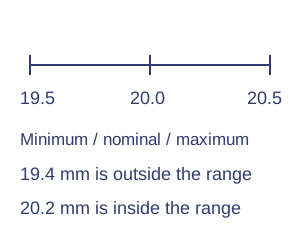
Tolerance calculation — A 20.0 ± 0.5 mm dimension accepts 19.5–20.5 mm under the stated limits. A hole and shaft need a specified fit; nominal equality does not guarantee they will assemble. Use minimum/maximum combinations to assess clearance and process capability.20.0 ± 0.5 mm dimensional limits. Original schematic; apply the qualifications in the explanation.View full-size diagram
Mechanism calculation — Moment is force × perpendicular distance and gear reduction is driven teeth ÷ driver teeth. A 20-tooth driver at 300 rpm drives a 60-tooth gear at an ideal 100 rpm. Explain direction and ideal assumptions, then consider friction and losses.
Electrical calculation — For an ohmic resistor, V = IR with volts, amperes and ohms. A 6 V supply across 300 Ω gives 0.020 A, or 20 mA. Electrical power P = VI, so 6 V at 0.5 A is 3 W. Actual circuits require appropriate component ratings and safe design.
Statistics and graphs — Use tables, bar charts or suitable scatter plots to communicate research and tests. Mean is total divided by count; range is maximum minus minimum. A correlation suggests an association, not proof of cause. Show axes, units, scale, sample size and outliers honestly.
Percentages and costs — Percentage is part ÷ whole × 100. A cost rising from £40 to £50 is a 25% increase, using the original £40 as the denominator. Separate material, labour, tooling, overhead and selling price; a fixed tooling cost per unit falls as production volume increases.
Geometry and layout — Use angles, symmetry, coordinates and tessellation when drawing or nesting components. Locate features from a common datum and specify hole centres. Repeating a measurement from the previous feature can accumulate error; independent datum measurements reduce that problem.
Examination and NEA
Examination structure — The untiered written exam lasts two hours, has 100 marks and contributes 50%. Its sections assess core technical principles, specialist technical principles and designing/making principles. Revision covers all core content and all six specialist areas here; apply the specialist examples you understand and have practised.
Answering questions — Read the command word, marks, data and required material context. Name a relevant property and connect it to a product feature and benefit. Calculations need method and units; evaluations compare justified advantages/limitations and conclude for the stated user rather than listing unrelated facts.
NEA process — NEA contributes 50% and is normally 30–35 hours with 100 marks. Use the live AQA contextual challenge and your teacher's instructions. Investigate, develop a brief/specification, generate and develop ideas, realise a prototype and analyse/evaluate it with authentic evidence. This guide supplies no assessed project.
Evidence and independence — Record genuine research, iterations, manufacture, testing and justified decisions under assessment rules. Credit external sources and follow teacher guidance on permitted assistance and authentication. Do not invent user responses or submit a model answer as personal design development.
Practical preparation — Practise safe material processes, measured testing, drawings and explanations with feedback before assessment. Use PLC tasks to demonstrate broader skills; short quizzes test only selected concepts. Your teacher checks practical competence and assessment evidence, which cannot be established by a vocabulary score.
Test yourself
30 questions · Random sets of 10. These quick checks support revision; practise longer explanations and justified judgements too.
Mind map
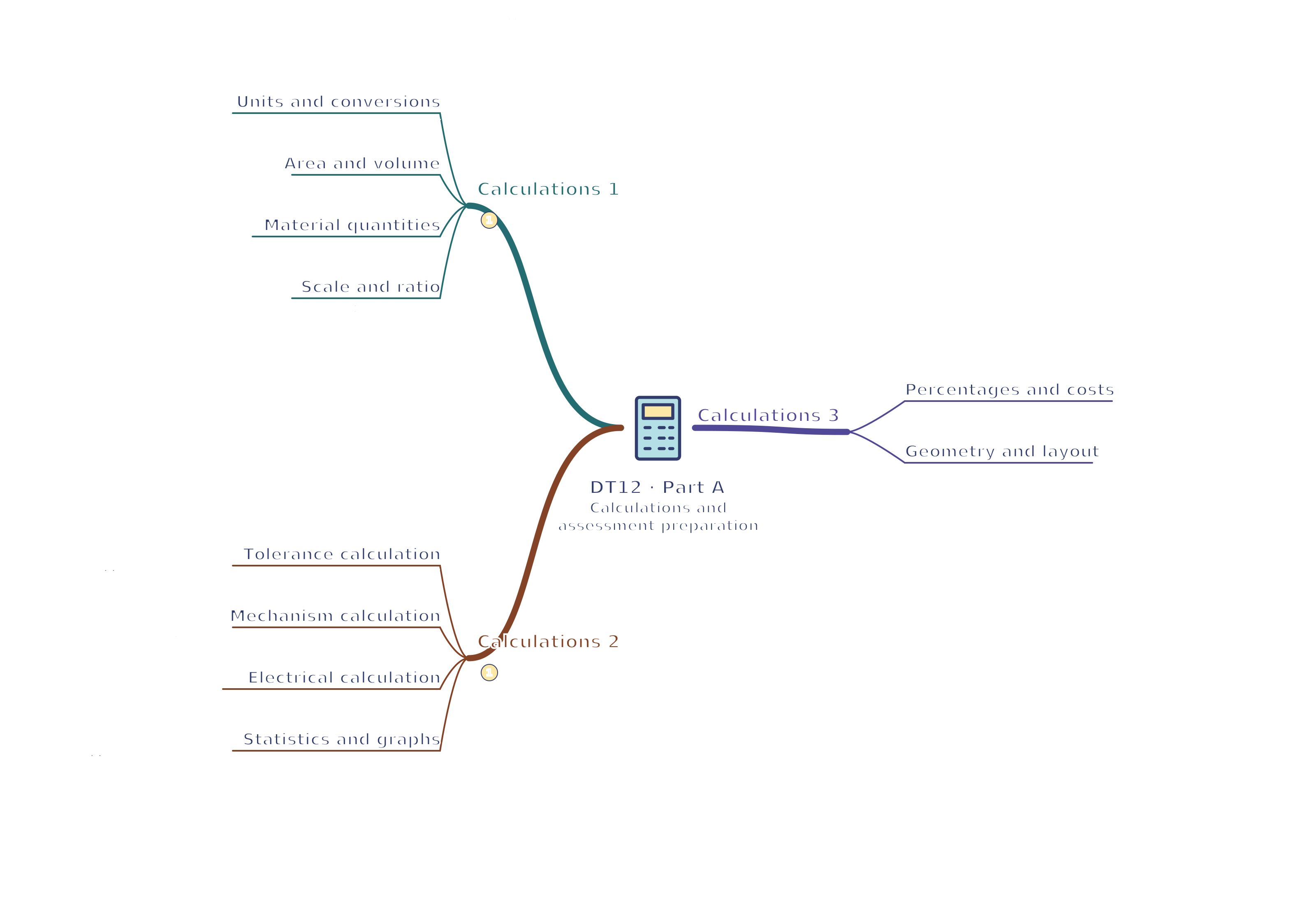
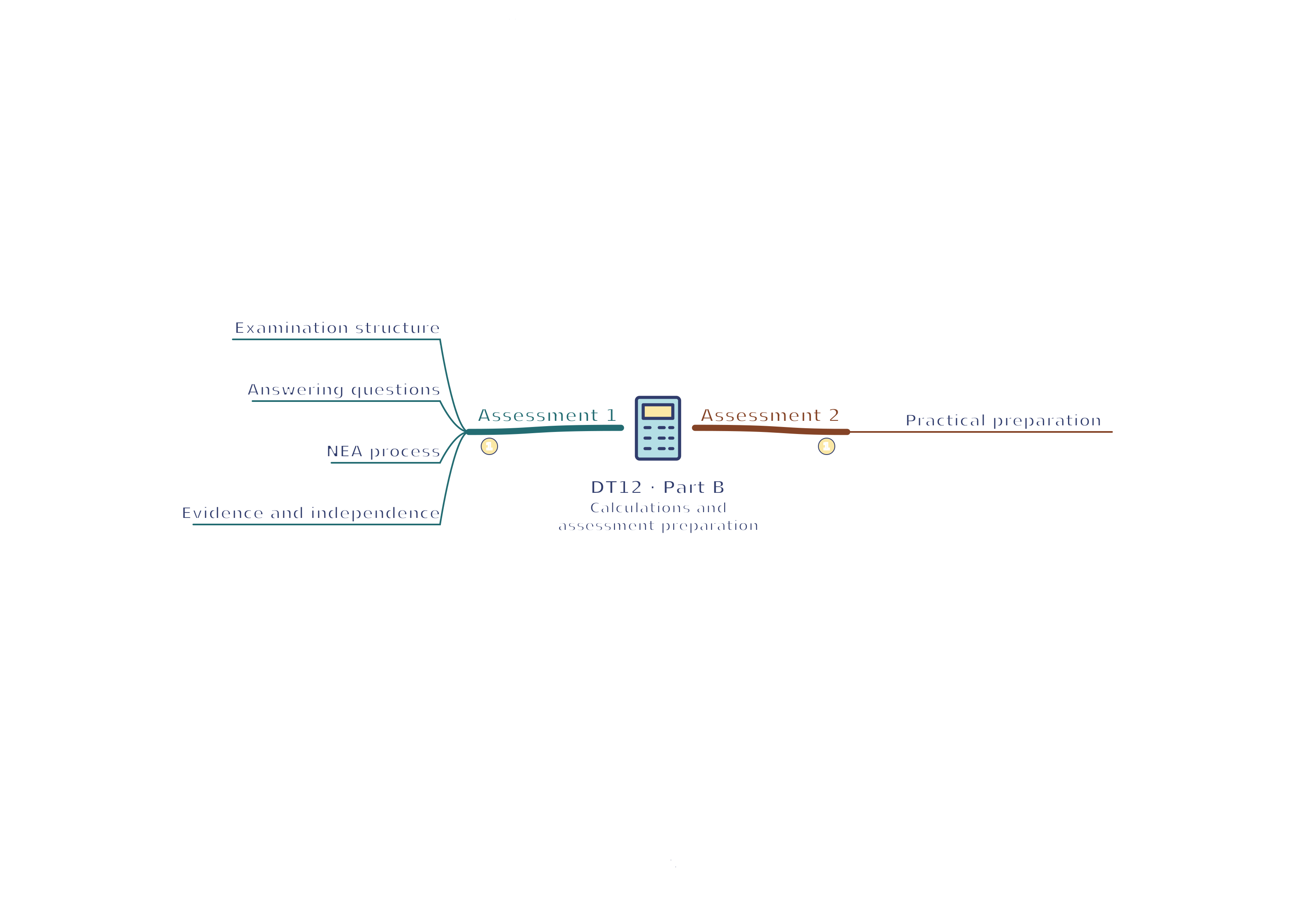
Use the branches to recall the ideas and explain their connections. Check the revision notes for the full detail.
Evidence and independence: Own decisions and evidence; credited sources
Assessment 2
Practical preparation: Practise methods; evidence and teacher judgement
Connections
Calculations 1 → Calculations 2: units and geometry support material and tolerance calculations
Part connections
DT12 · Calculations 1 / Calculations 2 / Calculations 3: Calculations 1 → Calculations 2 — units and geometry support material and tolerance calculations
DT12 · Assessment 1 / Assessment 2: Assessment 1 → Assessment 2 — exam and NEA evidence demonstrate different skills
 Mr Kidman's Classroom