Papermaking — Cellulose fibres from wood, grasses or recovered paper are separated into pulp. The watery pulp is spread on a mesh, drained, pressed and dried into a sheet. Fibre length, additives and coatings alter strength, texture and moisture behaviour; recycling shortens fibres over successive cycles.
Paper selection — Cartridge paper takes pencil and some paint; layout paper is light for draft designs; tracing paper supports overlay work; bleed-proof paper limits marker spread. Compare print quality, opacity, thickness and cost for the intended leaflet or drawing instead of choosing by colour alone.
Grid and inkjet stock — Grid paper supports aligned or scaled sketches using printed guides. Inkjet card has a surface suitable for compatible inkjet printing; check printer feed limits, coating and ink compatibility. A printable surface does not itself make a structural board strong or food-contact safe.
Board selection — Solid white board gives a smooth printable surface; duplex board has different faces; foil-lined board can act as a barrier. Corrugated board protects parcels using a fluted layer, while foam board is light and rigid for models. Lamination can hinder separation at end of life.
Packaging performance — Food packaging must suit the food, protect it, communicate information and be safe for contact. Moisture-resistant additives or coatings reduce transfer; do not assume all board is food-safe or waterproof. Consider opening, stacking, reuse and recycling alongside appearance.
Stock, forming and joining
Stock sizes — Paper and board are sold in sheets or rolls by size, colour, thickness and grammage in g/m². A3 is 297 × 420 mm and A4 is 210 × 297 mm. Grammage is mass per area, not thickness; different fibre structures can have the same grammage.
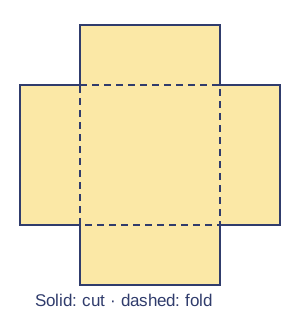
Nets — A net lays out a three-dimensional package as joined faces with tabs. Separate cutting lines from score/fold lines and allow for material thickness. Test a card prototype for fit, stability, closure and assembly before ordering a cutting die.Open tray net: cut and fold lines. Original schematic; apply the qualifications in the explanation.View full-size diagram
Cutting and perforating — Scissors or a guarded cutter suit small prototypes; a cutting mat protects the surface. Perforation creates spaced cuts for controlled tearing. Select equipment and supervision appropriate to age and material; keep hands away from the cutting path and use a suitable rule.
Scoring and creasing — Scoring locally weakens or indents a fold line; creasing compresses a controlled fold using suitable tooling. Test pressure and direction because excessive scoring can cut through and weaken the package. Folding against fibre direction can crack some coated surfaces.
Joining — PVA suits many absorbent paper/card joints, while tapes, tabs, staples and bindings have different appearance, strength and disassembly consequences. Allow adhesive to set and check food-contact suitability where relevant. Do not choose a joint only because it is fast.
Commercial processes and finish
Die cutting — A shaped cutting die cuts repeated outlines and may include crease tooling for folds. High setup cost can be justified by large batches of identical packaging. A hand-cut prototype remains useful for checking the net before making the die.
Offset lithography — Image and non-image areas on a plate attract ink and water differently. The image transfers from plate to rubber blanket and then to paper. Separate colour passes must align; it suits consistent commercial runs, with preparation costs that may favour digital printing for short runs.
Registration — Registration marks help align different print colours and cutting/creasing operations. Misregistration can blur edges or put artwork over a fold. Check a sample against the approved artwork and tolerances before continuing the run.
Embossing and UV varnish — Embossing presses a raised or recessed relief into the sheet. UV-cured varnish creates a protective or decorative surface using suitable inks, equipment and safe curing procedures. Finishes improve appearance or durability but may add cost and affect recyclability.
Packaging impact — Reduce unnecessary layers, choose separable materials and retain enough protection to prevent product waste. A recycled package is not automatically the lowest-impact choice if failure spoils the contents. Explain the functional trade-off with evidence and suitable tests.
Test yourself
30 questions · Random sets of 10. These quick checks support revision; practise longer explanations and justified judgements too.
Mind map
Use the branches to recall the ideas and explain their connections. Check the revision notes for the full detail.
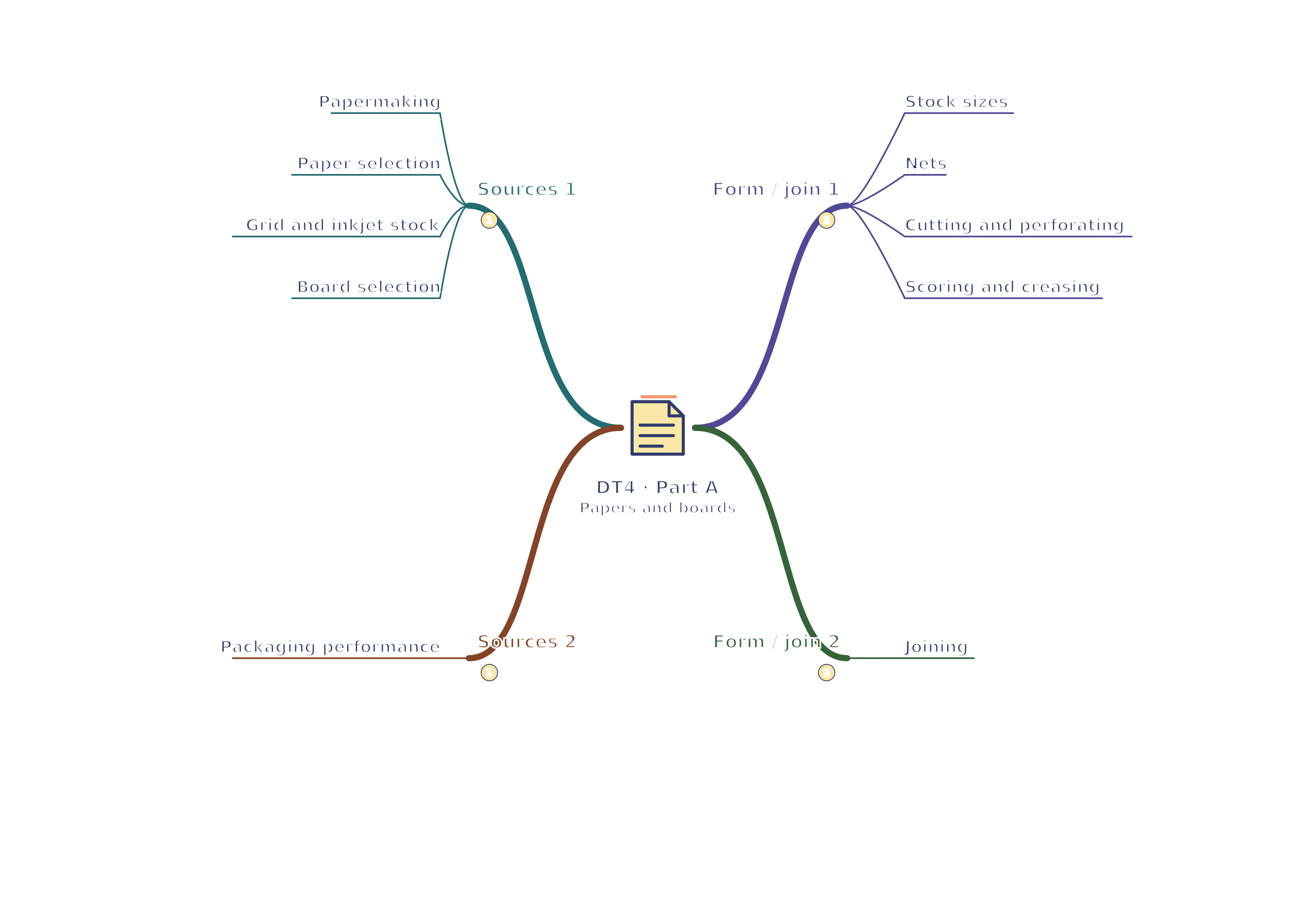
DT4 · Sources 1 / Sources 2 / Form / join 1 / Form / join 2
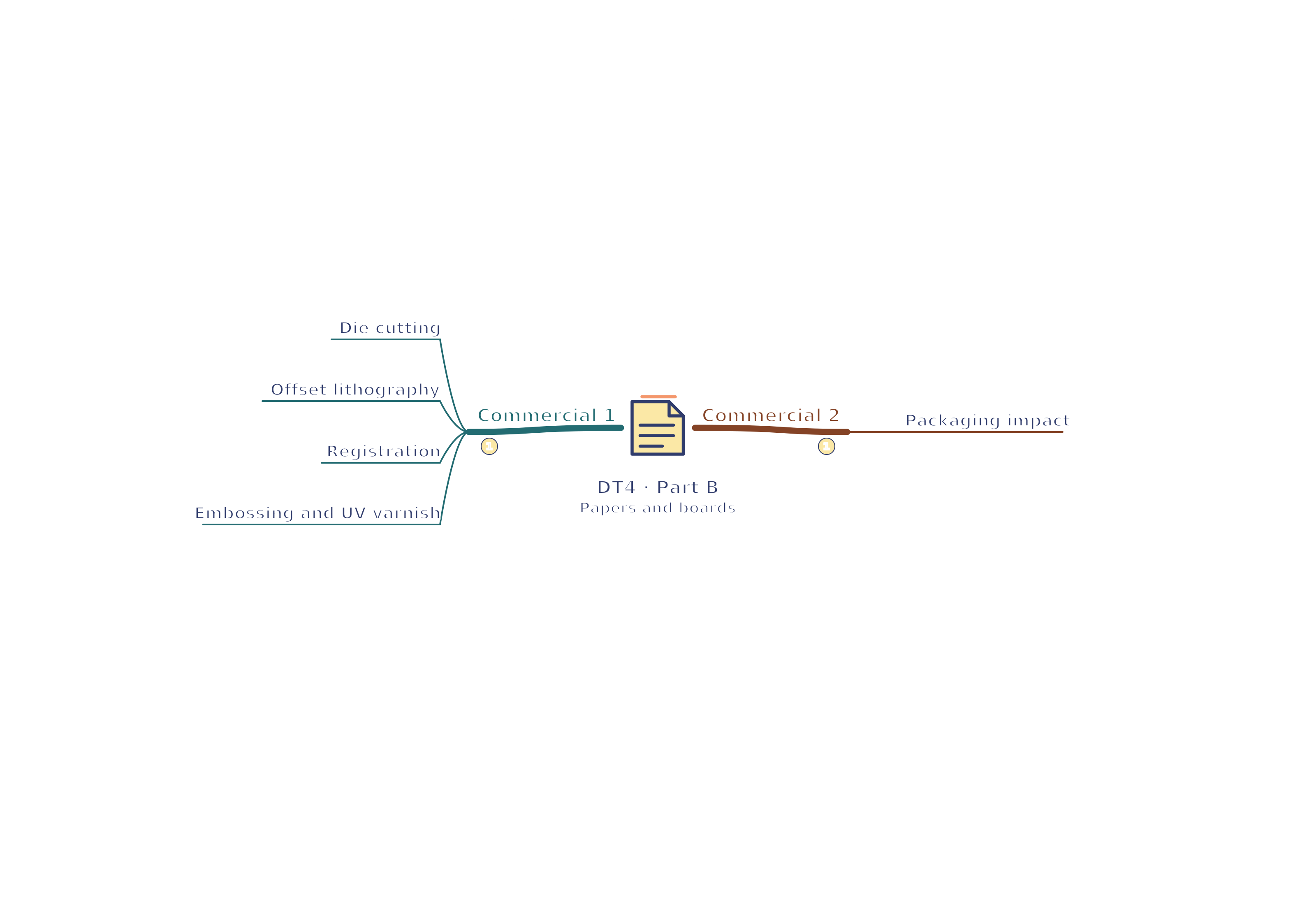
View DT4 · Sources 1 / Sources 2 / Form / join 1 / Form / join 2 mind mapOpen the full-size map to zoom. Download the PDF to print on A4 or enlarge to A3.
 Mr Kidman's Classroom