Develop theatrical skills and justify choices with evidence. Use actual centre-approved material; practical skills and extended writing need PLC tasks and teacher feedback.
Revise the key ideas
Selecting and understanding a text
Component purpose — Component 2 assesses the final application of acting or one design skill in a performance from a text. Understand the whole play so chosen scenes are coherent, even though only sections are realised. Your centre approves the text and roles; these notes do not invent a school production or choose a text on your behalf.
Contrasting text — The Component 2 text must differ from the Component 3 text in playwright, historical time period and theme according to Eduqas's comparison table. For Noughts & Crosses the table identifies Malorie Blackman, 1990–2010 and racism/discrimination as exclusions for C2 selection. Merely choosing another title does not establish a valid contrast; ask the teacher to confirm eligibility before rehearsing.
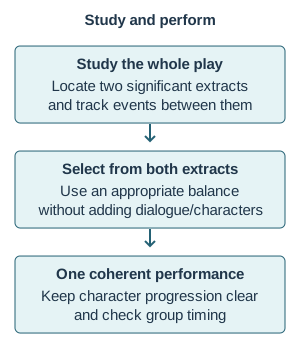
Two key extracts — Study two extracts of about ten minutes each from the same approved text, each significant to the whole. Understand preceding events, later consequences and relationships in each. The final performance uses material from both; twenty minutes studied does not mean the performed piece must last twenty minutes.
Playwright's intentions — Read dialogue, stage directions, dramatic structure and context to understand what the play communicates. Characters may have beliefs the playwright challenges. Distinguish your proposed theatrical solution from a claim about the writer's intention and explain evidence for both. Avoid importing events from a film adaptation that are absent from the play.
Context and character arc — Identify what the character knows, wants and has experienced at each selected moment. Connect shifts of confidence, allegiance or status to intervening events. A performance should show consistency or development across the extracts. Repeating one unchanging gesture without considering circumstances can flatten the character's journey.
Preparing an interpretation
Editing coherently — Select an appropriate amount of text from each extract to form a coherent interpretation. The balance need not be equal. Editing must not add dialogue or characters; follow the centre's approved arrangement. Check that cuts preserve essential relationships and cause-and-effect rather than create a misleading story or unexplained change.Two studied extracts contribute to one coherent final performance. Original teaching schematic. Open full-size diagram
Ensemble arrangements — Acting groups have two to four actors; up to two designers can support a performance, each offering a different skill. Designers work with actors and contribute to the piece. Monologues may feature, but the entire piece cannot consist solely of monologues. Plan interaction and clear opportunities to demonstrate each assessed role.
Character objectives — Define what the character wants from the other person and choose a tactic such as persuade or challenge. Rehearse a different tactic to test whether it clarifies the relationship. Use the objective to connect speech, movement and listening, rather than perform emotion independently of what the character is trying to achieve.
Vocal interpretation — Select pitch, tone, pace, pause, volume, articulation and emphasis to suit the character and action. Rehearse audibility while preserving a confidential or restrained intention. A voice should respond to the partner and developing circumstances. Mark a precise change and explain why it belongs at that point in the extract.
Physical interpretation — Choose posture, gait, gesture, expression, eye contact and distance with reference to the text. Rehearse entrances and exits as character actions, not just routes between positions. Respond visibly to the partner while listening. Keep choices repeatable and safe, especially when the scene includes conflict or distress.
Design consistency — Build lighting, sound, set or costume choices from the play's world and your interpretation. Changes can show time, atmosphere or a character's changed circumstances without replacing every element. Designers must support the whole performed piece. Confirm sightlines and practical use rather than describe a design that remains only on paper.
Rehearsal and final realisation
Text and cue confidence — Learn the text accurately and understand cue lines, entrances and technical triggers. Practise recovering from a slip without inventing assessed dialogue or abandoning the character. Run sections in context to preserve timing and listening. Memorisation alone does not demonstrate interpretation, but uncertainty can obstruct the intended communication.
Refinement through evidence — Invite specific feedback on relationships, pace, projection or design clarity. Compare an earlier version and a revision, then decide which better communicates the intention. Keep feedback within current supervision rules. Unlike C1, the assessed outcome here is final realisation; rehearsal records support learning but do not replace the performed work.
Performance timing — Two actors perform for 5–10 minutes, three for 7–12 and four for 9–14. Each actor needs at least five minutes interacting with performers and/or the audience. Plan enough meaningful action for each learner and time the final edited version. Longer is not automatically better: stay within the specified window.
Design minimums — C2 lighting requires four different states, sound four different cues, and costume one full costume with hair and make-up for one character. Set must be created and appropriately dressed with props for the chosen group. These are minimum requirements, not a substitute for thoughtful design or permission to add purposeless effects.
Technical integration — Prepare and test cue sheets, plots, plans and changes with performers. Designers are assessed on their realised design, and another person may operate equipment. Check lighting focus, sound levels, costume movement and prop safety. The final live performance needs evidence of your design decisions working in practice.
Artistic intentions account — The brief account is approximately 150 words. Explain how you intend to interpret character or scenes through the assessed skill and indicate how the studied text was edited into the final piece. This account assists the examiner but is not itself assessed. It should match your actual interpretation rather than promise skills the performance does not contain.
Final performance and evidence — The performance takes place live for a visiting examiner under the centre's arrangements and is recorded from the audience perspective. AO2 rewards applying theatrical skills to realise intentions and an individual contribution to the text's interpretation. A rehearsal video, quiz score or confidence tick is not a substitute for this assessment.
Test yourself
30 questions · Random sets of 10. These quick checks support revision; practise longer explanations and justified judgements too.
Mind map
Use the branches to recall the ideas and explain their connections. Check the revision notes for the full detail.
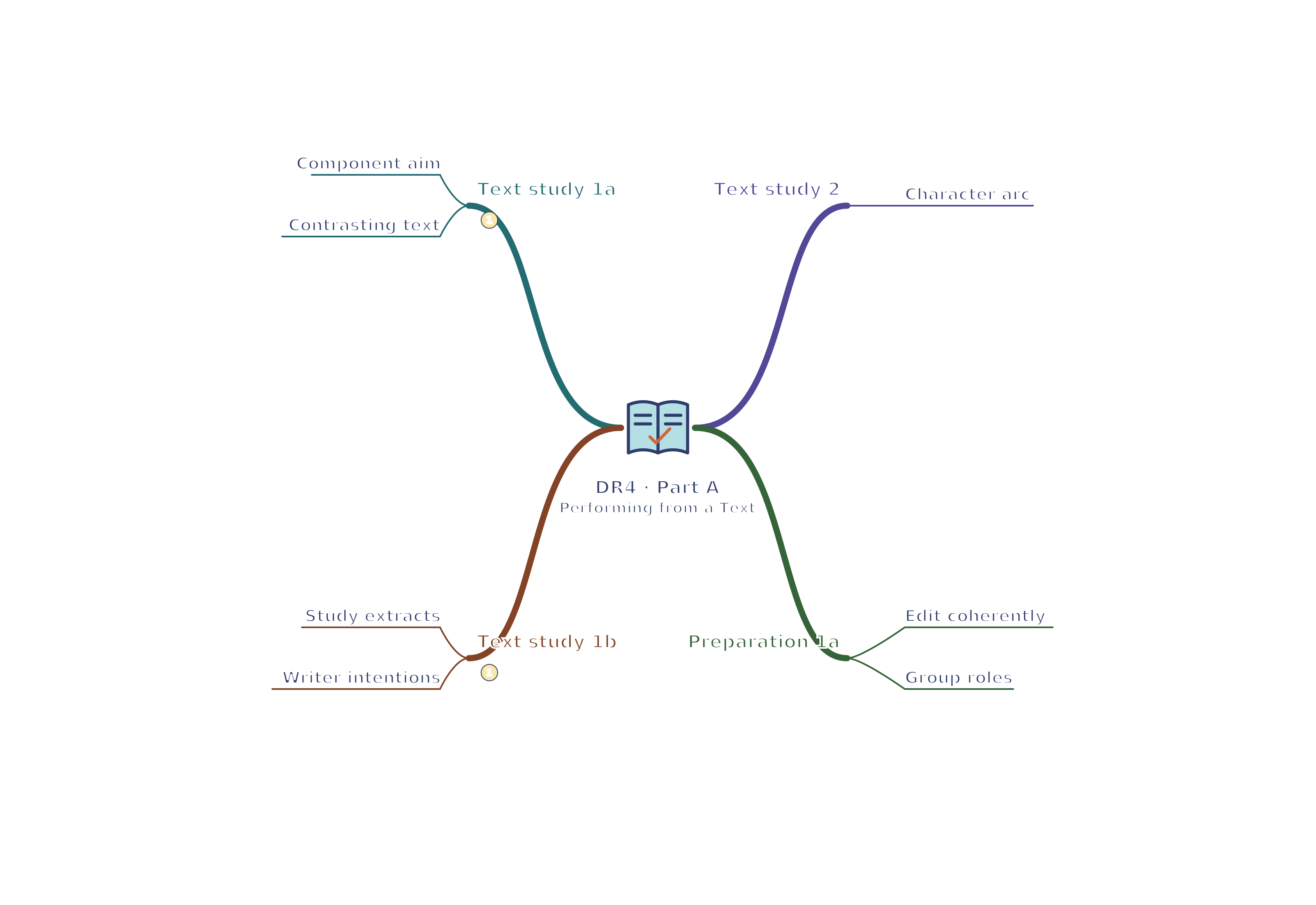
DR4 · Text study 1a / Text study 1b / Text study 2 / Preparation 1a
View DR4 · Text study 1a / Text study 1b / Text study 2 / Preparation 1a mind mapOpen the full-size map to zoom. Download the PDF to print on A4 or enlarge to A3.
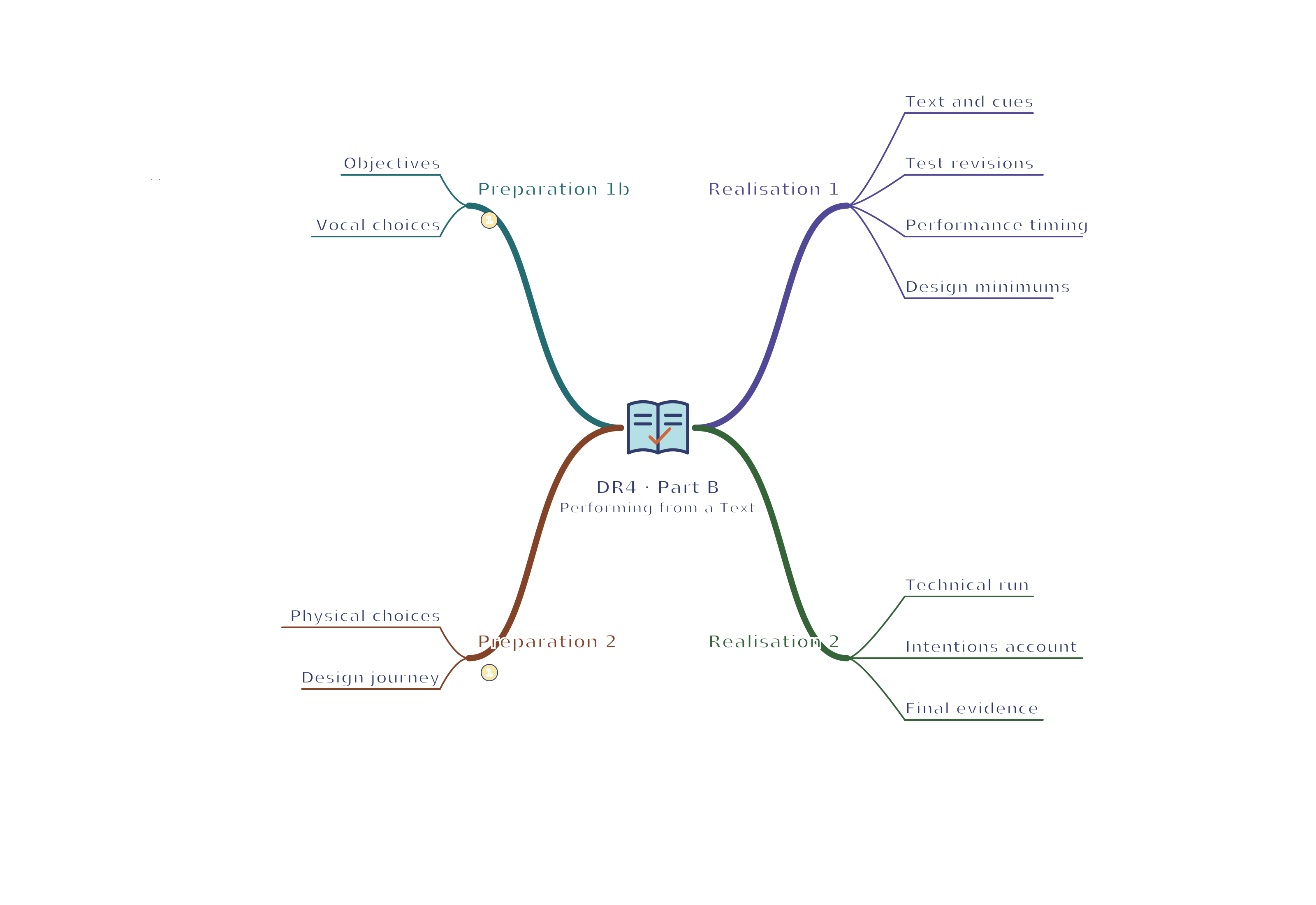
View DR4 · Preparation 1b / Preparation 2 / Realisation 1 / Realisation 2 mind mapOpen the full-size map to zoom. Download the PDF to print on A4 or enlarge to A3.
 Mr Kidman's Classroom