Develop theatrical skills and justify choices with evidence. Use actual centre-approved material; practical skills and extended writing need PLC tasks and teacher feedback.
Revise the key ideas
Theatre and meaning
Artistic intentions — An artistic intention is the meaning or response a theatre maker aims to communicate. Decide what the audience should notice about a character, relationship or issue, then choose skills that serve that purpose. An intention such as making a meeting feel threatening is more useful than simply promising a good performance; test it against what spectators actually perceive.
Theatre makers — Actors realise characters through voice, movement and interaction. Designers shape the visible and audible environment. A director coordinates interpretation, style, casting, blocking and the relationship with spectators. These responsibilities interact: a lighting change needs a performer in the right place at the right moment. Do not attribute every choice to one person without evidence.
Form, genre and style — Form concerns how a piece is organised, such as a monologue or ensemble sequence. Genre concerns a category with conventions, such as tragedy or comedy. Style concerns how the action is presented, such as naturalistic or highly stylised performance. Terms can overlap, so explain the actual feature rather than attach labels without examples.
Naturalism and stylisation — Naturalistic work aims to make behaviour and circumstances recognisably plausible. Stylisation deliberately shapes movement, language or images beyond everyday behaviour. A precise repeated gesture can emphasise an idea; a realistic pause can reveal hesitation. Neither style guarantees quality, and an effective production may combine them with a coherent purpose.
Convention and audience — A theatrical convention is an accepted way of representing action, such as direct address, a visible scene change or a spotlight isolating a speaker. Establish conventions clearly so spectators understand time, space and perspective. Breaking a convention can be purposeful, but unexplained inconsistency may confuse the audience.
Safe ensemble practice — Warm up voice and body appropriately, clear pathways and agree safe physical contact before rehearsing. Work respectfully with sensitive material and the centre's safeguarding procedures. Never improvise dangerous falls, weapons use or electrical work. Communicating discomfort and revising an action is part of professional collaboration.
Voice and character
Pitch and tone — Pitch is the perceived highness or lowness of a voice. Tone is its expressive quality, such as warmth or bitterness. They can change independently: a character can speak quietly with a sharp tone. Choose a change in response to the partner and situation rather than use one voice mechanically for an entire scene.
Pace and pause — Pace concerns how quickly speech proceeds; a pause is a deliberate break. A quick response might suggest confidence or anxiety, depending on context. A pause before an important word can suggest reluctance, calculation or shock. Give the pause a reason and keep listening active so silence remains dramatic.
Volume and projection — Volume is loudness; projection carries supported speech to the audience with clear articulation. A confidential exchange still needs to be heard. Vary loudness to suit intention, space and audience position, and practise supported breath. Shouting throughout removes contrast and can strain the voice.
Articulation, accent and emphasis — Articulation concerns clarity of speech sounds; accent is a pattern of pronunciation; emphasis gives selected words greater weight. Stressing different words can change the implied accusation in the same sentence. Use a researched, sustainable accent where appropriate, without caricature or assuming an accent determines a person's intelligence.
Vocal progression — Mark shifts of thought in the text and rehearse changes in pitch, tone, pace, pause, volume and emphasis. A character trying to reassure someone may slow down, then accelerate when losing control. Describe when and why a change occurs; a list of vocal terms alone does not explain interpretation.
Movement and interaction
Posture and gait — Posture concerns how the body is held; gait concerns the manner of walking. An upright stance might show self-control while a constrained gait suggests pain or tension. Ground choices in circumstances and rehearse safe repeatable movement. A physical feature need not remain fixed when the character's confidence changes.
Gesture and facial expression — Gesture is purposeful movement of part of the body; facial expression communicates through the face. A hand that almost reaches for another person can reveal an interrupted intention. Match scale to the venue and sightlines. Avoid unrelated repeated gestures that distract from the partner or accidentally turn serious action into comedy.
Eye contact and focus — Focus is the direction of attention, which can be expressed through eyes, head and body. Sustained eye contact can challenge or connect; avoidance may suggest shame or strategic concealment. Identify who looks, who withdraws and when. Do not assume a single gesture has the same meaning in every scene.
Proxemics and status — Proxemics concerns the use of distance and spatial relationships. A character occupying the centre while another stays near an exit may suggest unequal confidence. Status is the relative power expressed in the interaction, which may differ from official rank. Explain how movement changes that relationship rather than treat centre stage as an automatic sign of authority.
Objectives and subtext — An objective is what a character wants in a moment; an obstacle prevents it. Subtext is implied meaning beneath the spoken words. A polite greeting can conceal distrust. Choose playable actions such as reassure, challenge or evade, and test them with a partner instead of deciding only that a character feels sad.
Listening and reaction — Respond to a partner's words and behaviour with thought, breath, focus and movement. A delayed answer can show a decision forming. Keep responses consistent with the character's knowledge at that point in the story. Anticipating a revelation before it occurs undermines believable interaction.
Space and directing
Stage directions — Stage directions indicate action, setting or delivery outside spoken dialogue. Read them alongside the whole play. They may establish essential information or suggest a theatrical solution. Explain a practical interpretation using evidence; changing a choice should not erase the scene's meaning or introduce unsupported events.
Blocking and levels — Blocking is the planned positioning and movement of performers. Levels are differences in height, such as standing beside a seated character. A ground plan helps record entrances, exits and movement. Keep pathways safe and actions motivated; a raised platform needs secure construction and does not always signify higher social status.
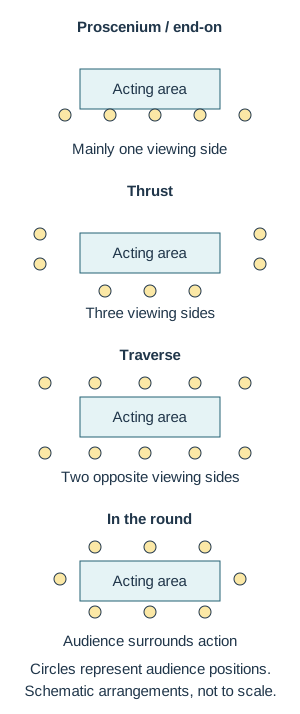
Proscenium and end-on — In proscenium staging spectators view through a framed opening; end-on also places the audience chiefly on one side without necessarily having an arch. A clear frontal composition can guide attention, but performers and scenery must not mask important action. Distinguish actor's left/right from the audience's perspective when documenting positions.
Thrust and traverse — Thrust extends into spectators on three sides; traverse places spectators on two opposite sides. Both can create intimacy, but large scenery and prolonged face-away positions can obstruct parts of the audience. Rotate focus purposefully and test the scene from each seating side rather than simply transfer an end-on plan.Compare four stage arrangements and their audience viewing sides. Original teaching schematic. Open full-size diagram
Theatre in the round — In the round spectators surround the playing space. Low or open scenery helps preserve sightlines, and entrances may use audience aisles. Share important reactions around the space through motivated turns and shifting arrangements. Facing every spectator at once is impossible; balance access over the scene.
Rhythm and transitions — A beat is a unit of action or thought, often changing when an objective or tactic shifts. Rhythm grows from speech, movement, silence and scene transitions. A deliberately slow transition can sustain reflection; an accidental delay can break tension. Rehearse changes as part of the performance rather than treat them as empty time.
Interpreting an extract — Read who is present, what has just happened, what each person wants and how the encounter changes. Select a precise line or action, propose a vocal or physical choice and explain its intended effect. Test alternative choices practically. Extended explanation must connect technique to the actual character and situation rather than narrate the plot alone.
Test yourself
30 questions · Random sets of 10. These quick checks support revision; practise longer explanations and justified judgements too.
Mind map
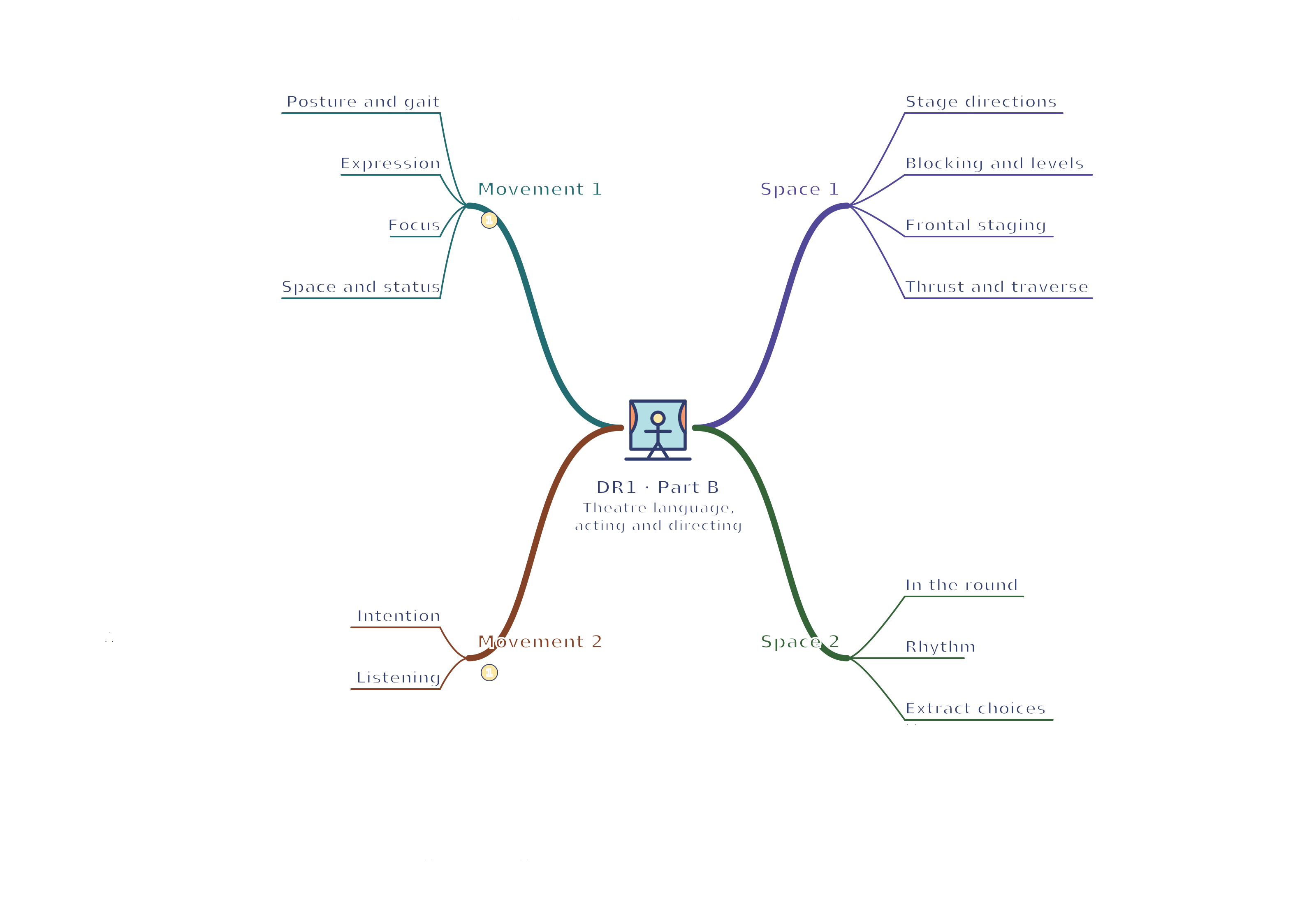
Use the branches to recall the ideas and explain their connections. Check the revision notes for the full detail.
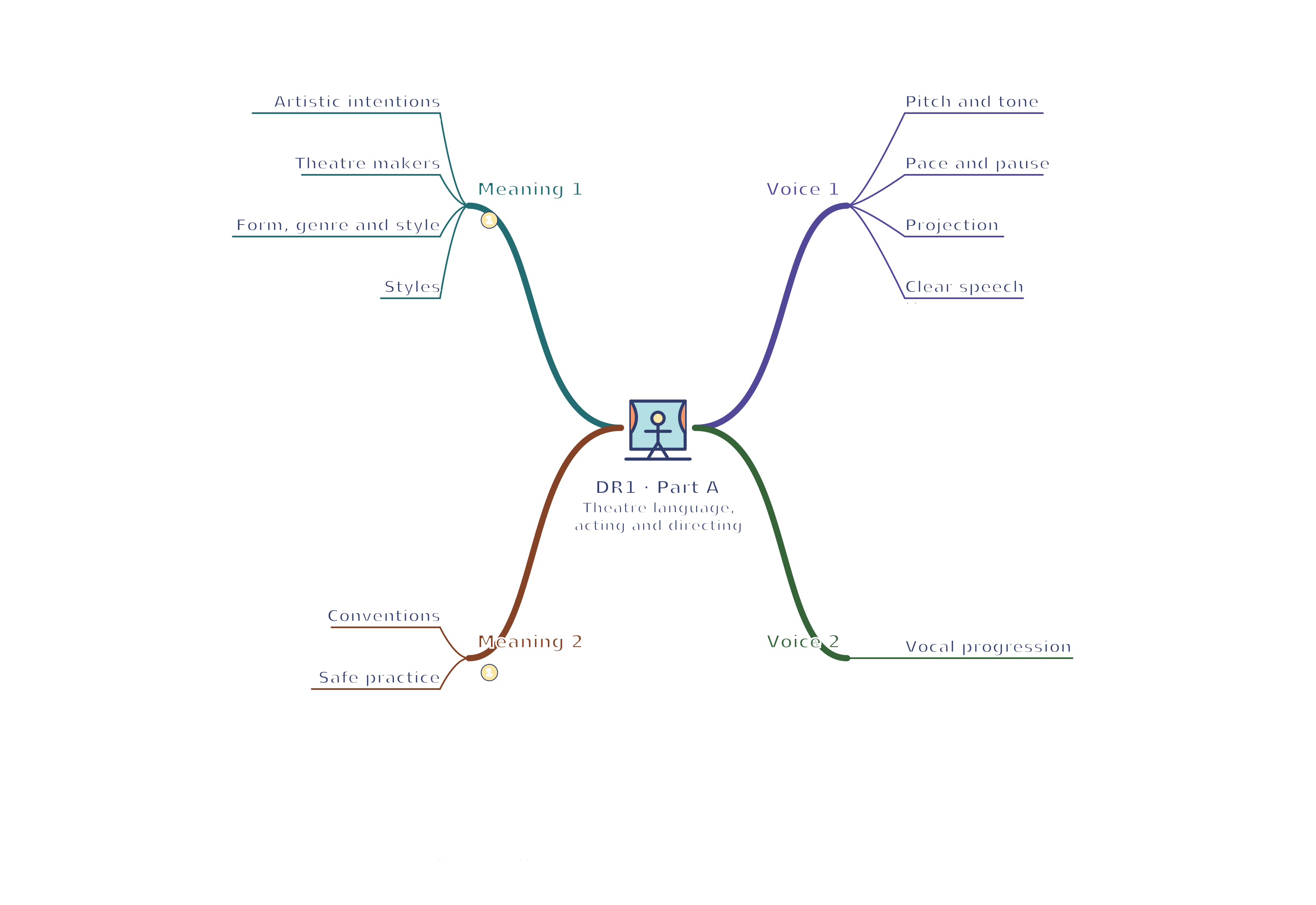
DR1 · Meaning 1 / Meaning 2 / Voice 1 / Voice 2
View DR1 · Meaning 1 / Meaning 2 / Voice 1 / Voice 2 mind mapOpen the full-size map to zoom. Download the PDF to print on A4 or enlarge to A3.
 Mr Kidman's Classroom