Develop theatrical skills and justify choices with evidence. Use actual centre-approved material; practical skills and extended writing need PLC tasks and teacher feedback.
Revise the key ideas
Production and observation
Actual live theatre — Study a live production attended during the course, with performers and audience in the same performance space. The Section B production must differ from the Section A set text and cannot be peers' work. A professional full-length production is recommended; eligible amateur work can be used. Confirm the centre's arrangements rather than assume a screen recording meets the live-attendance requirement.
Production details — Record the play title, company and venue; also note the date, key performers and creative credits where available. These details distinguish a specific production from the script or another revival. If a designer's name is unknown, describe the observed design without inventing a credit. Refer to the version you saw rather than a review of a different cast.
Observation record — After attendance record scenes, interactions, visual images, sound changes and audience responses while memory is fresh. Separate description from inference and locate evidence by action or line rather than invent a timestamp. Use programmes and permitted photographs to verify details, but ground your analysis in the actual performance.
Audience response — Explain your own response and visible or audible reactions such as laughter or sustained silence where observed. Silence does not prove all spectators agreed, and applause does not identify which individual choice caused success. Qualify claims about the audience and link effects to specific performance evidence.
Analysing acting and direction
Vocal evidence — Identify an actor, the moment and a change in pitch, tone, pace, volume, pause, articulation or emphasis. Explain how the choice shaped your reading of character or conflict. Saying the actor used a loud voice is description; explaining why it felt like a loss of control and judging its clarity develops analysis and evaluation.
Physical evidence — Describe posture, gait, gesture, expression, focus or movement precisely. A performer turning away after an accusation can suggest withdrawal when the surrounding action supports that reading. Explain scale and visibility within the actual venue. Avoid substituting a plot event for evidence of how the actor performed it.
Interaction and relationships — Notice listening, interruption, distance, touch, timing and who controls the space. Compare a relationship before and after a turning point to establish progression. A moment of stillness may show resistance rather than passivity. Explain the interaction as a coordinated exchange, not a disconnected list of each actor's techniques.
Director's interpretation — Discuss style, conventions, staging and audience relationship across the production. Support a claim about the interpretation with repeated or contrasting evidence. Do not assume the director personally invented every design detail or that you know private intentions. Explain how the coordinated production communicated an interpretation to you.
Space and focus — Identify the stage arrangement and explain how blocking, levels, entrances and sightlines directed attention. An actor entering through an aisle can connect the fiction with spectators; it may also reduce visibility elsewhere. Evaluate the actual result from your seat and qualify what other seating areas may have experienced.
Analysing design
Set and props evidence — Describe particular scenery, furniture, textures, levels or objects and how performers used them. Connect the design to location, period or the production's interpretation. A symbolic barrier can suggest social division, but show how action supported that reading. Evaluate movement and visibility as well as visual appearance.
Lighting evidence — Describe intensity, colour, focus, angle and change timing where observed. Explain how a spotlight isolated a response or a fade changed the scene's atmosphere. Do not guess equipment names if the beam alone does not identify them. Evaluate whether the choice clarified focus and meaning within that moment.
Sound evidence — Identify music, effects, live or recorded sources, volume, position and transition where discernible. Explain how a cue established location, tension or contrast, and whether speech remained clear. A statement that music was scary needs a precise sound feature and a reasoned connection to the action.
Costume, hair and make-up evidence — Describe garment shape, fabric, colour, wear, accessories and relevant hair/make-up. Explain how they established identity, status, period or a changing circumstance. Avoid claims based only on stereotypes. Compare significant appearances to evaluate continuity or development, including whether the actor could move effectively.
Design collaboration — Connect design and performance at the same located moment. A sound withdrawal, narrowed light and still actor might together focus attention, whereas an overpowering cue can obscure dialogue. Explain contributions individually and as a combination. More elaborate technical effects are not automatically more effective theatre.
Evaluation and examination writing
Analysis versus evaluation — Analysis examines how a choice communicates. Evaluation judges how effectively it achieved a purpose, using evidence and a reason. A judgement such as convincing, confusing or moving needs an explanation tied to the observed result. Balance strengths and limitations where relevant rather than write unsupported praise or dislike.
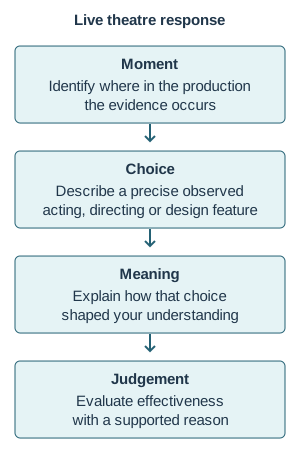
Evidence chain — Identify a specific moment, describe a theatrical choice, interpret its effect and evaluate it against the question. For an original practice example, a delayed reply and withdrawn eye contact could reveal uncertainty, but their effectiveness depends on context and visibility. Replace practice material with evidence from your actual production.Move from a located observed moment to a supported judgement. Original teaching schematic. Open full-size diagram
Comparing moments — Pair two moments that illuminate the same aspect, such as a relationship's opening and later breakdown. Explain how altered voice, movement or design changed your response. A second example should extend the argument rather than repeat the first with different names. Do not narrate an entire plot instead of examining the selected aspect.
Answering the question — Read the given aspect and command words, then choose moments that directly address them. Section B offers a choice of two questions, each worth 15 marks. Introduce essential production details briefly and use the answer space for analysis and evaluation. A prepared general review may miss the actual task even if its facts are correct.
Precise terminology — Name techniques accurately, then describe their realised use. Distinguish pitch from volume, lighting state from cue, and actor's intention from your inferred effect. Avoid claiming a production used an effect you did not observe just to include vocabulary. Clear located evidence is stronger than a long list of technical labels.
Independent judgement — Explain how far the selected aspect contributed to effective theatre and acknowledge limitations supported by observation. Different spectators can respond differently; a reasoned personal judgement is appropriate when grounded in evidence. PLC tasks require extended writing and feedback, while short questions check concepts and analytical decisions only.
Test yourself
30 questions · Random sets of 10. These quick checks support revision; practise longer explanations and justified judgements too.
Mind map
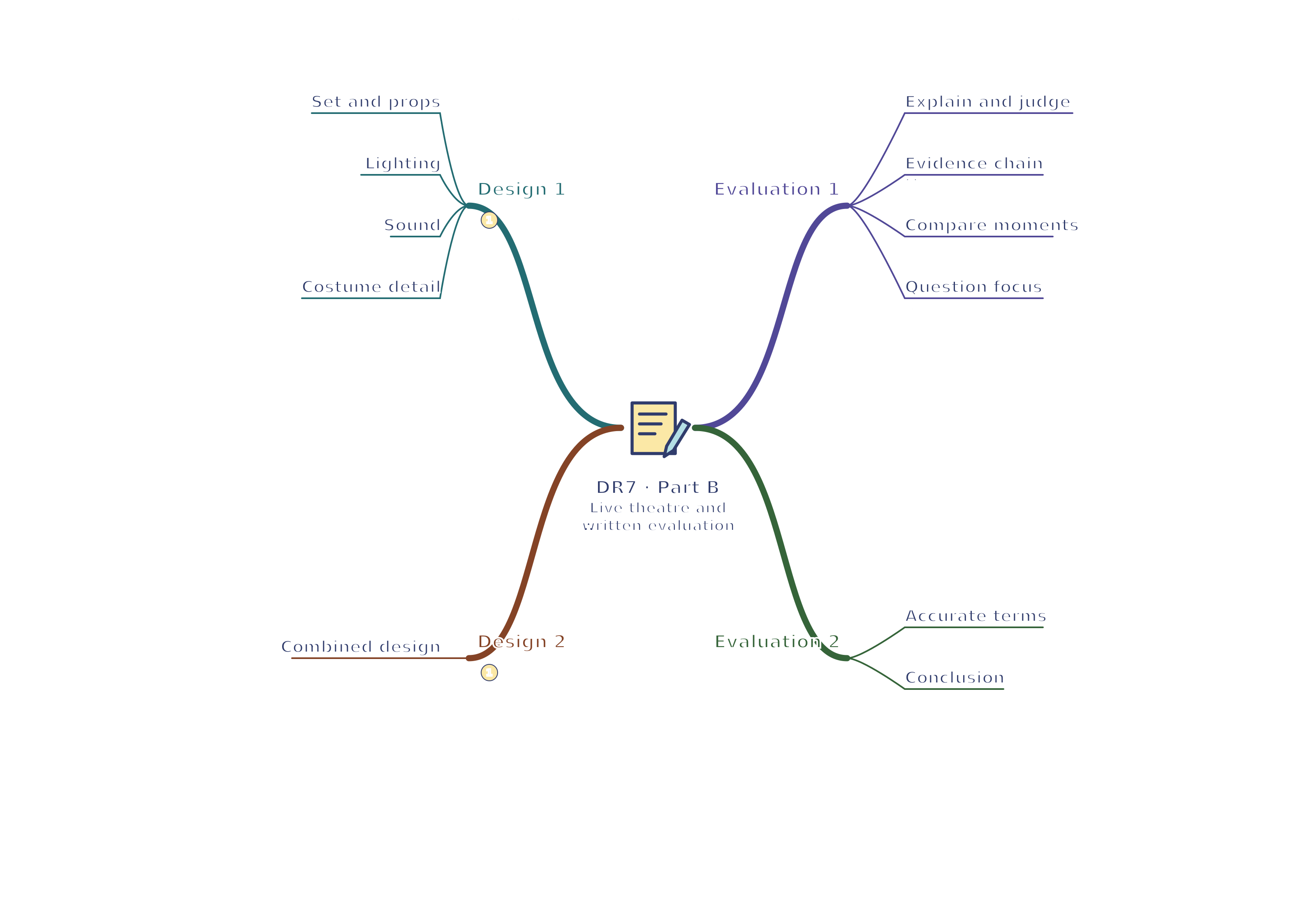
Use the branches to recall the ideas and explain their connections. Check the revision notes for the full detail.
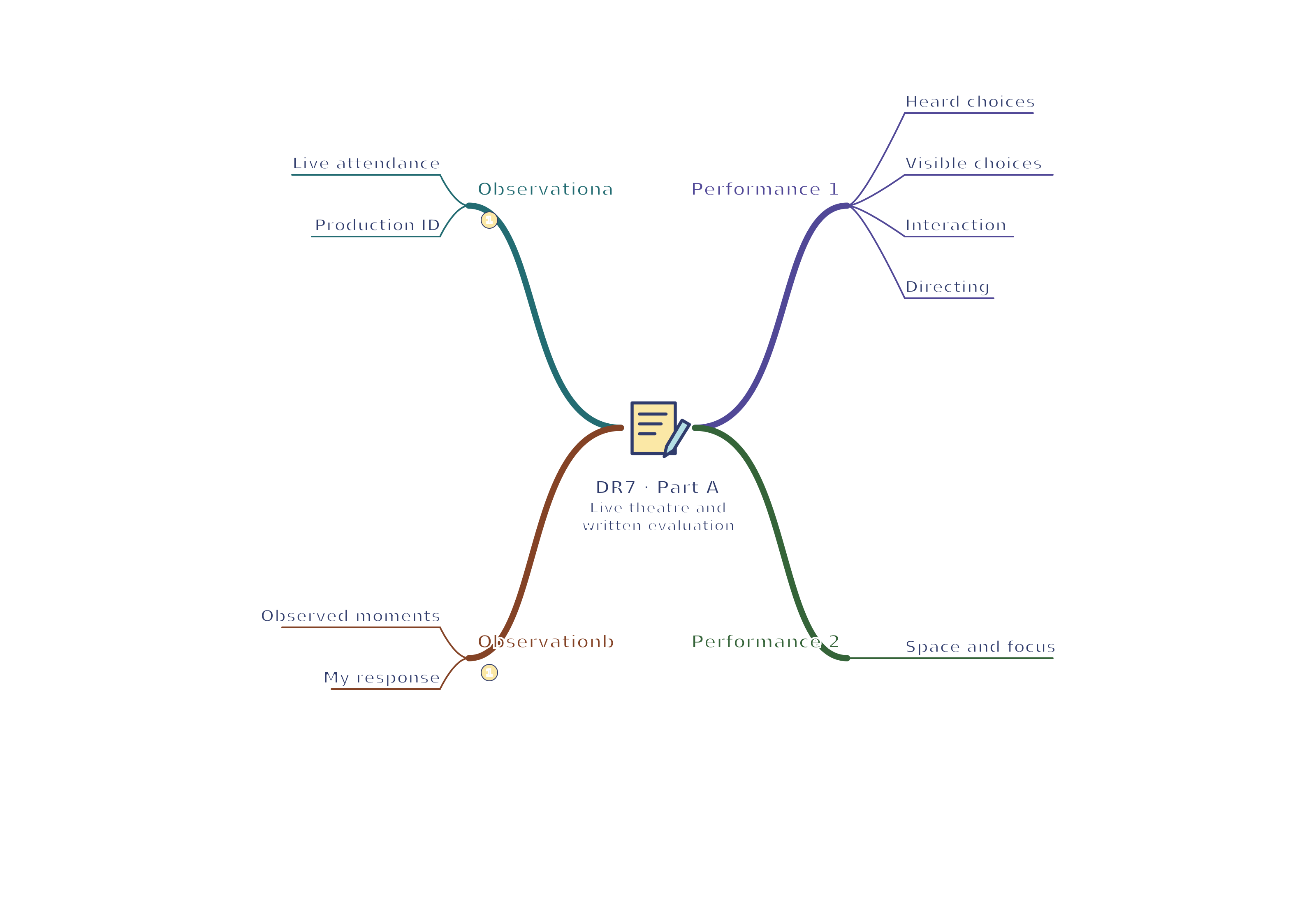
View DR7 · Observationa / Observationb / Performance 1 / Performance 2 mind mapOpen the full-size map to zoom. Download the PDF to print on A4 or enlarge to A3.
 Mr Kidman's Classroom