Develop theatrical skills and justify choices with evidence. Use actual centre-approved material; practical skills and extended writing need PLC tasks and teacher feedback.
Revise the key ideas
Design intentions and collaboration
Design concept — A design concept links visual and audible decisions to an interpretation of the text or devised piece. Establish time, place, atmosphere, style and audience relationship before choosing decoration. A restricted space might communicate social confinement, but justify that meaning through the action. Different designers should agree what spectators need to understand.
Research and evidence — Use appropriate research for period, setting, clothing, technology and theatrical conventions. Record sources and distinguish a researched fact from a proposed symbolic choice. A contemporary re-setting needs a reason and consistency with the text's relationships; it is not permission to alter the essential story arbitrarily.
Plans and communication — Annotated sketches show appearance; ground plans show layout from above; plots show technical positions; cue sheets show changes and their triggers. Include scale or dimensions where useful and label equipment and safe routes. Discuss changes with actors and other designers so a visual idea can actually work during performance.
Realisation and safety — A drawing is preparation rather than the final realised design. Test visibility, audibility, fit, stability and transitions in the actual space. Follow teacher supervision for rigging, electricity, construction and special effects. Seek safe alternatives to flame, hazardous materials or unsupported structures rather than treating risk as evidence of realism.
Lighting
Intensity and focus — Intensity is the strength of the light. Focus concerns directing and shaping light to cover the intended area. A narrow special can isolate a speaker while a wider wash supports ensemble action. Check that faces and movement remain visible where intended; darkness should communicate something without creating unsafe movement.
Angle and shadow — Front, side, back and overhead lighting reveal different features and shadows. Side light can emphasise movement; back light can outline figures; strong overhead light may deepen facial shadows. Explain the actual effect within the scene and test it, since angle alone does not guarantee fear or authority.
Colour and atmosphere — A warm or cool palette can support time, place or atmosphere, while a contrasting colour can mark a change. Colour associations are contextual: blue can suggest cold, night or calm depending on other choices. Keep costumes readable and consider how light alters fabric colours; colour cannot replace a full explanation of mood.
Lanterns and effects — A profile lantern can shape a controlled beam, and a gobo can project a pattern through suitable equipment. A Fresnel produces a softer edged beam; flood lighting can cover broad areas. LED fixtures may change colour electronically. Specify the required result and use equipment safely under supervision rather than assume every venue has identical technology.
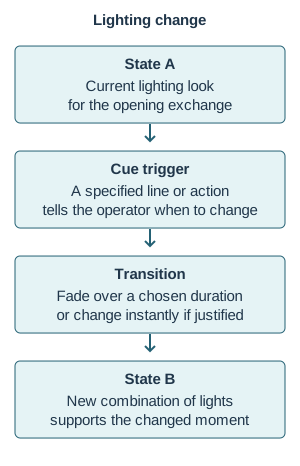
States, cues and fades — A lighting state is the combination of lighting at a moment. A cue tells the operator when to change; a fade describes a gradual transition over a stated time. A cue sheet should name the trigger, destination state and timing. Test transitions with performers so the change supports the action rather than arrives too early.Distinguish a lighting look, its trigger and its transition. Original teaching schematic. Open full-size diagram
Sound
Sound sources — Live sound is produced during performance; recorded sound is played back. Music can establish tone or contrast with action; effects can locate an unseen event. Decide whether the sound belongs to the characters' world or is intended only for spectators. A live source needs reliable repetition, while playback needs appropriate files and operators.
Volume and placement — Set levels so dialogue remains intelligible and a sudden effect is controlled. Speaker position can suggest a sound arriving from an exit or surrounding the audience. Test all seating areas, since loudness and direction vary with the venue. A louder cue is not automatically a more effective one.
Reverb, echo and silence — Reverb adds a sense of sound persisting in a space; echo creates discernible repetition. Both can suggest a large or disorienting environment if used purposefully. Silence may focus attention on breath or a movement. Avoid effects that obscure essential words, and explain why a texture or withdrawal matters at that moment.
Sound cues and amplification — A sound cue sheet records the source, exact trigger, level, duration and fade or stop. Microphones and amplification can support audibility but need testing for feedback and balance. Rehearse overlap with dialogue and scene changes. A cue must have an intended effect and a reliable technical route to achieve it.
Set and props
Ground plans and sightlines — A ground plan shows the stage from above, including scenery, furniture, entrances and exits. Sightlines are what spectators can see from their seats. Check corners and side seats as well as the centre. Design changes for thrust, traverse and in-the-round spaces need to preserve action without assuming a single frontal viewpoint.
Scenery and dressing — Scenery establishes the physical world; set dressing adds objects that suggest occupation, period or atmosphere. A backdrop hangs behind action; a cyclorama is a large plain surface often used for lighting effects. A sparse symbolic setting can be appropriate, but spectators need enough information to understand locations and transitions.
Props and furniture — A hand prop is handled by a performer; furniture and other larger objects organise the playing space. Choose objects for the action, character and period, and rehearse their use and placement. A symbolic object still needs a safe practical function. Agree who carries or resets it so it does not disappear between scenes.
Scale, levels and texture — A model or sketch should show the proposed proportions and movement space. Raised levels can separate locations or suggest relationships, but need safe access and visibility. Surface texture and wear may suggest wealth, neglect or age. Explain the connection to the scene instead of assuming that more detail always improves communication.
Entrances and transitions — Plan where people enter, where objects wait and how locations change. A visible change can become part of a stylised convention; a concealed change needs timing and access. Keep routes clear and rehearse with actual furniture. Avoid a beautiful arrangement that forces an actor to make an unexplained detour or blocks an exit.
Costume, hair and make-up
Silhouette and garments — Silhouette is the outline created by clothing and the body. Cut, fit and garment choice can suggest occupation, period, status or individual preference. A formal jacket may constrain movement, which should be tested with the actor. Do not rely on stereotypes as the sole basis for character design.
Fabric, colour and pattern — Consider texture, weight, wear, palette and pattern in relation to light, movement and viewing distance. A small print may disappear from the back row, and noisy fabric may interfere with speech. Connect colour choices to the character and production concept; test rather than assume photographs show the final stage appearance.
Accessories and props — An accessory such as a bag can contribute to costume and become a handled prop. Agree responsibilities with set/props design, and ensure the actor can use it reliably. Details can show a change in circumstance, but too many unrelated items can obscure the important visual message or slow a quick change.
Hair, wigs and make-up — Hair and make-up can establish age, period, condition or style. Test their visibility and consistency with lighting and costume. Follow hygiene procedures and check suitability of products with teacher guidance. Do not use racialised make-up or caricature to represent identity; interpret character through respectful casting and performance choices.
Continuity and changes — Track changes in time, status or physical condition through the piece. A removed jacket or altered hairstyle can indicate a shift if it follows the text. Plan safe realistic change times and labelled storage. Check that repeated appearances remain consistent unless a change is intended and supported by the story.
Design analysis — In writing, identify a moment, describe a concrete design feature, explain its intended meaning and justify how it supports the text or performance. Include practical details such as placement or fade timing where relevant. In live theatre evaluation report what was actually seen or heard, not a design you wish had been used.
Test yourself
30 questions · Random sets of 10. These quick checks support revision; practise longer explanations and justified judgements too.
Mind map
Use the branches to recall the ideas and explain their connections. Check the revision notes for the full detail.
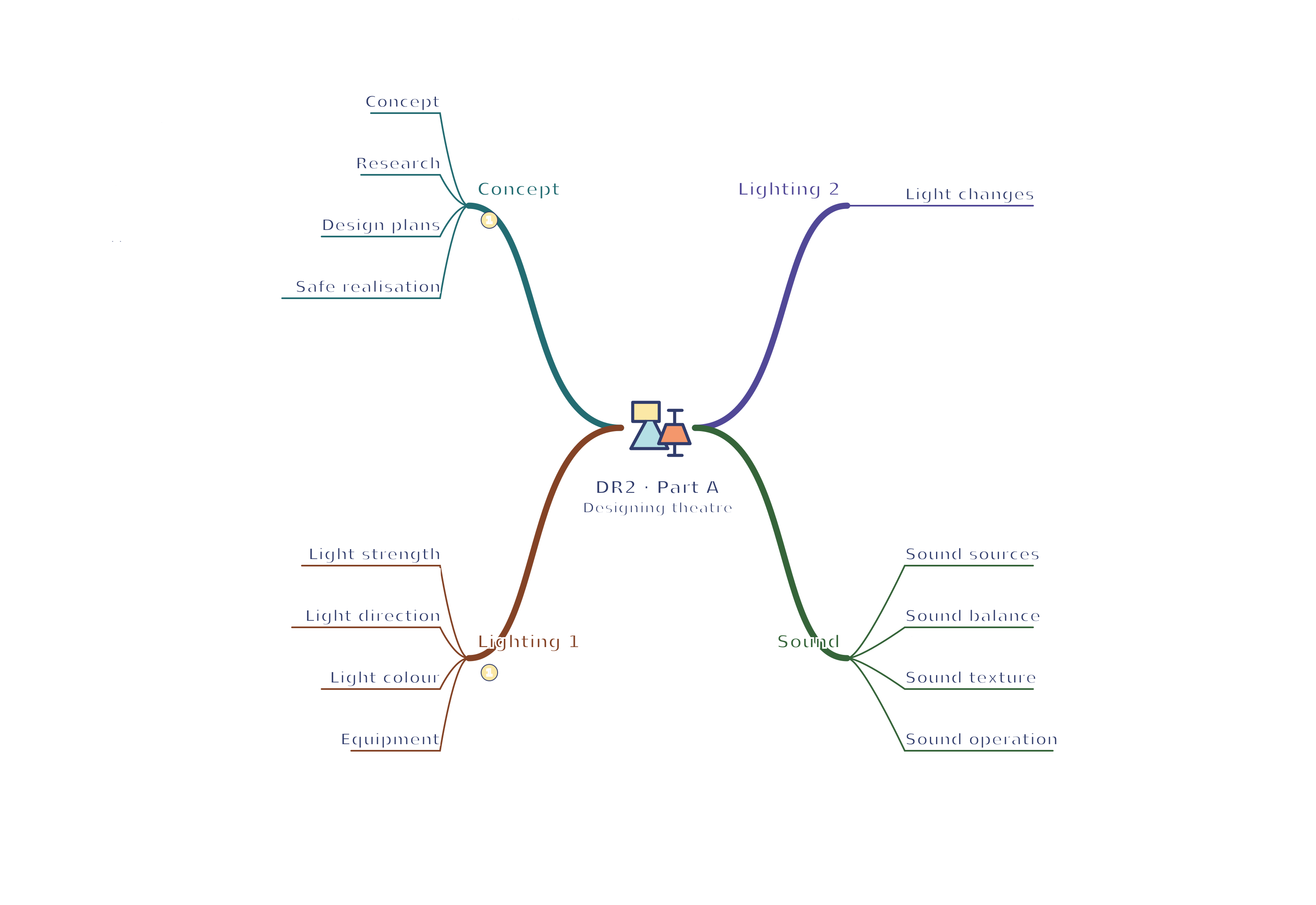
DR2 · Concept / Lighting 1 / Lighting 2 / Sound
View DR2 · Concept / Lighting 1 / Lighting 2 / Sound mind mapOpen the full-size map to zoom. Download the PDF to print on A4 or enlarge to A3.
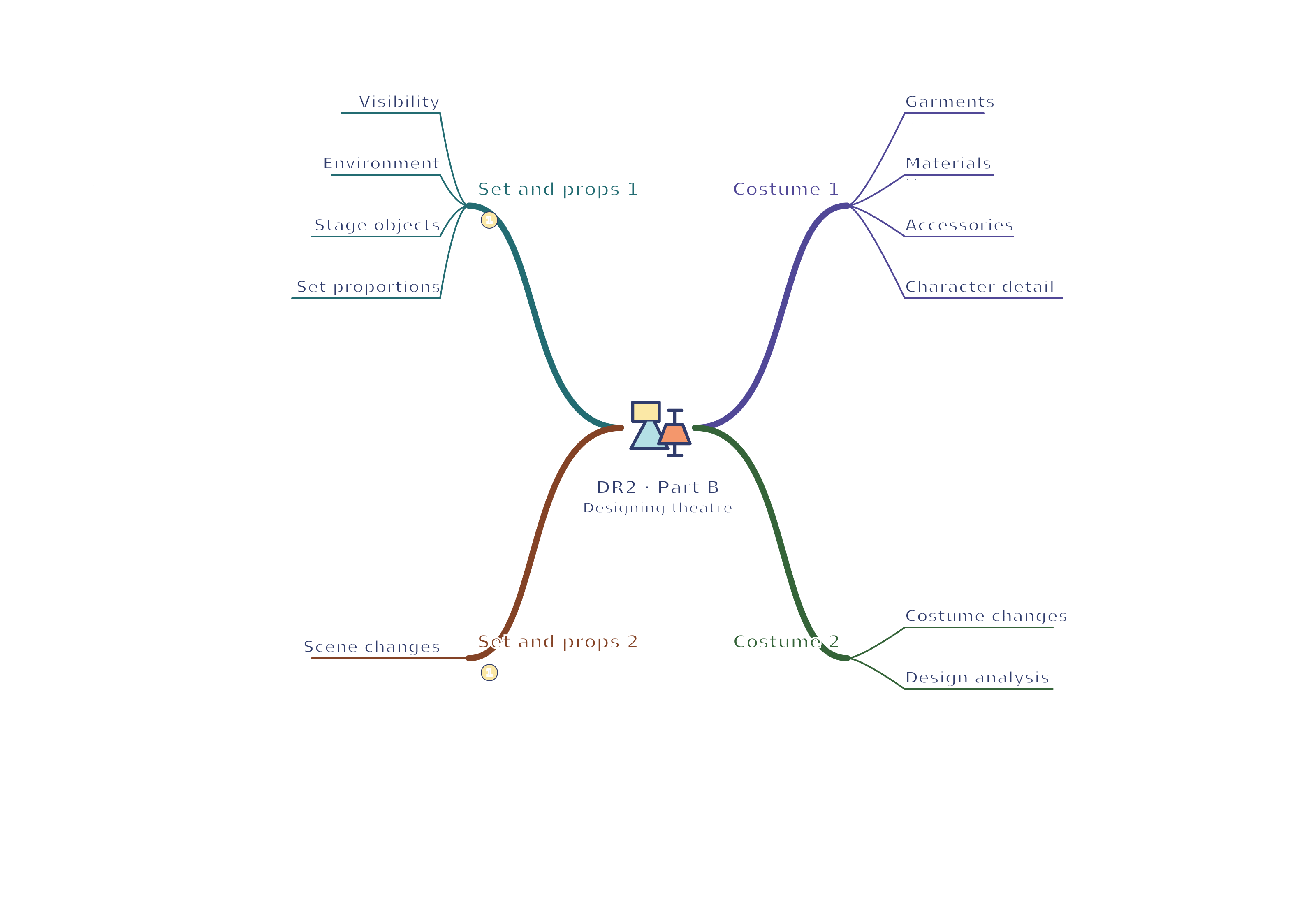
DR2 · Set and props 1 / Set and props 2 / Costume 1 / Costume 2
View DR2 · Set and props 1 / Set and props 2 / Costume 1 / Costume 2 mind mapOpen the full-size map to zoom. Download the PDF to print on A4 or enlarge to A3.
 Mr Kidman's Classroom