Develop theatrical skills and justify choices with evidence. Use actual centre-approved material; practical skills and extended writing need PLC tasks and teacher feedback.
Revise the key ideas
Actor and director choices
Read the specified task — Read the actual examination extract and command words before selecting evidence. Establish who is present, what has happened and what changes within it. Work as actor, designer or director according to the question; a good costume answer does not replace a requested vocal interpretation. Use the complete Mahfouz play to understand context without importing another adaptation.
Sephy's vocal journey — For a supported moment where Sephy initially assumes shared understanding, an actor could use fluent pace and open tone, then slow down or hesitate when challenged. A later determined response could use firmer emphasis. These are original possibilities to test, not compulsory delivery. Explain the triggering line, the changed thought and the effect on spectators.
Callum's vocal journey — A supported private encounter could use a warmer tone than an institutional confrontation, where measured speech may suggest self-control under scrutiny. Later abruptness may communicate strain if the scene supports it. Locate the change precisely and preserve audibility. Do not give Callum one fixed angry voice solely because he is a Nought.
Power in the Hadley household — A director might test Kamal holding a pause while another character waits, or an actor might emphasise an instruction with controlled articulation rather than continuous shouting. Compare what each choice implies about authority. Use the actual exchange and reactions to justify the interpretation; social position alone does not determine every vocal choice.
Physical progression — An actor could contrast relaxed mutual focus in an intimate encounter with a constrained stance under hostile observation. Rehearse a specific transition, such as withdrawing eye contact after a challenge, and explain how it changes the relationship. Avoid fixed stereotypes and ensure the movement remains visible and safe in the chosen venue.
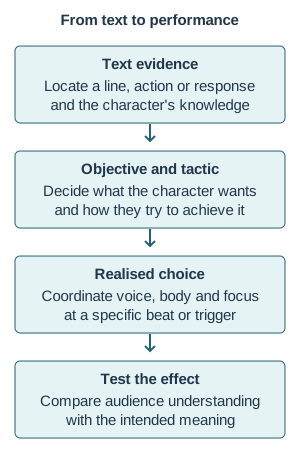
Objectives and beats — Mark a moment where the tactic changes from reassurance to challenge or concealment, using the dialogue and partner's response. Rehearse the same passage with an alternative tactic and judge which better fits the text. A beat change can alter pace, posture and distance together. Explain the objective before listing techniques so the choices form an intelligible action.Connect a text-supported change of thought with a playable choice. Original teaching schematic. Open full-size diagram
Rehearsal methods — Hot seating can test a character's perspective if answers stay consistent with their knowledge. A still image can clarify status and spacing; a thought track can explore implied meaning; rehearsing a beat with different tactics can compare effects. These are rehearsal experiments rather than new dialogue to insert into the assessed text. Evaluate what each method reveals, not just name it.
Space, style and audience
A coherent production concept — Choose a justified vision for the fictional divided world and apply it consistently to performance and design. An apparently familiar school setting could expose how ordinary institutions sustain exclusion. A more symbolic approach could foreground boundaries. Both require evidence and practical explanation; no single Pilot production design is compulsory.
Frontal staging — On a proscenium or end-on stage, a director could arrange a hostile group behind an isolated figure while keeping the important reaction visible. Explain how depth, levels and focus serve the specific school encounter. Test the scene from side seats and avoid a wall of actors masking the character whom the audience needs to watch.
Thrust staging — For a private conversation on thrust, performers might change a shared diagonal when trust breaks so different audience sides receive key reactions over the exchange. Keep scenery low or open where needed. Describe motivated turns and a specific moment; merely promising to turn around does not explain the relationship or solve all sightlines.
Traverse staging — A traverse proposal could place opposing groups toward opposite ends while leaving a central pathway for an encounter. Explain how this spatial division fits the text without pretending every spectator sees the same face throughout. Rebalance positions across beats and avoid tall opaque scenery between the two audience banks.
In-the-round staging — A director might use an open central area with low furniture and several entrances to make institutional scrutiny feel surrounding. Ensure that the actor's important responses become available around the audience over time through motivated movement. Explain the particular scene and safe routes; surrounding seats do not automatically produce a successful interpretation.
Storytelling and transitions — A shift of actor focus, lighting area or a carefully chosen object can distinguish narration from enacted action. Keep transitions precise enough to preserve momentum without losing location. Visible ensemble changes can suit the storytelling convention, but identify them as your proposed interpretation unless the text specifies them. Explain why they help an audience follow the selected sequence.
Design interpretations
Set and the school encounter — An original proposal might use movable low benches and a marked entrance to show where the school community permits or resists access. Describe arrangement, colour, texture and actor use, with a ground plan for the chosen stage. Do not add a symbolic barrier that contradicts essential action or blocks spectators; justify the concept through the scene.
Set across locations — A small set of reusable objects could suggest home, school, a public space or confinement through changed arrangement and focus. Specify which objects establish each location and who moves them. A minimal set still needs legible locations; a detailed set still needs workable changes. Test the balance of scene clarity and narrative momentum.
Lighting at a turning point — At a supported moment of isolation, a narrower area of light could reduce the visibility of the surrounding group while retaining the speaker's face. Name the cue trigger and fade duration as a proposed choice, then explain its effect on attention. Do not prescribe a colour as universally sad or threatening; connect the palette to the production concept.
Lighting contrasts — A wider balanced state for an apparently open encounter could contrast with a more restricted state after hostility becomes clear. Explain both looks and the transition at an actual line or action. Check whether the change suits realism or a more expressive convention. Darkness must not create unsafe movement or make essential action unreadable.
Sound at a public encounter — A proposed soundscape could build pressure through located crowd sound, then withdraw as a personal reaction becomes central. Describe whether the source is live or recorded, speaker location, level and fade. Avoid drowning the dialogue or claiming an invented cue belongs to the script. The choice needs a reason tied to the specific encounter.
Sound and recurring meaning — A recurring sound or musical fragment could connect a private meeting with a later altered relationship, but specify where it returns and how its texture, level or duration changes. This is a creative proposal supported by the story, not mandatory scoring. Repetition without variation or relevance can become decoration rather than communicate a developing idea.
Costume and institutional identity — A school costume proposal might use a shared uniform shape to show formal membership, then fit, condition or an accessory to suggest differences in resources. State garments, fabrics, palette, hair and make-up, and justify how they communicate the character at that moment. Do not use skin make-up or assume every member of a group dresses identically.
Costume progression — Track how a character's clothing could change with time, activity or circumstance. A modified silhouette or removed item may distinguish institutional conformity from a later choice without erasing personal continuity. Explain practical changes and their text reference. A wealthy character can remain vulnerable, so costume status should not substitute for interpretation of feeling.
Props as actions — Choose an object present or justified in the selected encounter and explain how the character handles it, places it or gives it to someone. The action may communicate control, trust or hesitation when supported by context. Coordinate props with blocking and costume, and distinguish an original proposal from a written stage direction.
Extract, wider text and written method
Extract evidence — An answer should specify where the choice occurs, what it is, why it fits the role and situation and what spectators should understand. Include physical/vocal interaction where required, rather than describe an isolated actor without their partner. Quoting accurately can support evidence, but a quotation without a theatrical explanation does not complete the answer.
Wider-text selection — Locate a moment outside the supplied extract when the task requires wider-text knowledge. Explain how the character or relationship differs there and connect your choices to events and themes. Compare evidence that addresses the same issue. A plot summary of the whole play is less useful than precise theatrical choices supported by the chosen moment.
Design explanation — Name the selected scene and intended mood or meaning, describe practical details and explain how the audience receives them. A lighting answer might specify focus and transition; a costume answer might explain silhouette and fabric under light. Sketches can clarify a plan where appropriate, but they need readable labels and written justification.
Timing and assessment — Component 3 lasts 90 minutes and is worth 60 marks. Section A has 45 marks, covering the extract and a wider-text question; Section B has 15 marks. Allocate time in relation to the actual questions and leave time to review. A clean copy of the required published play supports wider-text work; an annotated revision copy is not permitted in the examination.
Reviewing an answer — Read your response against the task: is each technique specific, is its trigger located, does its intended effect fit the scene and have you included the requested perspective? Remove invented quotations, unsupported universal rules and irrelevant plot narration. These practice notes offer methods and possibilities; your final interpretation must be your own, text-led and coherent.
Test yourself
30 questions · Random sets of 10. These quick checks support revision; practise longer explanations and justified judgements too.
Mind map
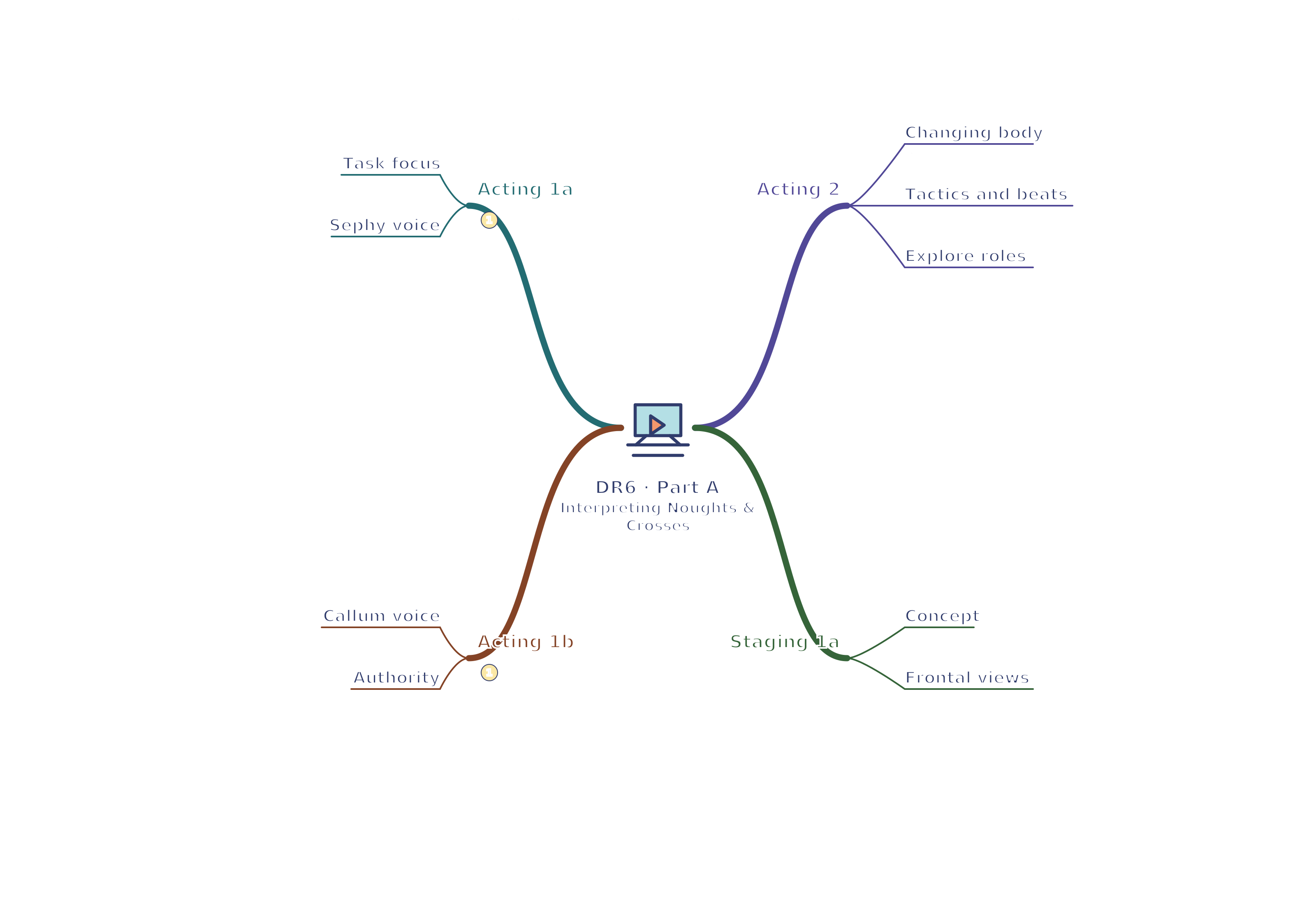
Use the branches to recall the ideas and explain their connections. Check the revision notes for the full detail.
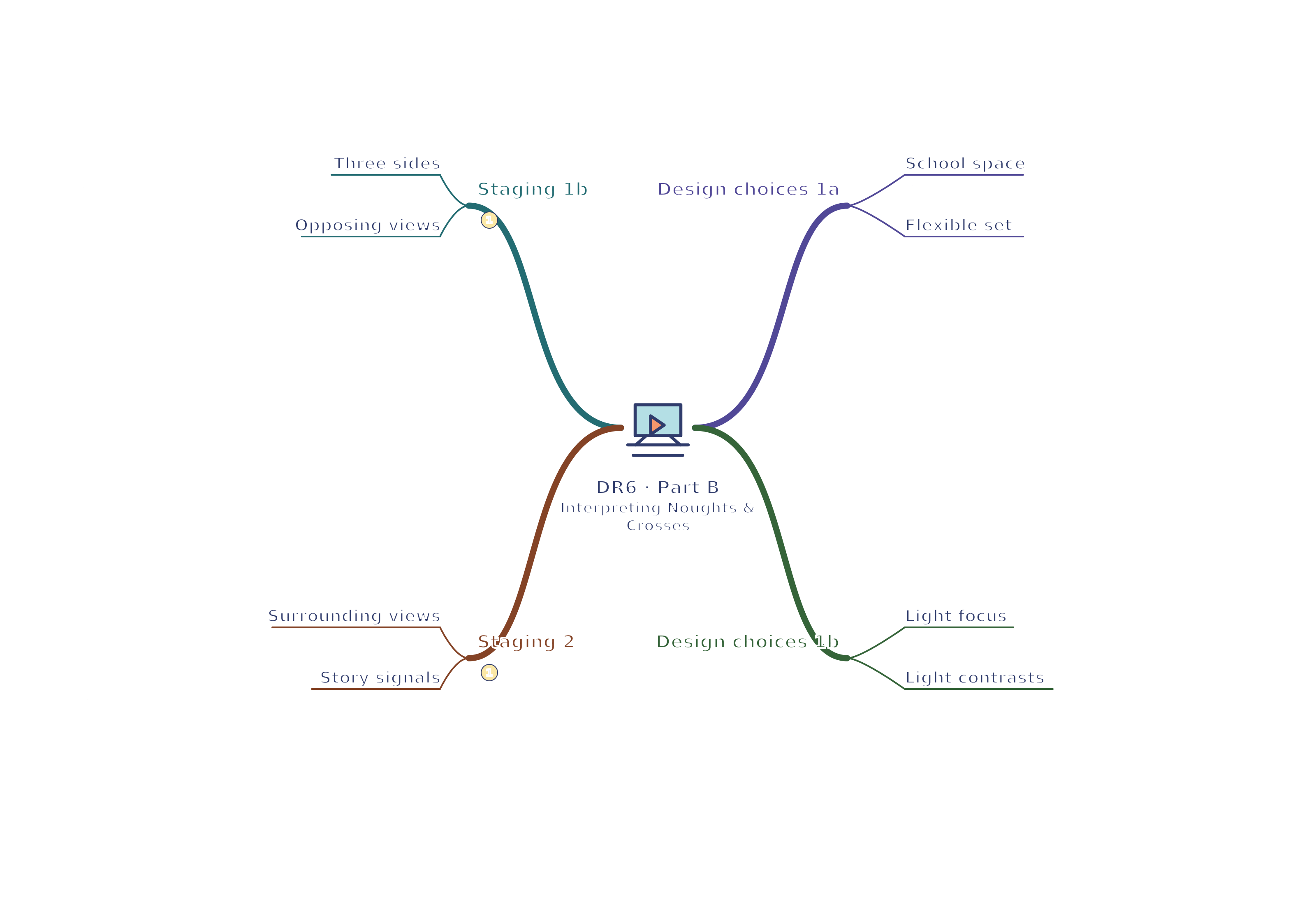
View DR6 · Staging 1b / Staging 2 / Design choices 1a / Design choices 1b mind mapOpen the full-size map to zoom. Download the PDF to print on A4 or enlarge to A3.
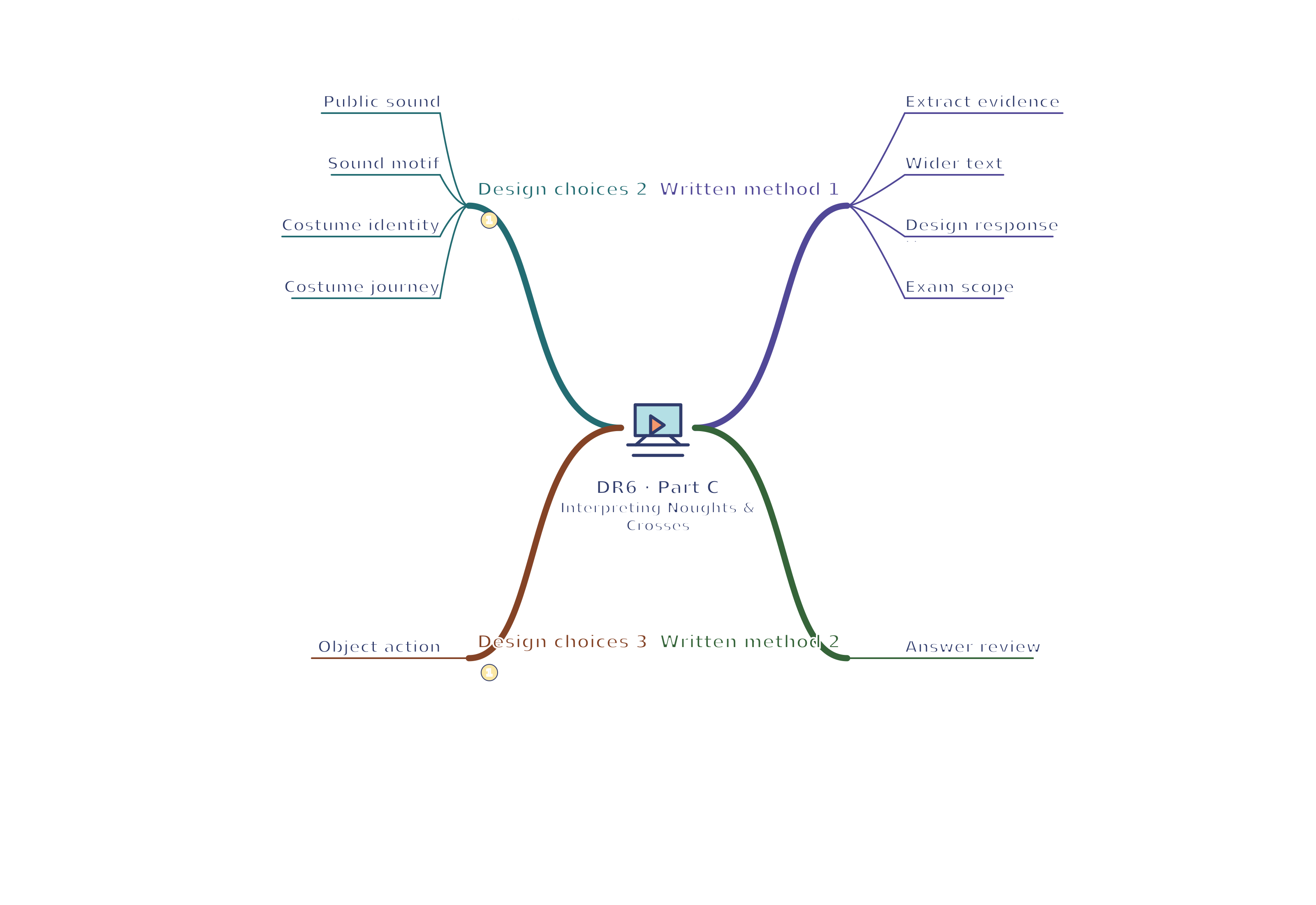
DR6 · Design choices 2 / Design choices 3 / Written method 1 / Written method 2
View DR6 · Design choices 2 / Design choices 3 / Written method 1 / Written method 2 mind mapOpen the full-size map to zoom. Download the PDF to print on A4 or enlarge to A3.
 Mr Kidman's Classroom