Develop theatrical skills and justify choices with evidence. Use actual centre-approved material; practical skills and extended writing need PLC tasks and teacher feedback.
Revise the key ideas
Starting a devised piece
Component purpose — Devising develops original theatre rather than simply staging a published scene. Component 1 combines creating and developing ideas, applying theatrical skills and evaluating your contribution. Your teacher supplies the approved stimulus and assessment arrangements. Keep your own decisions and evidence distinguishable from general advice and other people's work.
Stimulus exploration — Begin with the actual annual stimulus provided by the centre. List images, questions, conflicts and possible perspectives, then research ideas that could sustain action. The stimulus is a starting point rather than a script to copy. Record how it influenced the work even when the final link becomes less obvious.
Research and intention — Investigate relevant circumstances, voices and ideas without presenting invented testimony as fact. Decide what spectators should understand and whose perspective the piece explores. Research needs to influence choices of character, structure or design; a folder of unrelated facts does not explain the development of the piece.
Practitioner or genre — Choose the centre-approved theatre practitioner or dramatic genre and investigate its relevant techniques or characteristics. Apply them to communicate the piece's intention rather than attach a name afterwards. The specification offers examples, not a compulsory practitioner for every school. Explain why the chosen approach suits the stimulus and performers/designers.
Approaches to explore — Stanislavski-informed rehearsal can investigate objectives and circumstances; Brechtian approaches may use direct address or visible theatrical devices to encourage critical reflection; physical theatre can communicate through ensemble movement. Research your selected approach accurately, acknowledge variation and avoid claiming these practitioners each prescribed a single universal rule. Do not substitute this overview for study of your actual choice.
Developing and structuring
Improvisation and selection — Agree circumstances, objectives and boundaries, improvise short encounters, then discuss what spectators could understand. Record effective actions and discard repetition. A useful discovery becomes material to refine, not a requirement to retain every improvised line. Designers can test atmosphere, objects and spatial relationships during this phase.
Structure and narrative — Choose a coherent beginning, development and ending, or a deliberately non-linear structure with clear signposts. Establish conflict and let actions produce consequences. A sequence of unrelated dramatic images needs a linking idea and audience logic. Plot concerns events; theme concerns the ideas explored through those events.
Form and style — Decide whether scenes use dialogue, narration, physical sequences or a combination. Establish how transitions, direct address, multi-roling or symbolic movement will work. A style change can reveal a shift of perspective if signalled clearly. Adding devices solely because they look impressive may weaken coherence.
Character and language — Give each character an objective, obstacles and a changing relationship with others. Refine dialogue so it reveals action or thought rather than supplies unnecessary explanation. Use pauses, interruptions and subtext purposefully. A narrator can clarify context, but should not explain every meaning the performance could show through action.
Space and spectators — Test arrangements that suit the intention and the available venue. An intimate configuration may expose private conflict; direct address can involve spectators in an ethical question. Check visibility, entrances, movement and safe access. Explain how spatial relationships affect meaning rather than choose a stage simply because it is available in a diagram.
Integrated design — Lighting, sound, set/props and costume should develop with the action. Test a cue or object during rehearsal and evaluate whether it clarifies location, time or atmosphere. Designers contribute to the group's creation, not just decorate a finished script. Keep the chosen assessed skill clear while collaborating across disciplines.
Rehearsing and refining
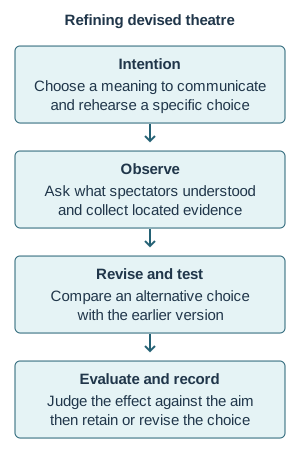
Feedback evidence — Use focused questions: which moment showed a power shift, where did attention move, or which transition caused confusion? Distinguish audience observations from your explanation of what you meant. Select justified feedback and test revisions; accepting every suggestion can destroy coherence just as ignoring all feedback can preserve a problem.
Amendment and comparison — Compare an earlier version with a revised one and explain why the change was made. Moving a character away from an exit may make escape seem less possible, for example. Rehearse both possibilities and evaluate the effect. A chronological diary of rehearsals is weaker evidence than a clear explanation of a significant decision.A rehearsal feedback cycle links changes to observed effects. Original teaching schematic. Open full-size diagram
Technical and dress rehearsal — Integrate actual costumes, props, scenery, lighting and sound, then rehearse triggers and transitions. Check visibility, balance, change times and safe pathways. A dress rehearsal tests the complete sequence, while a technical rehearsal may stop to adjust individual cues. Fix practical problems before the final performance rather than rely on last-minute improvisation.
Individual contribution — Describe the research, practical suggestions, tests and refinements you personally contributed, while crediting the ensemble. A shared performance does not mean every learner made the same decisions. Keep evidence that demonstrates your assessed role and explain how it helped communicate the group intention.
Portfolio, realisation and evaluation
Portfolio focus — Build a working record during the process, then select evidence showing response to stimulus, incorporation of practitioner/genre and refinement. An annotated sketch, rehearsal image or short script extract should support a precise explanation. The portfolio explains creation and development; it is not a transcript of every rehearsal or a review of the final performance alone.
Commentary and evidence — Connect illustrative material to the decision it demonstrates. Label earlier and later versions and discuss their effects on communication. Written portfolio guidance is about 750–900 words across the three stages; audio or audiovisual alternatives are 4–7 minutes. Follow the teacher's current instructions and permitted assistance arrangements, and retain your authentic work.
Group timing — The performance window increases with the number of actors: two actors 5–10 minutes, three 7–12, four 9–14 and five 11–16. Each actor needs at least five minutes of interaction with performers and/or the audience. Time the actual piece and check individual opportunity rather than add meaningless material to increase length.
Lighting and sound realisation — C1 lighting design requires at least five different states; sound requires at least five different cues. Design changes must communicate meaning and function in the realised piece. Prepare appropriate plots and cue sheets as evidence. Someone else may operate equipment: the designer's realised design is assessed, so explain your own choices clearly.
Set and costume realisation — Set design includes an appropriately dressed set and props for the group, supported by plans/model and photographs as appropriate. Costume design requires two full costumes with hair and make-up for two different characters. Test fit, movement and visibility. A concept sketch without a functioning realised design cannot replace the practical outcome.
Evaluating the final work — Discuss interpretation or realisation, use of skills, and how your individual contribution fulfilled initial aims in relation to stimulus and practitioner/genre. Locate successful and less effective moments and explain why. Distinguish intention from result: a missed cue or unclear transition can be evaluated thoughtfully without pretending it succeeded.
Supervised evaluation — The evaluation takes place under supervised conditions for 90 minutes. Two sides of A4 bullet-point notes may be used and handed in. Prepare located evidence and observations rather than a pre-written essay. Follow current centre instructions; these revision notes and examples are practice support, not an assessed evaluation to submit as your own.
Assessment evidence — AO1 concerns creation and development through the portfolio; AO2 concerns realised theatrical skills; AO4 concerns analysis and evaluation. A vocabulary quiz can support concepts but cannot demonstrate a finished performance or authentic creative process. Use the PLC demonstration tasks with practical evidence and teacher feedback.
Test yourself
30 questions · Random sets of 10. These quick checks support revision; practise longer explanations and justified judgements too.
Mind map
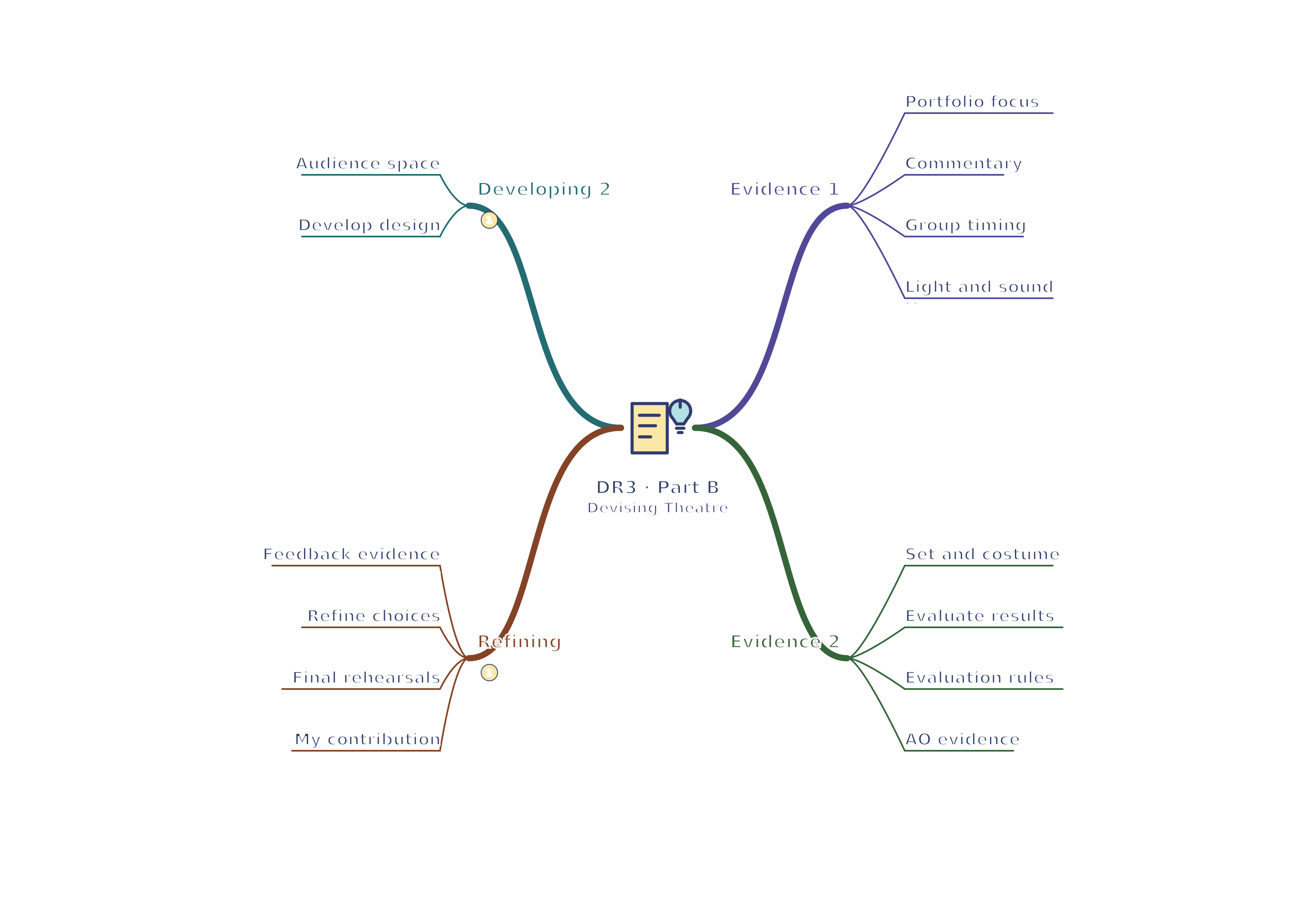
Use the branches to recall the ideas and explain their connections. Check the revision notes for the full detail.
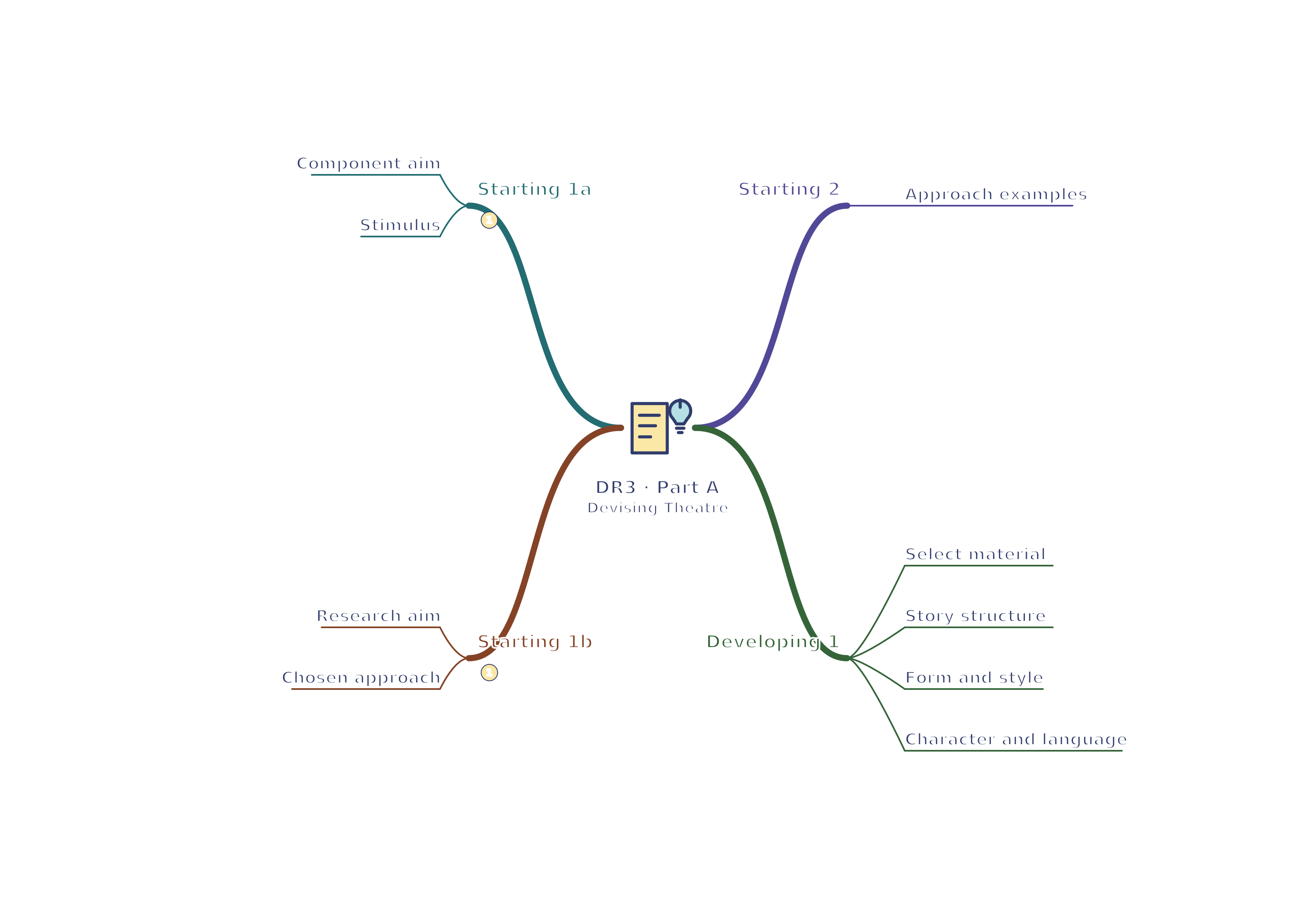
View DR3 · Starting 1a / Starting 1b / Starting 2 / Developing 1 mind mapOpen the full-size map to zoom. Download the PDF to print on A4 or enlarge to A3.
 Mr Kidman's Classroom