Fibre sources — Cotton fibres grow around seeds; linen comes from flax stems; wool is animal fleece and silk is produced by silkworms. Synthetic fibres such as polyester, nylon and acrylic are made through chemical processing. Cleaning and preparation precede spinning; fibre sourcing has water, land, chemical and social impacts.
Spinning and blends — Spinning draws and twists fibres into yarn. Yarn thickness, twist and ply affect strength, texture and manufacture. Blends can combine cotton comfort with polyester crease resistance, but performance depends on proportions and structure; mixed fibres can be harder to separate for recycling.
Named fibre properties — Cotton absorbs moisture, wool can insulate, and silk has a smooth lustrous surface. Polyester resists creasing, nylon/polyamide can provide tough abrasion-resistant fibres, and elastane such as Lycra provides stretch/recovery in suitable blends. Fabric construction, finishing and care modify these broad tendencies.
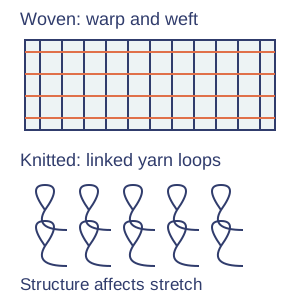
Woven and knitted — Woven fabric interlaces warp and weft yarns; knit fabric forms linked loops. Knits often stretch more and suit close-fitting sportswear, while woven constructions can offer stability. Fibre, yarn, weave and finishing all affect performance; structure alone does not guarantee waterproofness or strength.Fabric structures: schematic. Original schematic; apply the qualifications in the explanation.View full-size diagram
Non-woven fabrics — Non-wovens bond or entangle fibres without weaving or knitting. Felt can be formed from suitable fibres, and bonded webs serve interfacing or disposable products. They may resist fraying but have application-dependent strength; disposal and reuse should be considered for single-use products.
Sportswear and furnishings — Sportswear may need stretch, breathable comfort, abrasion resistance and moisture management. Furnishings may need durability, colourfastness and suitable fire performance. Different layers can provide different functions; match evidence to actual use and care conditions.
Interfacing and fire treatment — Interfacing stabilises areas such as collars; webbing carries concentrated loads. Flame-retardant treatments reduce relevant ignition/combustion hazards but do not make fabric fireproof. Treatments can affect drape, washing and disposal and must suit the product's requirements.
Stock, shaping and joining
Stock and components — Fabrics are sold by roll width and length, mass per area or other specified weights; yarns use quantity and ply. Zips, press studs, buttons and hook-and-loop fasteners are standard components. Match strength, washability, user dexterity and opening method to the garment or furnishing.
Patterns and cutting — A pattern transfers shape and construction markings. Arrange pieces with seam allowance, grain direction, nap and print matching in mind. Nesting reduces waste but cannot ignore stretch direction or motifs; measure the layout against actual usable fabric width before purchasing.
Seams — Sewing joins with suitable stitch, thread, needle and seam type. A plain seam is simple; seam finishing can reduce fraying. Stretch fabrics need an appropriate stitch that accommodates movement. Test a sample for strength, comfort and appearance under the intended conditions.
Pleats and gathers — Pleats fold fabric in controlled lines; gathers draw excess fabric into a smaller length. Both create fullness but give different appearance and structure. Mark positions and distribute fabric deliberately; measure finished dimensions after forming rather than treating the original length as final.
Quilting and piping — Quilting stitches layers together, often with padding for warmth or texture. Piping encloses cord or creates a raised edge detail within a seam. Choose needle, thread and layer compatibility, allowing for bulk and ensuring joins remain comfortable and strong.
Safe making — Secure the work and use shears, needles, irons and sewing machinery according to training. Keep fingers clear of the needle and switch off before appropriate adjustments. Heat treatments need compatible fabric settings; a melted surface cannot be corrected by more pressing.
Commercial production and finishes
Commercial weaving — A loom interlaces warp and weft; plain, twill and satin structures alter surface and performance. Repeated production needs consistent yarn and tension. Inspect faults against a sample; a decorative pattern should not be confused with the underlying structural weave.
Dyeing and printing — Dyeing colours fibres, yarns or fabric; printing places a pattern on selected areas. Screen printing pushes colour through a prepared screen; digital printing supports variable designs. Suitable dyes/inks, fixing and care affect colourfastness; check pattern registration and repeat against a master sample.
Batik and finishes — Batik uses a resist such as wax to block dye in selected areas. Stain-protection finishes reduce wetting or staining under specified conditions; they do not remove every stain or last indefinitely. Prepare, apply and care for finishes safely with appropriate environmental controls.
Quality and footprint — Inspect seam strength, dimensions, pattern matching and repeat consistency using measurable criteria. Consider water/chemical demand, fair working conditions, transport, washing energy and microfibre loss. Repair seams or replace fasteners to extend life; fibre blends and bonded layers complicate recycling.
Test yourself
30 questions · Random sets of 10. These quick checks support revision; practise longer explanations and justified judgements too.
Mind map
Use the branches to recall the ideas and explain their connections. Check the revision notes for the full detail.
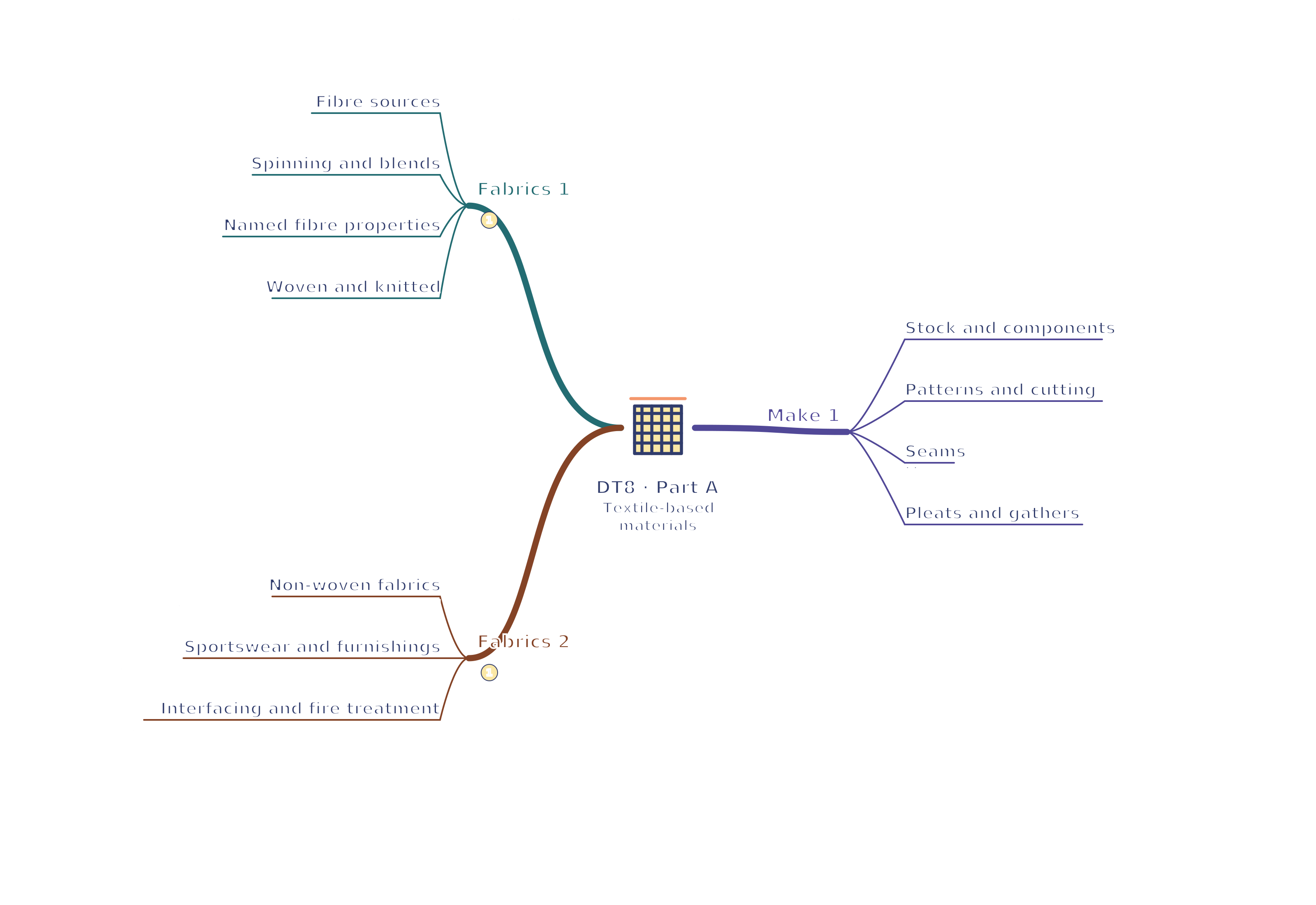
DT8 · Fabrics 1 / Fabrics 2 / Make 1
View DT8 · Fabrics 1 / Fabrics 2 / Make 1 mind mapOpen the full-size map to zoom. Download the PDF to print on A4 or enlarge to A3.
 Mr Kidman's Classroom