Conversion and seasoning — Logs are converted into boards by sawing. Seasoning reduces moisture using air drying or controlled kiln drying. Timber then needs storage suited to its use; moisture changes can cause shrinking, swelling, warping or splitting. Seasoning does not make timber permanently waterproof.
Hardwoods — Oak is strong and durable but relatively costly; mahogany is workable with attractive grain; balsa is very light for models but easily dented. Hardwood origin does not guarantee hardness. Consider sourcing, working properties and intended loads rather than assuming an exotic species is needed.
Ash and beech — Ash combines useful toughness and flexibility for handles and bent parts when appropriately selected. Beech is close-grained and workable for furniture or toys, but moisture exposure and protective requirements matter. Grade, defects, section and construction influence actual performance more than the species name alone.
Softwoods — Pine is common, relatively inexpensive and workable but can contain knots and resin. Cedar and larch can offer useful outdoor durability depending on grade and conditions. Softwoods come mainly from conifers; treatment, section and moisture influence service performance.
Spruce — Spruce is a relatively light workable softwood used in construction and other products with suitable grading. Its relatively low natural decay resistance makes exposure and protection relevant. Compare it with pine and larch using actual grade, loads and moisture conditions rather than assuming all softwoods behave alike.
Manufactured boards — Plywood bonds veneer layers with alternating grain for useful stability and strength. MDF bonds fine fibres into a uniform board suited to smooth painted surfaces. Chipboard uses bonded chips and often a facing for furniture; edges and fixings need care.
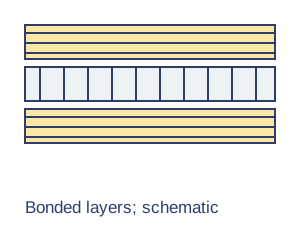
Grain and lamination — Natural timber is generally stronger along the grain than across it. Alternating plywood grain reduces direction-dependent movement and splitting, though properties still depend on layup. Laminated curved members bond shaped layers; joints and adhesive suitability are part of the structure.Plywood: alternating veneer grain. Original schematic; apply the qualifications in the explanation.View full-size diagram
Product selection — Traditional wooden toys need suitable strength, smooth edges, secure joints and appropriate finishes. Flat-pack furniture often uses manufactured board and knock-down fittings for transport and assembly. Check age-appropriate product safety and moisture exposure, not just appearance.
Stock, tools and joints
Stock forms — Timber is supplied as planks, boards, dowels and mouldings by length, width, thickness or diameter. Buy enough for defects, saw kerf and finishing; nominal and finished sizes can differ. Standard woodscrews, hinges and KD fittings speed assembly but require correct pilot holes and board compatibility.
Marking and cutting — Mark from a datum using a rule, square and suitable marking tool. Choose a saw for the cut and grain direction, secure the work and follow local machine rules. Leave a controlled allowance for planing or sanding rather than cutting every part undersize.
Drilling and chiselling — A pilot hole reduces splitting and guides a screw; countersinking seats an appropriate screw head. A chisel removes controlled waste for a joint. Secure work, use suitable sharp tools and keep hands behind the cutting direction; machine operation requires trained supervision.
Planing and sanding — Planing removes shavings to flatten or size timber; sanding abrades the surface through suitable grit stages. Work with grain where appropriate and remove dust before finishing. Dust extraction and respiratory protection follow the actual material and workshop risk assessment, especially for manufactured boards.
Joints — A butt joint is simple but may need reinforcement. A rebate provides location; dowels align and strengthen a glued joint; mortise-and-tenon joints resist loads in framed work. Choose a joint for load direction, material thickness, skill and disassembly rather than ranking joints without context.
Routing and turning — Routing uses a rotating cutter to make grooves or profiles; a lathe rotates suitable work for cylindrical forms. Templates or stops improve consistency. Tooling, workholding, feed and guarding are machine-specific; only trained supervised use is appropriate.
Production, quality and finishes
Quality checks — Check squareness, dimensions, joint fit and surface condition against the drawing. A go/no-go fixture accepts a part within its specified range, giving rapid repeatable checks. A fixture must itself be accurate; a smooth finish cannot compensate for an unsafe loose joint.
Finishing — Prepare by smoothing, removing dust and filling where appropriate. Paint adds opaque colour, varnish forms a generally transparent film and oil can enhance appearance with application-dependent protection. Use a compatible finish for the environment and toy/food-contact needs; observe drying and ventilation guidance.
Preservative treatment — Pressure treatment impregnates timber with preservative to reduce biological attack; tanalising is a named treatment approach. Treated timber still needs appropriate design, drainage and safe disposal. Do not burn treated offcuts or assume treatment removes every maintenance need.
Sourcing and repair — Responsible forestry and traceable certification support sourcing decisions. Design replaceable parts and accessible fixings where possible. A durable repairable product can reduce demand for new timber, but impacts depend on lifespan, coatings, transport and end-of-life separation.
Test yourself
30 questions · Random sets of 10. These quick checks support revision; practise longer explanations and justified judgements too.
Mind map
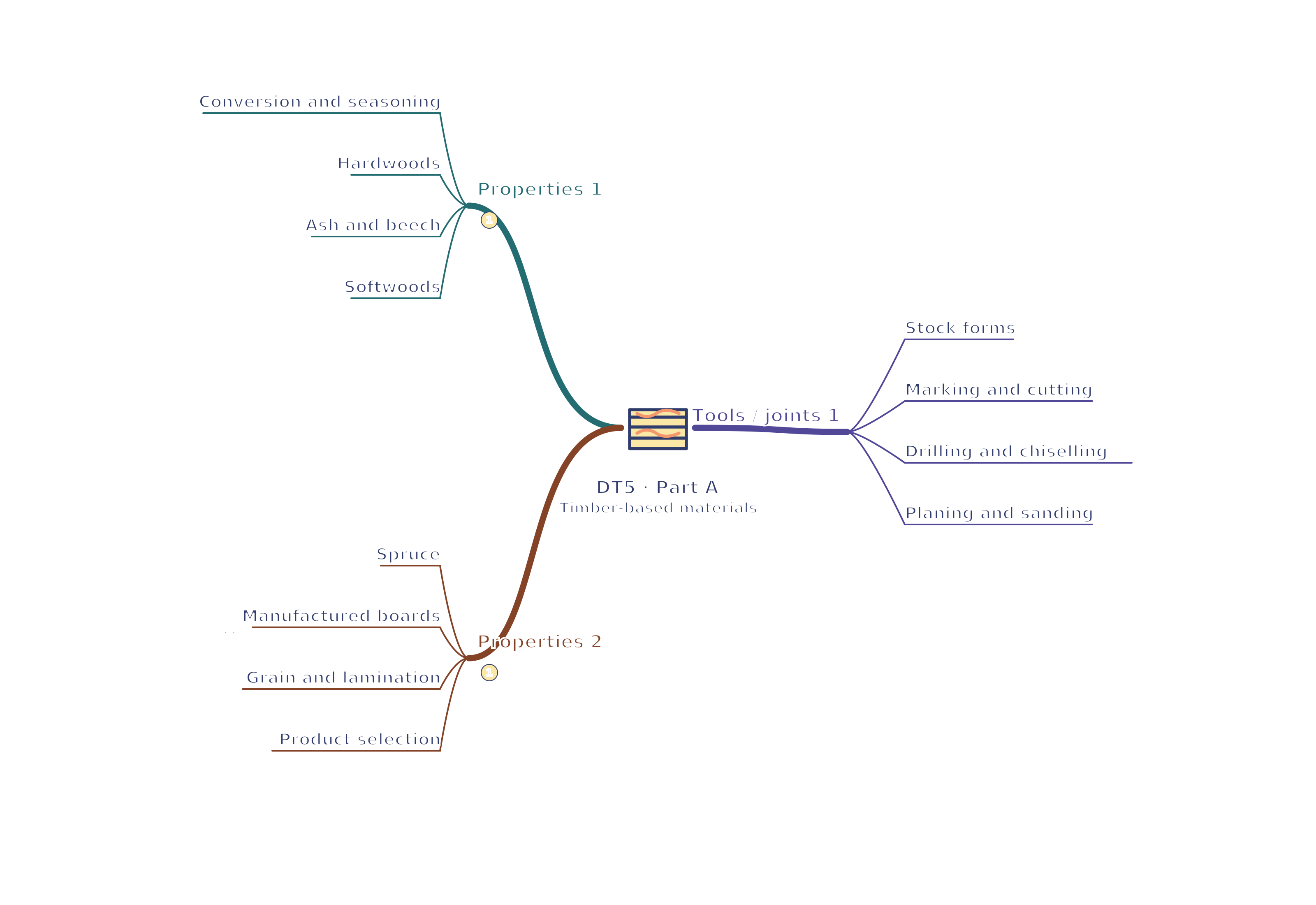
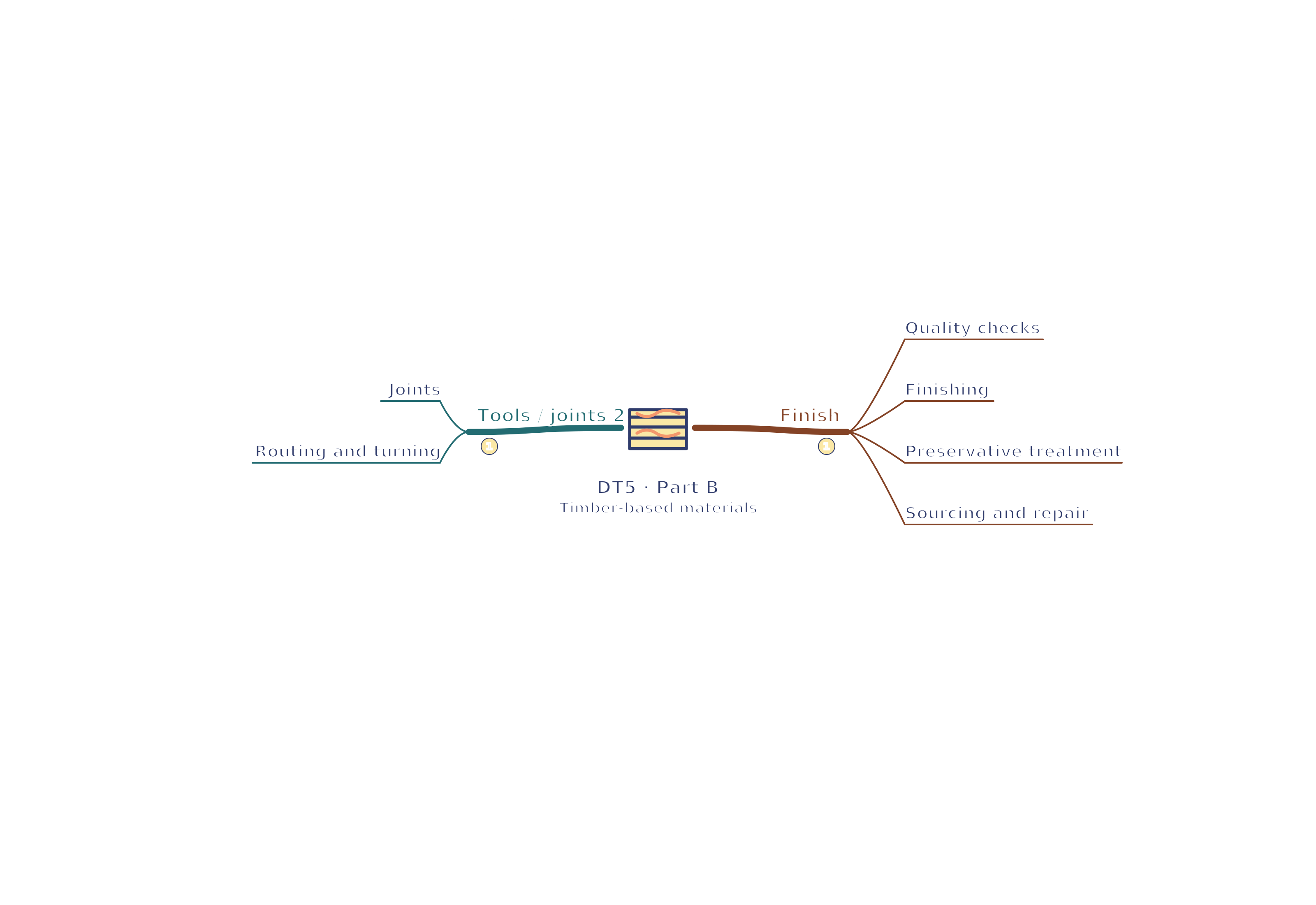
Use the branches to recall the ideas and explain their connections. Check the revision notes for the full detail.
 Mr Kidman's Classroom