Develop theatrical skills and justify choices with evidence. Use actual centre-approved material; practical skills and extended writing need PLC tasks and teacher feedback.
Revise the key ideas
Text, world and context
Specified adaptation — The course text is Noughts & Crosses, Malorie Blackman's story adapted for the stage by Sabrina Mahfouz and published by Nick Hern Books. This adaptation was first presented by Pilot Theatre in 2019. Use the complete specified play and check the scene in your copy; the novel, television series and Dominic Cooke adaptation do not have identical wording or structure.
A fictional divided society — Crosses are the Black ruling group in the play's imagined society; Noughts are white and face entrenched disadvantage. This reversal invites audiences to examine how institutions and everyday behaviour normalise racial hierarchy. It is a fictional construction, not a claim that skin colour determines capability or that real histories can be reversed without differences.
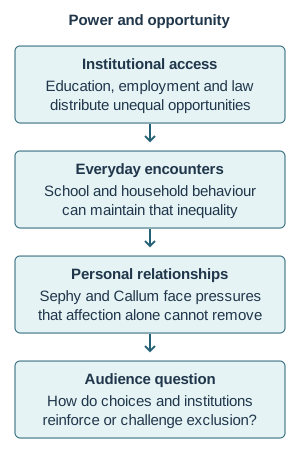
Structural discrimination — Discrimination is more than an individual's insult. Access to education, employment and legal authority shapes opportunity before a particular encounter begins. Consider how a character's freedom to speak or act depends on these institutions. Identify the institution and consequence in each scene rather than explain every conflict only as personal dislike.Institutional barriers affect personal opportunities and relationships. Original teaching schematic. Open full-size diagram
Social and cultural relevance — The play invites discussion of racism, unequal opportunity, political violence and belonging. Connections with segregation and civil-rights struggles can help explain audience recognition, but the fictional setting is not a documentary reconstruction of one historical place. Research a specific parallel and distinguish evidence about real history from the theatrical invention.
Contemporary theatrical context — Mahfouz's adaptation brings Blackman's narrative into live theatre with spoken encounters, storytelling and changing locations. Pilot's production is useful evidence of one interpretation, rather than a required aesthetic for the examination. A proposed design or performance must serve the published text even when it differs from that production.
Sensitive material — The story includes racist language, violence, coercion, family distress and death. Discuss their dramatic function and consequences respectfully under teacher guidance. A character's prejudiced statement is not an endorsed fact. Practical exploration should use safe agreed methods; realism never requires reenacting harm or pressuring a partner.
Relationships and dramatic functions
Sephy Hadley — Sephy is a Cross whose affection for Callum conflicts with family and social expectations. Her attempts at solidarity can miss the dangers he faces because their experiences of power differ. Track how she listens, resists and makes decisions across the play, rather than treat her only as innocent or rebellious in every scene. Use particular actions to justify a changing interpretation.
Callum McGregor — Callum is a Nought whose relationship with Sephy is shaped by educational exclusion, family pressures and later involvement in the Liberation Militia. His desire for dignity and belonging does not make every decision defensible. Track the pressure at each stage while distinguishing explanation of violence from approval. An actor needs different objectives in intimate, institutional and militant encounters.
Kamal Hadley — Kamal is Sephy's father and Home Secretary. His institutional power intersects with control of family behaviour and public reputation. Examine who can challenge him, what he can threaten and how his authority affects others' choices. A restrained delivery may convey power as effectively as anger if the text and relationship support it.
Jasmine Hadley — Jasmine is Sephy's mother. Her relationship with Kamal and the family shows tensions beneath privilege, while her treatment of Meggie exposes unequal power within a personal relationship. Her actions around legal help complicate a simple account of the Hadleys. Locate contradictory choices rather than flatten her into one emotional label.
Minerva Hadley — Minerva is Sephy's sister. Their interactions reveal differing attitudes within the same family, not a universal personality shared by every Cross. Consider how family allegiance, appearances and personal feeling operate in the extract. Identify what Minerva contributes to Sephy's conflict at a particular moment, using the dialogue and stage directions.
Meggie McGregor — Meggie is Callum's mother and works for the Hadley household. The unequal employment relationship affects the families' access to each other. Examine her protective response to danger and loss alongside the limits placed on her choices. Do not confuse lack of institutional power with absence of agency or feeling.
Ryan McGregor — Ryan is Callum's father and becomes involved with the Liberation Militia. The bombing and its legal consequences bring political conflict into family life. Analyse the difference between intended resistance and actual harm, and how other characters respond. His experience can explain pressure on Callum without making their decisions identical.
Jude McGregor — Jude is Callum's brother. His commitment to militant action can conflict with Callum's feelings for Sephy and complicates family loyalty. Trace when he challenges, persuades or threatens, and how the relationship changes. Avoid presenting all Noughts as sharing Jude's response or treating militancy as an inevitable consequence of identity.
Lynny and the cost of hostility — Lynny, also known as Lynette, is Callum's sister. Her experience of an attack connected with an interracial relationship, her distressed sense of identity and her death expose the personal cost of prejudice. Interpret these events with care: do not turn distress into a comic device or reduce a death to a universal clinical explanation. Study how grief changes the family's subsequent action.
Other roles and group pressure — School figures and peers, political associates, the Liberation Militia and legal/public voices expand the conflict beyond two lovers. For each minor role in a chosen extract, ask what new pressure or information it brings and whose action changes. Read the actual roles in Mahfouz's play instead of importing a similarly named figure or scene from another adaptation.
Dramatic journey and turning points
The opening and household rupture — The relationship between the two young people grows through their families' contact, but Meggie's dismissal exposes how dependent that access is on the Hadleys' power. The opening establishes both affection and vulnerability. Compare private closeness with the adult world that can separate them, noticing how storytelling and staged action organise what spectators learn.
Heathcroft and integration — Callum's admission to Heathcroft initially offers the possibility of shared education with Sephy. Protests, hostility and everyday separation reveal that formal access differs from acceptance. Examine how group action and individual reactions make that difference visible. Sephy's intentions do not guarantee that her interventions protect Callum or improve his situation.
Friendship under scrutiny — The school encounters put personal affection under pressure from peers and social rules. What feels like support to one character may create exposure or humiliation for another. In an extract, identify the immediate disagreement and the wider inequality that intensifies it. Explain changes in distance, tone or reaction with reference to this specific pressure.
Family loss and escalation — Lynny's death intensifies family grief and contributes to escalating conflict. Ryan and Jude's involvement with the Liberation Militia places family members in danger beyond the home. Connect events causally without claiming that trauma mechanically forces every person to choose violence. The dramatic focus includes decisions and their consequences for others.
The bombing and aftermath — A shopping-centre bombing endangers civilians. Callum gets Sephy out before the explosion, while the aftermath brings arrest, prosecution and pressure on the McGregors. Distinguish the personal rescue from the moral and social cost of the attack. The incident shifts the relationship between private knowledge, public evidence and institutional judgement.
Law, mercy and loss — Ryan is condemned after the trial; the sentence is changed to imprisonment, and he later dies during an attempted escape. Consider how the sequence affects the family's hope and despair and how power is exercised. Do not merge these events with Callum's later fate. The legal scenes create their own dramatic pressures rather than simply provide background dates.
Separation and missed communication — Sephy plans to leave for boarding school and offers Callum a shared escape, but they fail to connect in time. Their separation opens a later phase of the story in which experiences and allegiances have changed. Examine how the text compresses passing time and lets the audience understand missed opportunity without inventing actions outside the play.
Kidnapping and divided allegiance — Callum's later participation in Sephy's kidnapping with the Liberation Militia confronts the audience with a changed power relationship. Their conversation reveals unresolved feeling, but confinement and threat remain essential to the situation. Interpret vulnerability, agency and contested accusations carefully; affection does not make the surrounding coercion disappear.
Pregnancy, arrest and the final choices — Sephy's pregnancy and the identification of Callum as the father draw public attention and further intervention. Callum is arrested; Kamal seeks to control the public account through a proposed deal. Track what each character is asked to concede and why. Support discussion of the accusations and Sephy's testimony with the actual text rather than sensationalised retelling.
The ending and Callie Rose — Callum is executed, and the child Callie Rose links the two families and social groups. The ending can suggest the possibility of a different future while leaving the damage and inequality visible. Explain how a final theatrical image might communicate both loss and qualified hope. The child's existence does not prove society has already become equal.
Form, language and themes
Episodic storytelling — The play moves between locations and episodes, with narration and retrospective framing helping connect events. Much of the central journey develops in causal order, while memories and time shifts complicate a strictly linear description. Track who supplies information and from which perspective; clear transitions let spectators recognise where they are in the story.
Narration and direct address — When characters tell or comment on events, spectators gain access to perspective as well as enacted encounters. An actor may shift focus between a partner and the audience, but the change needs to be clear. Narration can create intimacy or invite judgement. Do not assume that direct address prevents an emotional response or that every narrated account is impartial.
Tragedy and social critique — The lovers' danger and devastating outcome support a tragic reading, while the political world invites criticism of inequality. Comparisons with Romeo and Juliet can illuminate divided communities and forbidden affection, but the plays are not identical: race, institutions and militant politics have specific functions here. Explain the actual genre features rather than rely on the comparison alone.
Language, dialogue and stage directions — Notice forms of address, interruptions, racist terms, repeated phrases, changes of register and the relationship between speech and implied thought. Stage directions organise actions and perspectives alongside dialogue. Select a specific feature from your copy and explain its effect; do not invent quotations or assume the same page number in every edition identifies the same line.
Identity, loyalty and resistance — Personal attachment, family loyalty and group belonging can pull in different directions. A character may defend one relationship while damaging another. Connect themes to turning points and contrasting choices, not just list words such as racism and love. Consider alternative readings while keeping them supported by the published play.
Motifs and public narratives — A recurring place such as the beach can offer an apparent refuge whose meaning changes as the conflict develops. News and public accounts can turn private relationships into contested stories. Identify repetition and variation in the text before claiming a motif. A director's added symbol is a proposal, not automatically a feature written by Mahfouz.
Test yourself
30 questions · Random sets of 10. These quick checks support revision; practise longer explanations and justified judgements too.
Mind map
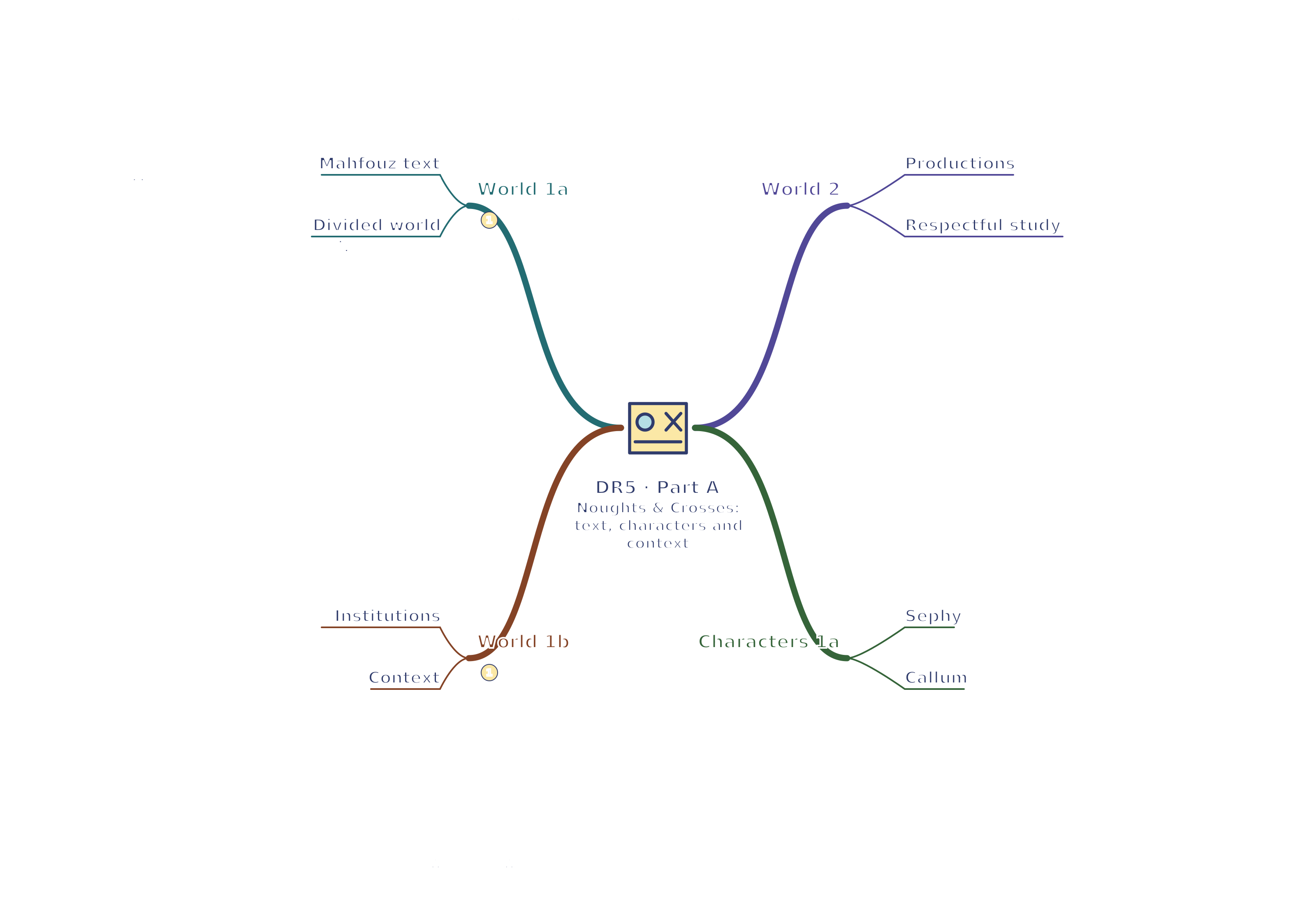
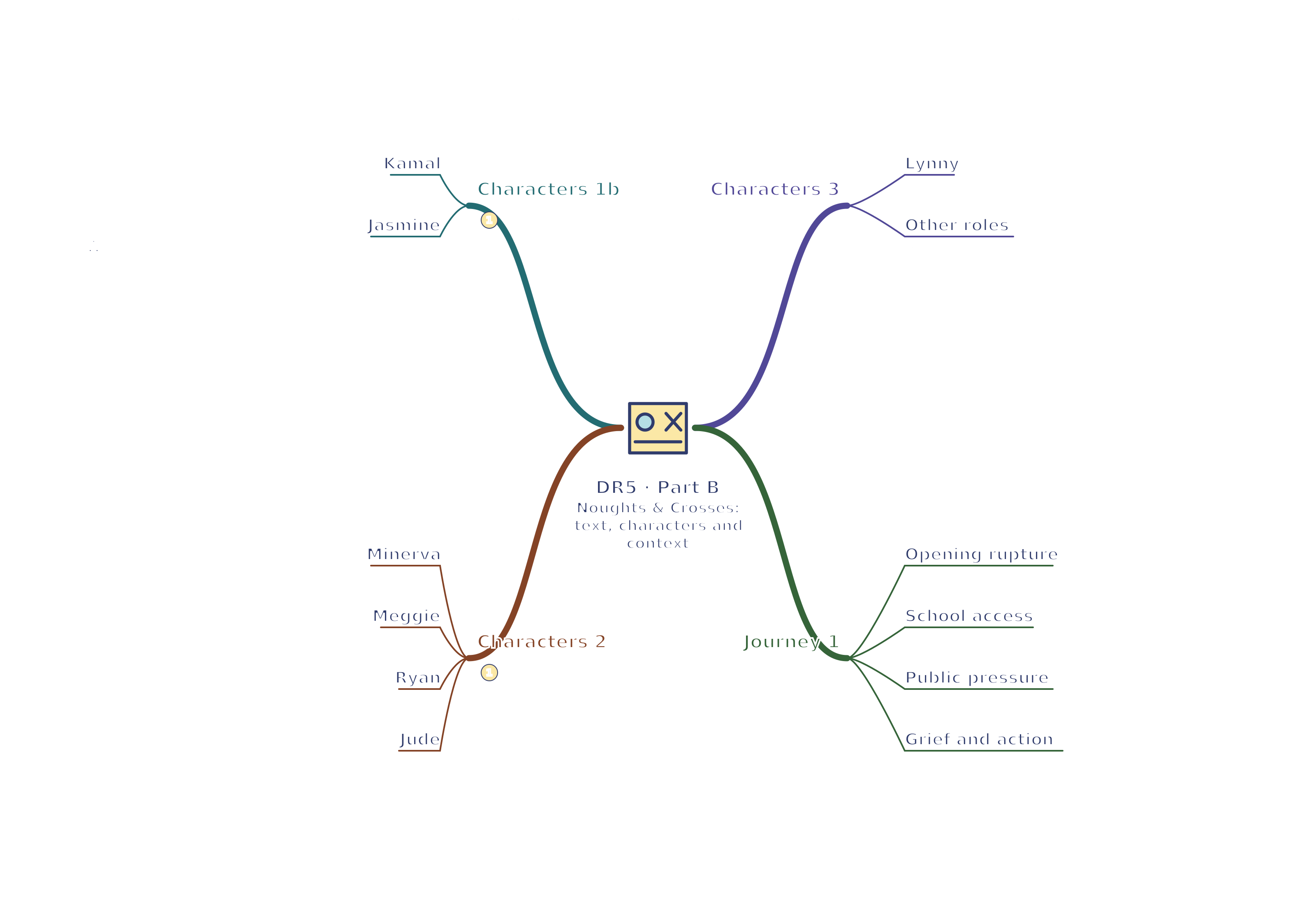
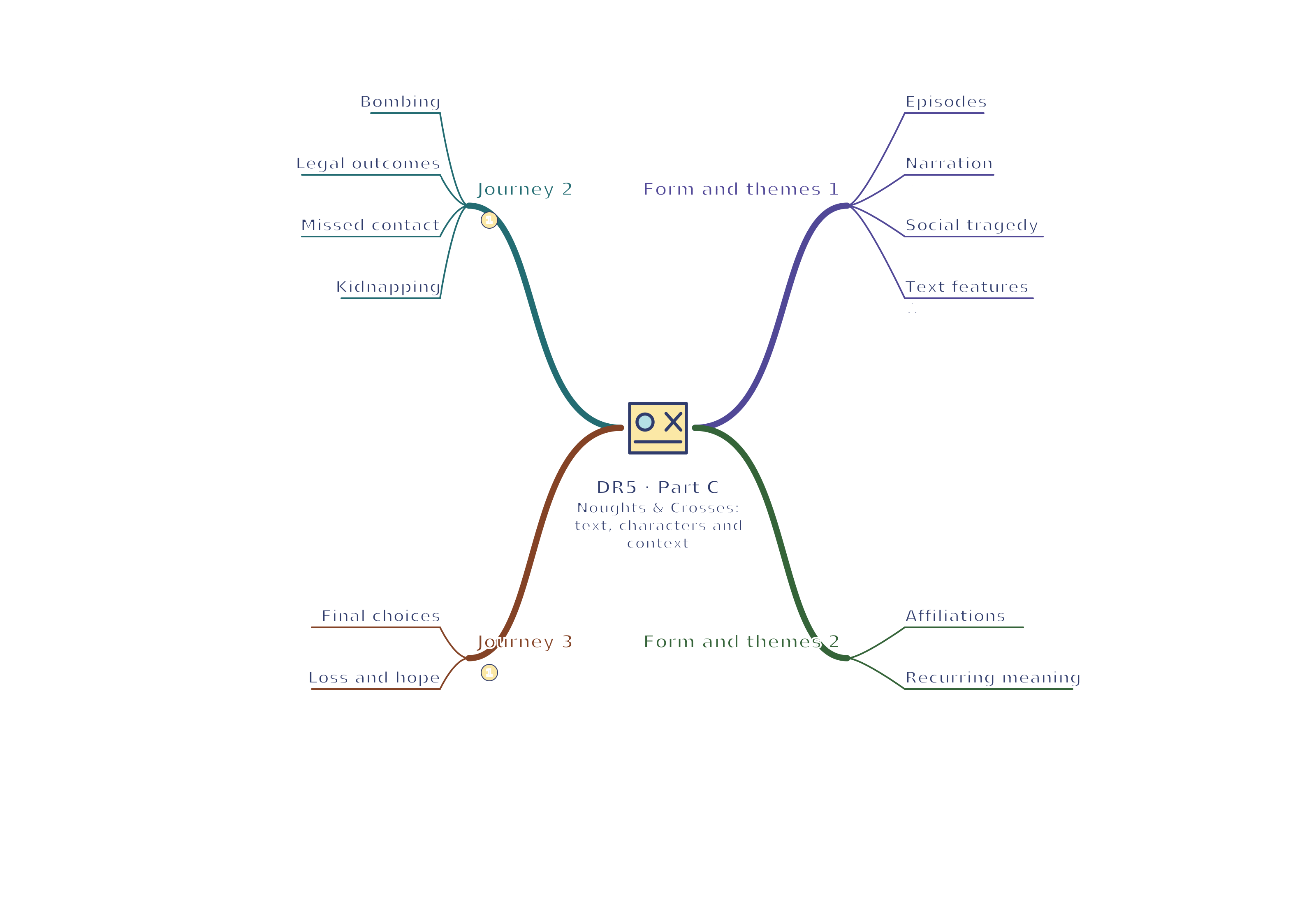
Use the branches to recall the ideas and explain their connections. Check the revision notes for the full detail.
DR5 · World 1a / World 1b / World 2 / Characters 1a
View DR5 · World 1a / World 1b / World 2 / Characters 1a mind mapOpen the full-size map to zoom. Download the PDF to print on A4 or enlarge to A3.
View DR5 · Characters 1b / Characters 2 / Characters 3 / Journey 1 mind mapOpen the full-size map to zoom. Download the PDF to print on A4 or enlarge to A3.
DR5 · Journey 2 / Journey 3 / Form and themes 1 / Form and themes 2
View DR5 · Journey 2 / Journey 3 / Form and themes 1 / Form and themes 2 mind mapOpen the full-size map to zoom. Download the PDF to print on A4 or enlarge to A3.
 Mr Kidman's Classroom