Analyse actual media products and practise original creation. Quick checks support concepts; use PLC tasks for evidence-led analysis and practical demonstration.
Revise the key ideas
Reading television
Set episodes — The current OCR television pair is Vigil, Series 1 Episode 1, and The Avengers, Series 4, The Gravediggers. Use the episode title to identify the historical product because listings can differ. Study each complete episode and practise unfamiliar extracts from them. These notes guide observation and analysis; they do not replace viewing.
Camera and framing — An establishing shot locates action; a close-up foregrounds expression or an object. A high or low angle can shape apparent vulnerability or authority; movement can follow a character or reveal space. Explain the actual relation between camera and subject. Do not infer a psychological effect from the shot name alone.
Mise-en-scène — Mise-en-scène includes what is placed before the camera. Naval interiors in Vigil can create confinement; The Avengers uses recognisable British settings and stylised clothing. Props can become clues. Locate a feature and connect it to character, genre or context, without assuming that every costume represents all people of a period.
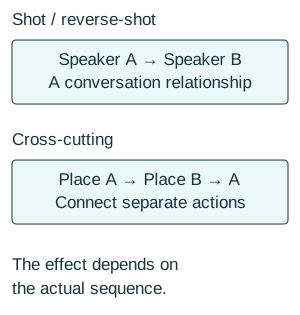
Editing — Continuity editing helps viewers follow time and space. Shot/reverse-shot organises exchanges; cross-cutting connects separate actions; a cut to a reaction can guide sympathy. Short shot durations may create urgency, while longer takes can sustain unease. Analyse the sequence rather than counting cuts without discussing their function.Two illustrative editing relationships. Original teaching schematic.
Sound — Diegetic sound belongs to the story world, such as dialogue or an alarm; non-diegetic sound includes added score. Sound bridges can connect shots. Silence, restrained music and sudden sounds can change tension. The same sound may move between categories; explain what characters can plausibly hear in the relevant moment.
Narrative organisation — Vigil sustains investigations and unanswered questions across episodes; The Gravediggers offers a more self-contained adventure. Both use clues, delay and danger. Restricting information can align viewers with investigators. Compare actual endings and ongoing strands rather than claiming every serial lacks any resolution or every episodic drama has no continuing characters.
Genre hybridity — Vigil combines detective investigation with submarine thriller elements; The Avengers mixes espionage, adventure, wit and stylisation. Explain the evidence of repetition and variation. The unusual mix can distinguish a programme within familiar genres and invite different audience pleasures.
Representation and context
Vigil and institutional power — DCI Amy Silva investigates aboard a Royal Navy submarine, where military routines and secrecy complicate a civilian investigation. Examine dialogue, framing and access to information to show how authority is negotiated. Different characters can give conflicting views of policing, defence and accountability; the drama is a constructed story rather than a documentary.
Amy Silva and agency — Amy's investigative role offers a woman professional authority, while personal experiences and pressures give her vulnerabilities. Analyse which actions she initiates and how others respond. Emotional difficulty does not automatically cancel agency, and a female lead alone does not establish that every aspect of the programme challenges gender conventions.
Contemporary relationships — Vigil includes same-sex relationships as part of its character world. Examine their narrative importance and how they are framed rather than treating sexuality as a complete explanation of a character. Discuss inclusion, conflict and audience interpretations using evidence, avoiding unsupported claims about every contemporary viewer's values.
Steed and Peel — John Steed's formal clothing and manner and Emma Peel's physical competence and fashion contribute to their personas. Peel can challenge expectations of female passivity through action and wit; the camera and costume may also invite attention to appearance. Support both possibilities with located examples rather than making a single blanket judgement.
The Gravediggers — The historical episode links a railway-related threat with a cemetery setting and eccentric characters. Track how clues, disguises, setting and danger move the investigation forward. Use the actual viewed sequence for close analysis; do not import plot details from a different Avengers episode.
1960s contexts — Fashion, changing gender roles and the appeal of stylish British popular culture help contextualise The Avengers. National institutions and class-coded manners can coexist with playful modernity. A text may negotiate change rather than simply reflect one unified 1960s attitude. Compare what the episode actually represents with historical evidence.
Comparative representation — For authority, compare who gets to question others, whose viewpoint the camera privileges and who resolves problems. For gender, compare dialogue, action, framing and costume. Account for genre, date and broadcaster, and recognise variation within each programme. A contemporary production is not automatically progressive in every representation.
Industry and audience
BBC and public service — Vigil was produced by World Productions for the BBC. Distinguish independent production from commissioning and broadcasting. BBC public-service purposes and access arrangements help explain investment in drama, but creative choices are also shaped by genre, budgets and competition for audiences. Use the broadcaster and production identities for the product's release period.
ITV and commercial television — The Avengers was made by ABC Television and shown on ITV in the 1960s. Advertising-funded commercial television offered a different model from the BBC. Do not confuse this historical ABC with the American broadcaster. International sales and recognisable stars could extend commercial reach beyond the UK.
Technology and availability — In the 1960s viewers depended much more on scheduled broadcasts; contemporary audiences can use catch-up and on-demand services. Production equipment, screen formats and viewing devices also change. Availability on a platform now is different from the original distribution context. Do not assume all viewers have equal access or watch in the same way.
Scheduling and regulation — Vigil's original BBC One evening scheduling positioned it as adult drama. The UK watershed concerns protection of children around 9pm, alongside contextual broadcast rules; it does not permit anything after that time. Historical regulation and contemporary Ofcom arrangements differ. Explain how scheduling, content and access relate rather than substituting an age guess.
Audience pleasures — Audiences may enjoy puzzle-solving, emotional engagement, familiar performers, stylish adventure or debate about institutions. Apply uses and gratifications to a scene or programme feature. Some viewers may welcome a representation while others question it; neither reaction is guaranteed by a demographic category.
Extract method — During practice, note camera, sound, editing and mise-en-scène, then select the strongest linked examples. Keep the question's focus visible. An answer about representation needs an explanation of how the technical feature constructs a person or group, not a separate list of techniques and character traits.
Test yourself
30 questions · Random sets of 10. These quick checks support revision; practise longer explanations and justified judgements too.
Mind map
Use the branches to recall the ideas and explain their connections. Check the revision notes for the full detail.
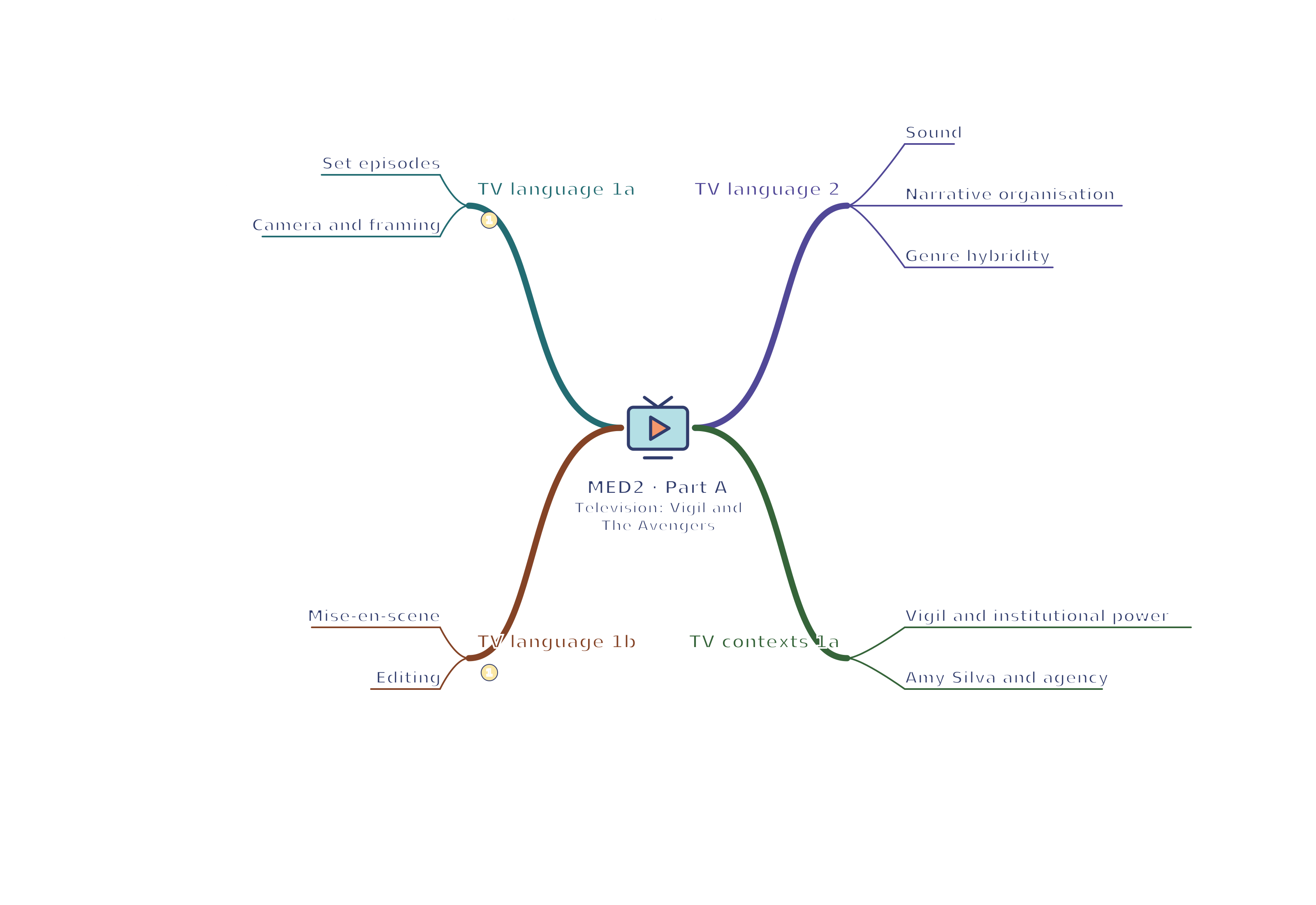
MED2 · TV language 1a / TV language 1b / TV language 2 / TV contexts 1a
View MED2 · TV language 1a / TV language 1b / TV language 2 / TV contexts 1a mind mapOpen the full-size map to zoom. Download the PDF to print on A4 or enlarge to A3.
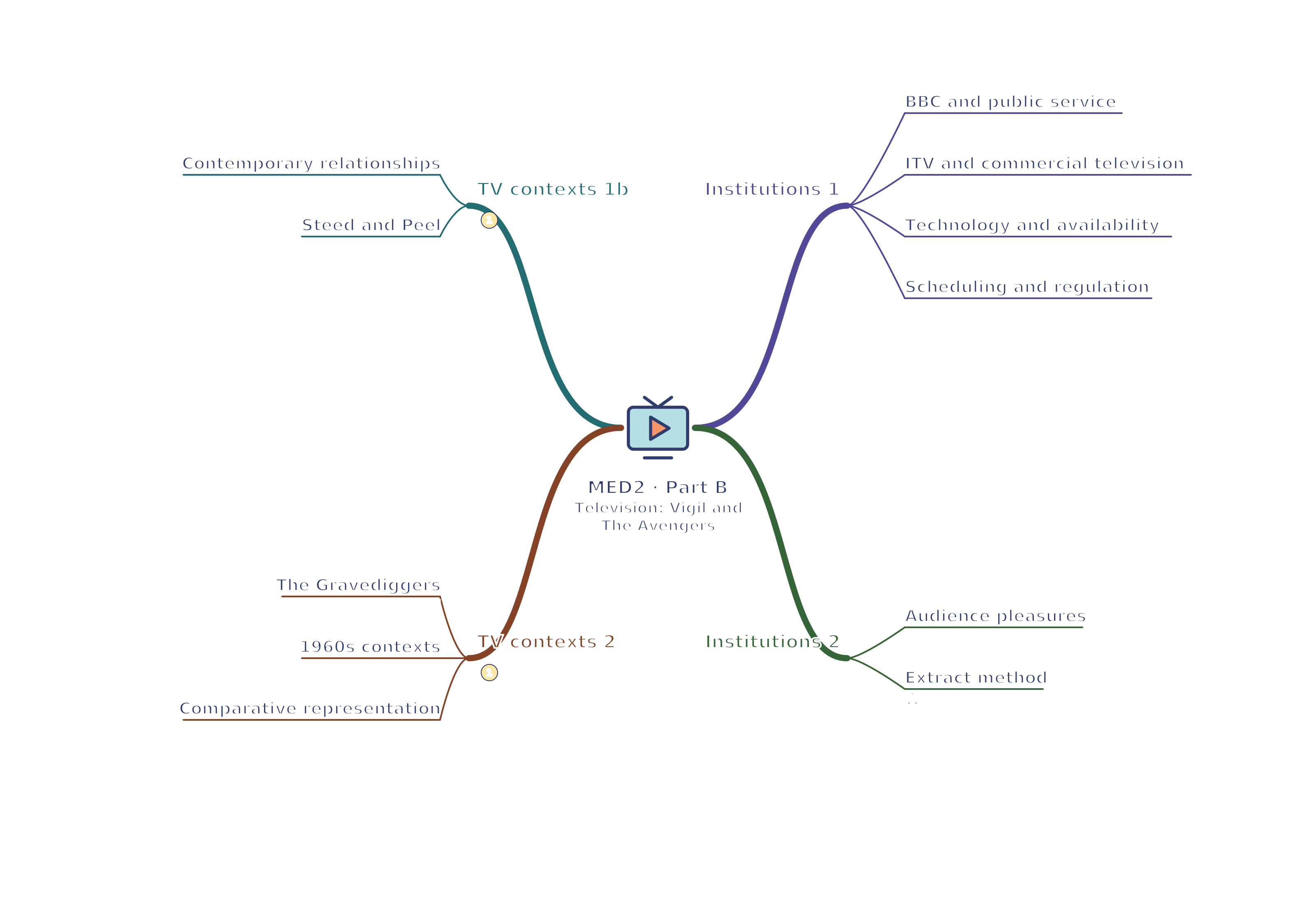
MED2 · TV contexts 1b / TV contexts 2 / Institutions 1 / Institutions 2
View MED2 · TV contexts 1b / TV contexts 2 / Institutions 1 / Institutions 2 mind mapOpen the full-size map to zoom. Download the PDF to print on A4 or enlarge to A3.
Set episodes: Study Vigil S1 E1 and The Gravediggers
Camera and framing: Shot size, position and movement organise attention
TV language 1b
Mise-en-scène: Setting, costume, lighting and performance work together
Editing: Order and duration create relationships and pace
TV language 2
Sound: Distinguish story-world sound from added scoring
Narrative organisation: Serial suspense differs from a self-contained resolution
Genre hybridity: Vigil joins crime investigation with political and military tension
TV contexts 1a
Vigil and institutional power: Investigating inside a submarine creates conflicting authorities
Amy Silva and agency: Expertise and vulnerability can coexist
TV contexts 1b
Contemporary relationships: Representation includes intimacy and identity
Steed and Peel: Style and partnership shape authority in The Avengers
TV contexts 2
The Gravediggers: A strange threat combines investigation and stylised adventure
1960s contexts: Social change and older conventions can appear together
Comparative representation: Compare the same group or relationship in both episodes
Institutions 1
BBC and public service: Vigil is a contemporary BBC drama
ITV and commercial television: The Avengers belongs to a different television system
Technology and availability: Scheduled viewing and on-demand viewing offer different experiences
Scheduling and regulation: Context of broadcast can shape audience expectations
Institutions 2
Audience pleasures: Tension, partnership and interpretation can attract viewers
Extract method: Watch for coordinated choices and revisit evidence
Connections
TV language 1a → TV language 1b: Technical choices construct television meanings
Part connections
MED2 · TV language 1a / TV language 1b / TV language 2 / TV contexts 1a: TV language 1a → TV language 1b — Technical choices construct television meanings
MED2 · TV contexts 1b / TV contexts 2 / Institutions 1 / Institutions 2: TV contexts 1b → TV contexts 2 — Technical choices construct television meanings
 Mr Kidman's Classroom