Analyse actual media products and practise original creation. Quick checks support concepts; use PLC tasks for evidence-led analysis and practical demonstration.
Revise the key ideas
Industry and the franchise
Set products — Study The Lego Movie film as an industry case, its poster campaign and UK television trailer for promotional language, representation and audience, and its video game for language, industry and audience. The full film is not a required close textual analysis in the same way as the television extract. Keep evidence attached to the relevant product.
Production and distribution — The 2014 film connects the LEGO brand with Warner Bros film production and distribution, with animation work involving Animal Logic. A brand owner, creative studio and distributor have different functions. Licensing intellectual property permits controlled use of characters and branding; it does not mean every contributing company is the same organisation.
Conglomerates — A conglomerate owns businesses in multiple sectors or media forms. Warner's activities provide a way to study ownership and resources around the release. Shared expertise, distribution and promotion can reduce costs or risk, but large scale does not guarantee commercial success or eliminate creative negotiation with brand partners.
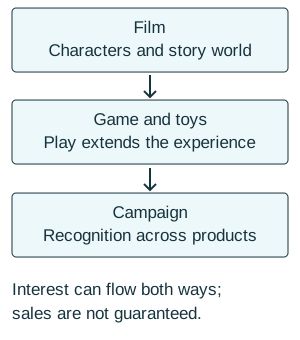
Synergy and cross-promotion — A film introduces characters and a world; a game extends activity; toys and promotional material encourage recognition. Connected products can advertise one another and maintain attention beyond release. Explain how the same brand element travels between products, and distinguish this promotional relationship from a claim that everyone buys all of them.Connected products can reinforce brand interest. Original teaching schematic.
Risk and franchise appeal — A familiar toy brand and recognisable licensed characters may attract established fans, while humour and narrative broaden appeal. Existing awareness helps marketing but a film still needs effective distribution and audience interest. Sequels and franchise extensions seek continued revenue; repetition can also fatigue audiences.
Funding and revenue — Films can earn through cinema, home releases, licensed distribution and associated rights. Revenue must be considered against production, marketing and other costs; headline box office does not equal producer profit. Use verified figures with dates if making a numerical claim. No earnings total is needed to explain the funding model.
Promotional language and representation
Poster hierarchy — Analyse the main ensemble poster and the centre's campaign character posters. Relative size, central position, depth and lighting make some figures prominent. Compare individual character positioning with the group composition. Identify which actual poster you mean; not every campaign poster contains the same layout or characters.
Brand and written codes — The LEGO styling makes the brand recognisable; the film title identifies the release. Taglines can establish tone or promise, and release information directs action. Explain how image and words combine through anchorage. A recognisable logo can promote the toy brand as well as the film without being proof of audience enjoyment.
Emmet and the ordinary hero — Emmet's ordinary worker identity can support an accessible hero while surrounding action signals exceptional adventure. Costume and expression can suggest the contrast between everyday identity and danger. Analyse the advertising's selection, rather than using later film events as evidence for a poster feature that is not visible.
Other characters — Wyldstyle's active persona, Batman's familiarity and other characters' contrasting appearances can offer several appeals. Consider which characters have agency and prominence and how gender is constructed. A campaign can challenge one stereotype while retaining another; claims need evidence from the chosen poster or trailer.
UK television trailer — The UK campaign used LEGO recreations of familiar advertisements alongside film promotion. This draws on intertextual recognition and the novelty of transforming an ordinary advertising environment. Study the specified trailer or promotional sequence supplied by the centre; explain the connection to brand and audience rather than describing unrelated online trailers.
Moving-image persuasion — A trailer can select action, comic moments, stars and spectacular settings, using rapid editing and music to create excitement. It offers a promise of the experience while withholding much of the story. Locate examples and explain how they appeal to intended audiences. A trailer's representation can differ from the balance of the complete film.
Game and audiences
Game industry — The Lego Movie Videogame is associated with TT Games development and Warner Bros publishing. Publishing involves marketing and distribution as well as release management. Platform versions and release arrangements can differ. Study the specified game rather than assuming every LEGO game uses identical mechanics or business arrangements.
Game language — Visual LEGO construction, character abilities, collectible items, instructions and rewards guide player actions. The developer describes building virtual creations and playing through locations and characters associated with the film. Familiar figures such as Batman connect licensed properties, while construction turns the brand's imaginative-play identity into action. Interactive language differs from a poster because players act within programmed rules. Explain a located mechanic and its feedback rather than describing game graphics as if they were a still film image.
Adaptation and participation — A game lets audiences act through characters, solve tasks and repeat attempts. Familiar settings and branded figures connect it with film marketing; playable goals supply additional pleasures. A player can enjoy challenge or cooperation even without remembering every film event. Interactivity remains constrained by the designed system.
Age classification — The specified game is PEGI 7. PEGI labels concern content and age suitability; a higher age rating does not mean a harder game. Discuss the actual platform/version when checking a rating. A family-oriented classification can support parental decisions but does not guarantee that all children will enjoy or be able to complete it.
Multiple audiences — Children may recognise toys and enjoy action; older audiences may enjoy familiar characters, parody and nostalgia; parents may value shared activity. These are plausible appeals to support with evidence, not fixed traits of all people in an age group. Different campaign elements can address different segments of a broad audience.
Uses and gratifications — Comedy can support entertainment; familiar characters can support identity; cooperative play can support social interaction. Explain the feature and the likely use. Do not claim that a promotional product automatically satisfies every gratification equally or that everyone interprets the brand positively.
Context and judgement — The franchise celebrates imaginative construction while operating as commercial brand promotion. This tension can support a reasoned judgement about messages and audience appeal. Use evidence from products and industry relationships; recognising commerce does not prove that all audiences are passive or that creativity is absent.
Test yourself
30 questions · Random sets of 10. These quick checks support revision; practise longer explanations and justified judgements too.
Mind map
Use the branches to recall the ideas and explain their connections. Check the revision notes for the full detail.
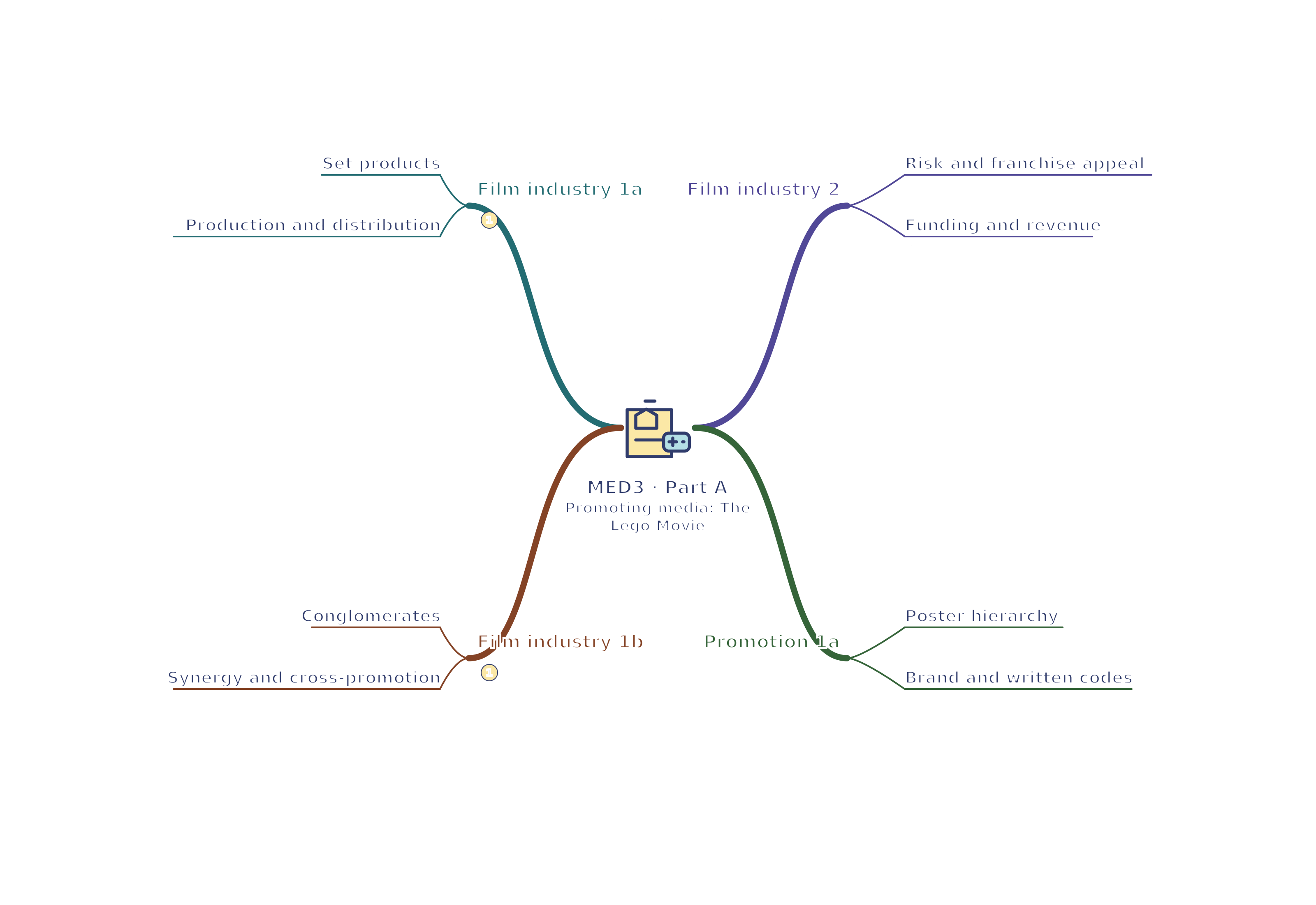
MED3 · Film industry 1a / Film industry 1b / Film industry 2 / Promotion 1a
View MED3 · Film industry 1a / Film industry 1b / Film industry 2 / Promotion 1a mind mapOpen the full-size map to zoom. Download the PDF to print on A4 or enlarge to A3.
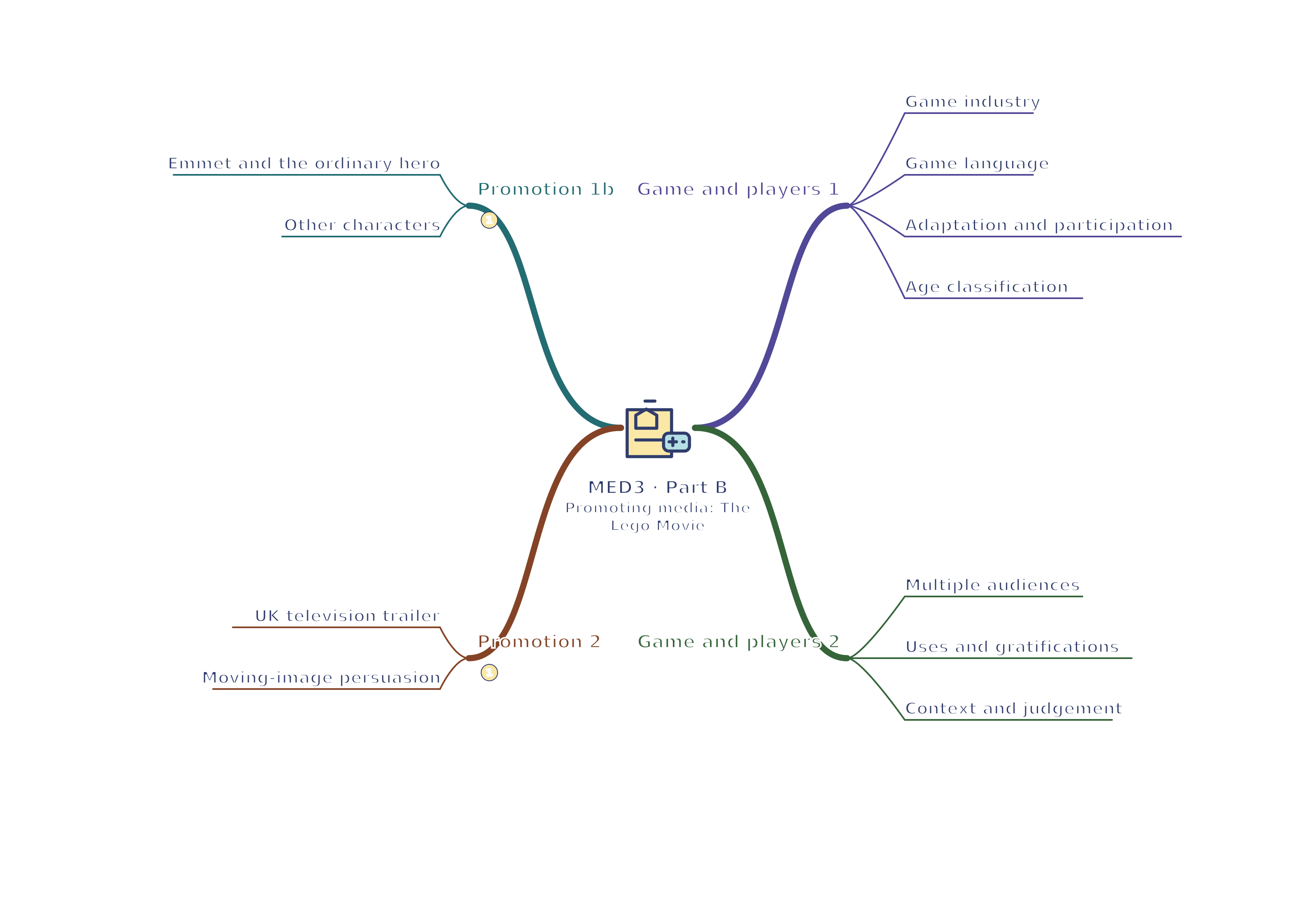
MED3 · Promotion 1b / Promotion 2 / Game and players 1 / Game and players 2
View MED3 · Promotion 1b / Promotion 2 / Game and players 1 / Game and players 2 mind mapOpen the full-size map to zoom. Download the PDF to print on A4 or enlarge to A3.
Set products: Film industry, poster campaign, UK trailer and game have distinct scope
Production and distribution: A brand collaboration becomes a mass-market film
Film industry 1b
Conglomerates: A large group can operate across media markets
Synergy and cross-promotion: Film, toy, advertising and game can reinforce interest
Film industry 2
Risk and franchise appeal: Recognition can reduce uncertainty without guaranteeing sales
Funding and revenue: Box office is not the same as profit
Promotion 1a
Poster hierarchy: Composition directs attention to character and spectacle
Brand and written codes: Logo, title and release information perform different jobs
Promotion 1b
Emmet and the ordinary hero: Centrality can reposition an apparently unremarkable character
Other characters: Different personas widen possible points of identification
Promotion 2
UK television trailer: An advertising break takeover creates an event
Moving-image persuasion: Editing and sound compress the promise of a film
Game and players 1
Game industry: Development and publishing are separate roles
Game language: Objectives, characters and feedback communicate play
Adaptation and participation: Playing offers a different relation to the story world
Age classification: PEGI signals content suitability, not difficulty
Game and players 2
Multiple audiences: Brand nostalgia and child play can coexist
Uses and gratifications: Apply a need to a particular promotional or game feature
Context and judgement: Consumer branding and creativity can be in tension
Connections
Film industry 1a → Film industry 1b: Franchise ownership supports connected promotion
Part connections
MED3 · Film industry 1a / Film industry 1b / Film industry 2 / Promotion 1a: Film industry 1a → Film industry 1b — Franchise ownership supports connected promotion
MED3 · Promotion 1b / Promotion 2 / Game and players 1 / Game and players 2: Promotion 1b → Promotion 2 — Franchise ownership supports connected promotion
 Mr Kidman's Classroom