Analyse actual media products and practise original creation. Quick checks support concepts; use PLC tasks for evidence-led analysis and practical demonstration.
Revise the key ideas
Language and meaning
The framework — Media language means the choices that communicate meaning; representation concerns how people, events and ideas are constructed; industries concern production, distribution and funding; audiences concern targeting, use and interpretation. Contexts help explain these choices. A close-up can construct intimacy, support a star brand and address fans at the same time.
Denotation and connotation — Denotation is the literal content of a sign: a red jacket, for example. Connotation is an associated meaning such as rebellion or urgency. Associations depend on culture and context; red does not always mean danger. Locate a feature, describe it accurately and justify your interpretation using surrounding evidence.
Codes and conventions — Technical codes include camera and editing; symbolic codes include clothing, objects and setting; written codes include headlines and captions. A convention is a familiar way of using these choices, such as a prominent masthead. Conventions help recognition but producers may depart from them for a purpose.
Genre and hybridity — Genres are categories with recurring features, such as crime drama investigations. Repetition helps audiences recognise a product; variation gives it novelty. Hybridity combines elements from different genres. Genres change with production technologies, audience tastes and social values; a label does not describe every moment of a text.
Intertextuality — Intertextuality occurs when one product draws meaning from another, through quotation, homage, parody or familiar characters. Recognition may reward knowledgeable audiences, while other viewers can miss the reference. Explain the specific relationship and its effect rather than treating every shared convention as an intentional reference.
Narrative and Propp — Narrative organises events, causes and perspectives. Propp identified recurring folk-tale functions: hero pursues the quest; villain opposes it; donor supplies a resource; helper assists; dispatcher sends the hero; the sought-after person and associated authority motivate or recognise success; false hero claims credit. Apply a role to what a character does, not simply gender or appearance. Modern narratives may distribute roles, change them or resist the model. Traditional labels such as princess should be treated as functions from the original model rather than rules that women must be prizes.
Representation and contexts
Mediation — Media do not offer an unfiltered window. Producers choose a subject, viewpoint, framing, language and sequence, and exclude alternatives. A photograph can be authentic while its crop and caption steer meaning. Ask whose viewpoint is privileged and whose experience is absent before making a judgement about a representation.
Stereotypes and countertypes — A stereotype is a simplified, repeated representation of a group. It can support rapid recognition but naturalise assumptions and exclude variation. A countertype challenges an established stereotype; one reversal does not remove every inequality. Analyse agency, voice, costume and narrative outcome, and do not repeat a stereotype as a fact about real people.
Gender and feminist approaches — Feminist approaches ask how media represent gender and distribute power. Consider who acts, speaks, leads or becomes an object of another person's gaze. A woman in authority may challenge traditional roles while other choices still frame her through appearance. Avoid assuming that all women or all viewers interpret a product identically.
Ideology and values — Ideology concerns beliefs about how society works or should work. Representations can favour individual achievement, consumerism or particular political positions. Support a claim with a pattern of textual evidence and acknowledge contradiction. A character's opinion is not automatically the programme's endorsed position.
Contexts — Social context concerns relationships and institutions; cultural context concerns shared tastes and meanings; historical context concerns circumstances and change over time; political context concerns power and policy. Explain how a context may shape a feature or interpretation. A date alone is not an explanation, and an old text is not evidence that everyone held the same beliefs.
Industries and audiences
Production and distribution — Production creates a product; distribution makes it available through platforms, retailers or broadcasters; circulation concerns its spread and consumption, especially print copies. Digital delivery can widen access but depends on devices, connectivity and discovery. Do not confuse a distributor, publisher, broadcaster and creative producer.
Ownership and funding — Commercial media may earn from sales, subscriptions, advertising or licensing; public-service organisations have different obligations and funding arrangements. Ownership concentration can share resources and influence priorities. Analyse actual evidence rather than assuming all products owned by the same company are identical or that funding guarantees a particular viewpoint.
Integration and convergence — Horizontal integration brings together businesses at the same stage; vertical integration connects stages such as production and distribution. Convergence brings previously separate media or technologies together, for example a radio performance available as video and social clips. Synergy is the added promotional benefit when connected products reinforce one another.
Regulation — Regulation includes legal requirements and industry codes. Ofcom regulates UK broadcasting; the BBFC classifies films, while PEGI provides game age classifications; press complaint arrangements differ by publisher. Platform moderation is distinct from broadcasting regulation. Online cross-border content creates enforcement challenges; no regulator checks every interpretation in advance.
Target audiences — Demographics include age and other population characteristics; psychographics concern values, interests and lifestyles. A mass audience is broad; a niche audience shares a more specialised interest. Targeting is a producer's intention, not proof of who actually consumes the product. Do not invent a current audience statistic from an old media pack.
Uses and gratifications — Blumler and Katz's uses and gratifications approach treats audiences as making choices for needs such as information, personal identity, social interaction and entertainment or escape. One product can meet several needs, and different users may seek different benefits. Apply a need to a concrete feature; a theory label alone does not explain why someone uses it.
Active interpretation — Active-audience approaches emphasise choice and interpretation; passive-audience approaches emphasise audiences receiving messages or being influenced with less agency. Do not assume one approach describes every situation or that exposure proves a specific effect. Audiences can accept, question or reject meanings. A preferred reading is encouraged by the product; a negotiated reading partly accepts it with qualifications; an oppositional reading rejects its central position. These reading categories are useful analytical vocabulary, not a requirement to memorise additional named theorists. Interpretations are not fixed solely by age, gender or class.
Evidence and assessment
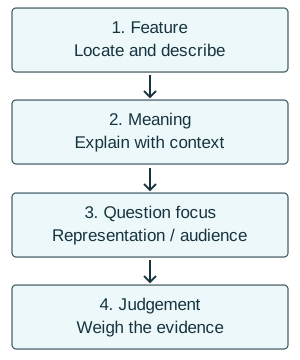
Analysis chain — Move beyond naming a technique: identify a located feature, explain its possible meaning, connect it to the question and substantiate a judgement. Distinguish observation from inference. For example, a low-angle shot can suggest power when performance and narrative support this interpretation; it does not always signify villainy.From observation to substantiated judgement. Original teaching schematic.
Comparison and evaluation — Use paired examples about the same issue, such as who controls action or how a cover addresses readers. Explain a similarity or difference, connect relevant contexts and qualify your conclusion. An evaluation weighs how far a claim fits the evidence rather than repeating it. Alternative readings should remain textually plausible.
Exam preparation — Paper 01 is 1 hour 45 minutes including viewing, worth 70 marks and 35%; Paper 02 is 1 hour 15 minutes, also 70 marks and 35%. Creating media is 30%. Read command words and the supplied sources, answer the actual question and use concise evidence. Short quizzes support concepts but extended analysis needs writing and teacher feedback.
Test yourself
30 questions · Random sets of 10. These quick checks support revision; practise longer explanations and justified judgements too.
Mind map
Use the branches to recall the ideas and explain their connections. Check the revision notes for the full detail.
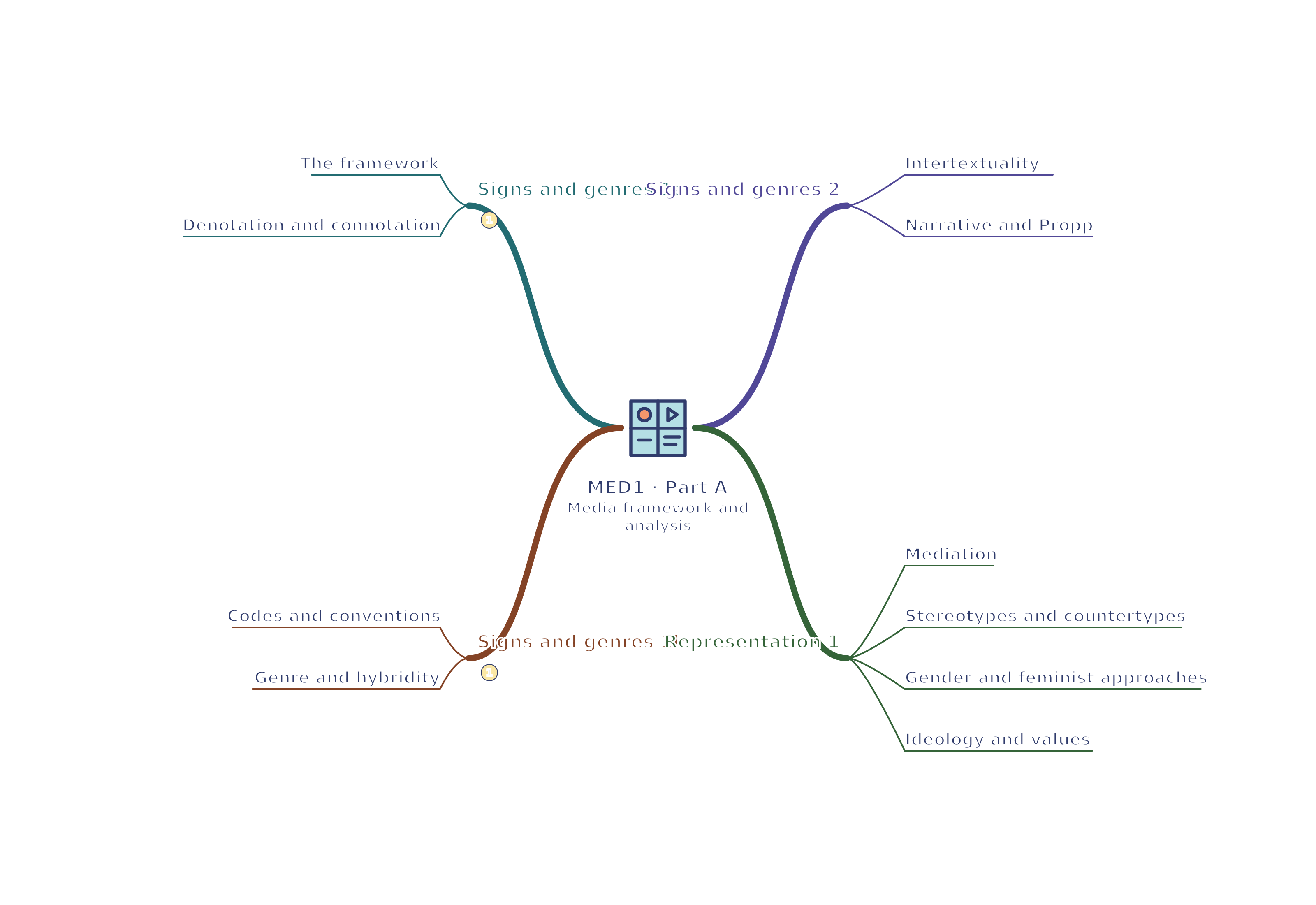
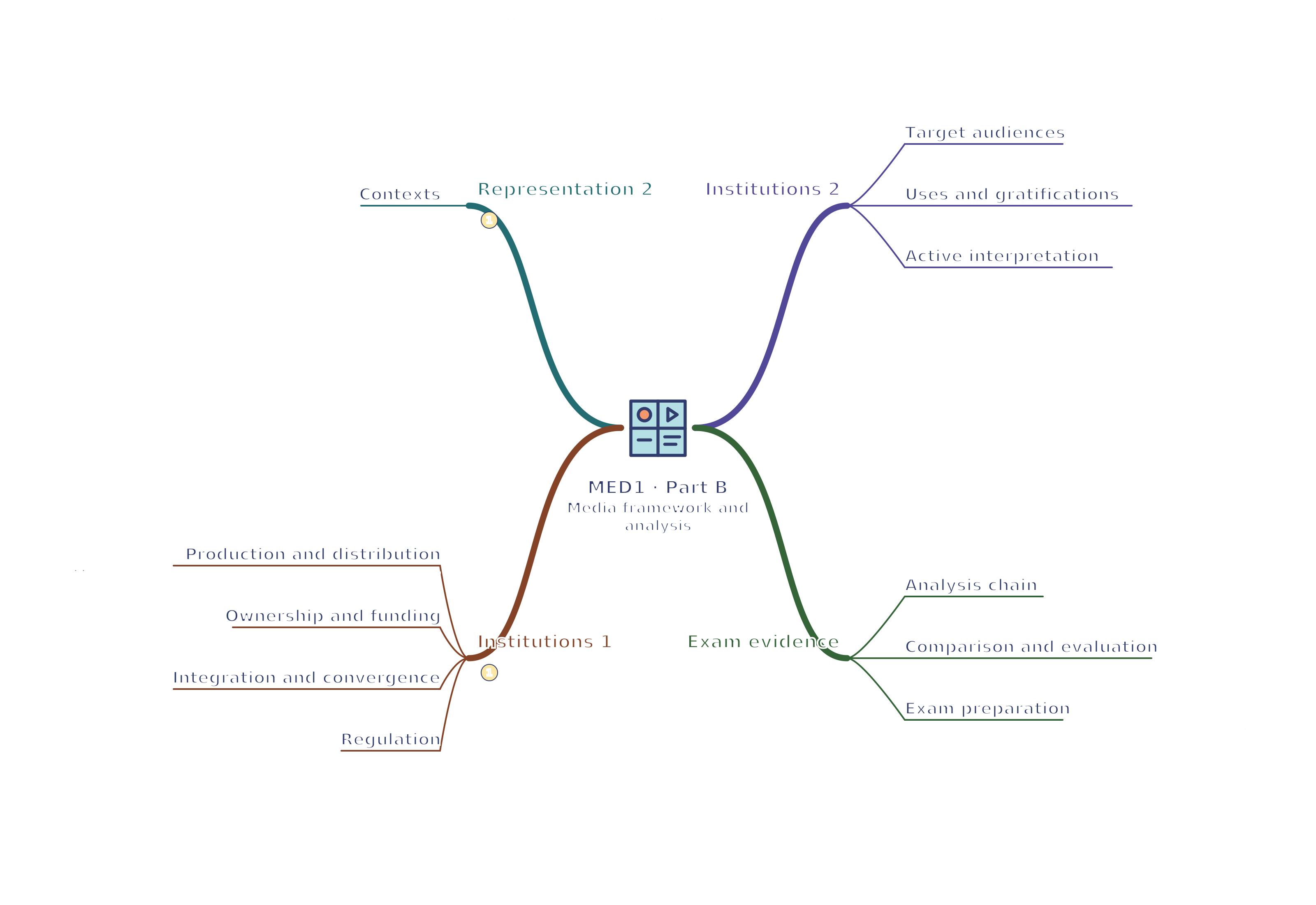
MED1 · Signs and genres 1a / Signs and genres 1b / Signs and genres 2 / Representation 1
View MED1 · Signs and genres 1a / Signs and genres 1b / Signs and genres 2 / Representation 1 mind mapOpen the full-size map to zoom. Download the PDF to print on A4 or enlarge to A3.
View MED1 · Representation 2 / Institutions 1 / Institutions 2 / Exam evidence mind mapOpen the full-size map to zoom. Download the PDF to print on A4 or enlarge to A3.
 Mr Kidman's Classroom