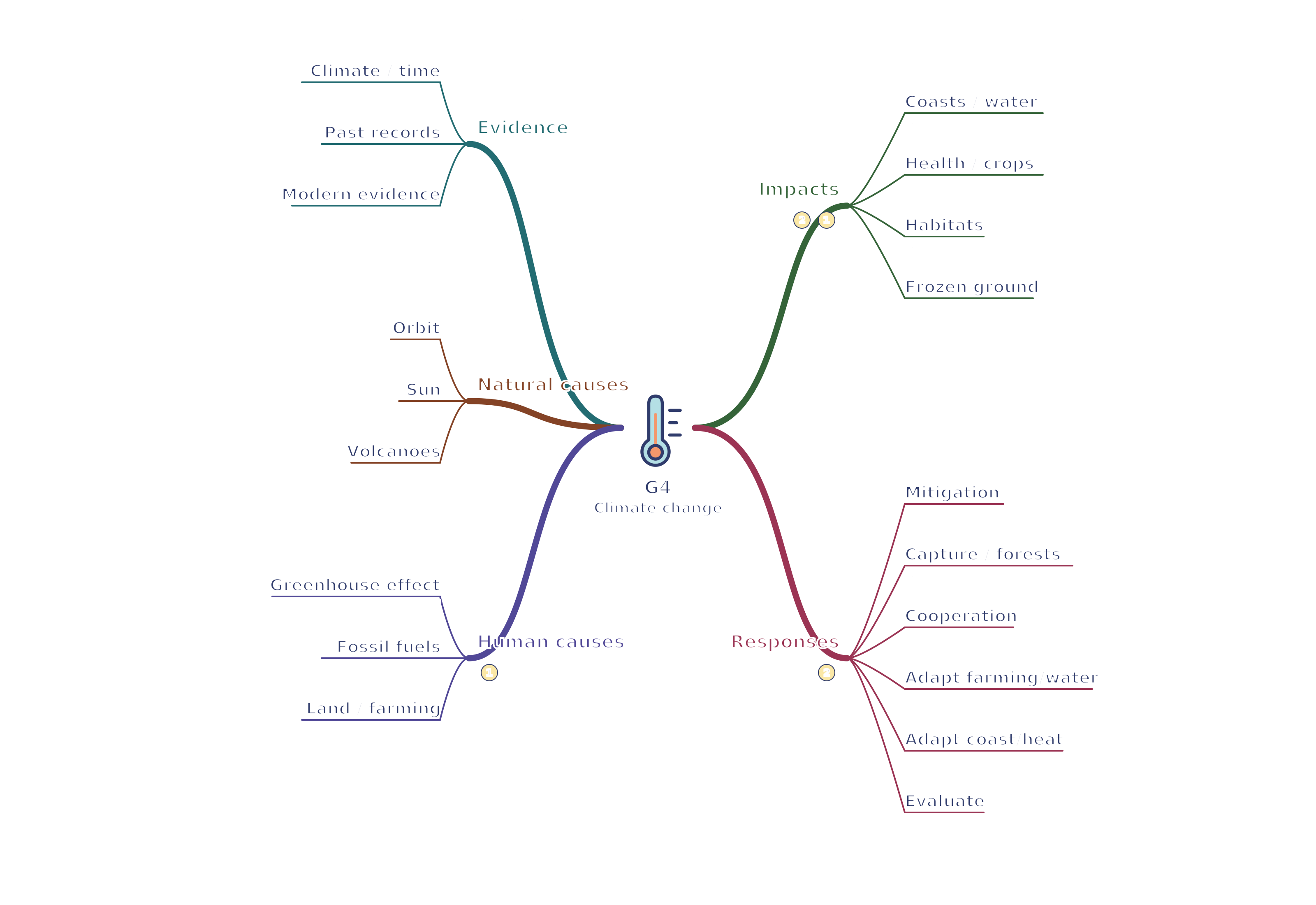
Evidence and causes of climate change, its effects, mitigation and adaptation.
Notes and quizzes readyCore topic
Revise the key ideas
Evidence of climate change
Climate is the average pattern of weather over a long period, commonly 30 years. Climate change is a lasting change in those patterns, rather than a single unusual day.
The Quaternary began about 2.6 million years ago. Its climate has alternated between colder glacial periods and warmer interglacial periods. We live in the Holocene interglacial, which began about 11,700 years ago.
Ice cores contain trapped air bubbles that show past atmospheric gas concentrations. The ice's isotopes provide evidence about past temperatures; they are not direct thermometer readings.
Pollen preserved in sediments shows which plants lived in an area, helping reconstruct earlier climates. Ocean sediments and other natural records also provide evidence beyond the instrumental record.
Tree rings can show yearly changes in growth related to temperature or moisture. Their meaning depends on local conditions, so scientists compare multiple records rather than treating all narrow rings as cold years.
Modern evidence includes instrumental temperature records, shrinking glaciers, loss of Arctic sea ice and rising sea level. Land ice melting adds water to the ocean; seawater also expands as it warms.
Natural and human causes
Orbital changes alter the distribution of solar energy reaching Earth. Changes in orbit shape, axis tilt and wobble help explain glacial cycles over thousands of years.
Variations in solar output can influence climate. They do not explain the rapid warming observed in recent decades; current warming is mainly driven by human greenhouse-gas emissions.
Large explosive volcanic eruptions can send sulphur dioxide into the stratosphere. Reflective particles form and can cool Earth's surface temporarily. Volcanoes also emit carbon dioxide, but much less than present human activity.
The natural greenhouse effect keeps Earth warmer than it would be without greenhouse gases. These gases absorb outgoing infrared radiation and emit radiation in all directions, including back towards the surface.The enhanced greenhouse effect. Greenhouse gases also emit radiation in all directions. Extra warming restores energy balance at a higher temperature.
Burning coal, oil and gas releases carbon dioxide. More greenhouse gases strengthen the greenhouse effect, upsetting Earth's energy balance until the planet warms.
Deforestation releases stored carbon when vegetation burns or decays and reduces the forest's future carbon uptake. Changes in land use can also affect water cycling and local temperatures.
Agriculture releases methane from livestock and rice cultivation, and nitrous oxide from fertilised soils. Different gases have different warming effects and atmospheric lifetimes.
Effects on people and environments
Sea-level rise increases coastal flooding, erosion and saltwater intrusion. Low-lying islands, deltas and coastal settlements are particularly exposed.
Changing rainfall and higher evaporation can worsen water shortages in some regions, while heavier rain raises flood risk elsewhere. Impacts vary between places and seasons.
Heat can harm health and reduce crop yields, particularly where temperatures exceed a crop's tolerance. A longer growing season may help some cooler regions, but pests, water supply and heat extremes can offset benefits.
Habitats shift as temperature and rainfall change. Species may move towards cooler areas or struggle to adapt; coral reefs are at risk from marine heatwaves and ocean warming.
Melting land ice and thawing permafrost change landscapes and infrastructure. Thawing frozen soils can release greenhouse gases, reinforcing warming.
Mitigation: reducing the causes
Mitigation limits warming by reducing emissions or increasing carbon storage. Renewable energy, energy efficiency and lower-emission transport can reduce fossil-fuel use.
Carbon capture can separate carbon dioxide from industrial emissions and store it underground. It has costs and energy requirements and needs secure long-term storage; it does not replace all other mitigation.
Planting trees and restoring forests can remove carbon dioxide as trees grow. Protecting existing forests is also important, and carbon can be released again through fire or clearance.
International agreements coordinate action across countries. The Paris Agreement aims to keep warming well below 2°C and pursue efforts to limit it to 1.5°C above pre-industrial levels; success depends on countries' actions.
Adaptation: responding to change
Adaptation reduces harm from changes that are happening or expected. Farmers may change crop varieties, sowing dates and irrigation methods to suit warmer or drier conditions.
Water management includes reducing leakage, conserving supplies, collecting rainwater and using water more efficiently. New reservoirs or transfers have environmental and financial costs.
Coastal adaptation includes sea defences, flood-resistant buildings and managed realignment. In some areas moving people or assets out of danger may be more sustainable than defending every location.
Heat-health plans, shaded spaces and early warnings can reduce heatwave harm. Adaptation needs to account for people who are most exposed or least able to pay.
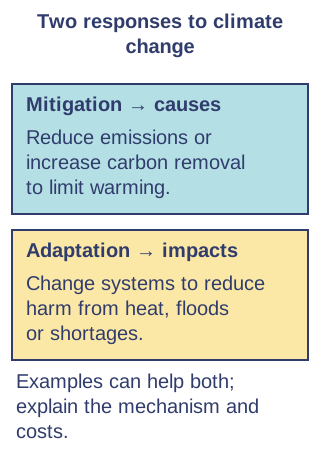
Mitigation addresses the causes; adaptation addresses the impacts. A strong answer explains how a named action works and considers costs, limits or possible side effects.
Test yourself
50 questions · Random sets of 10. These quick checks support revision; practise longer explanations and justified judgements too.
Watch G4 · Climate change
Revise climate change with this narrated video. Use the player controls to pause, seek, adjust the volume or mute. Turn English captions on or off using the captions menu.
 Mr Kidman's Classroom