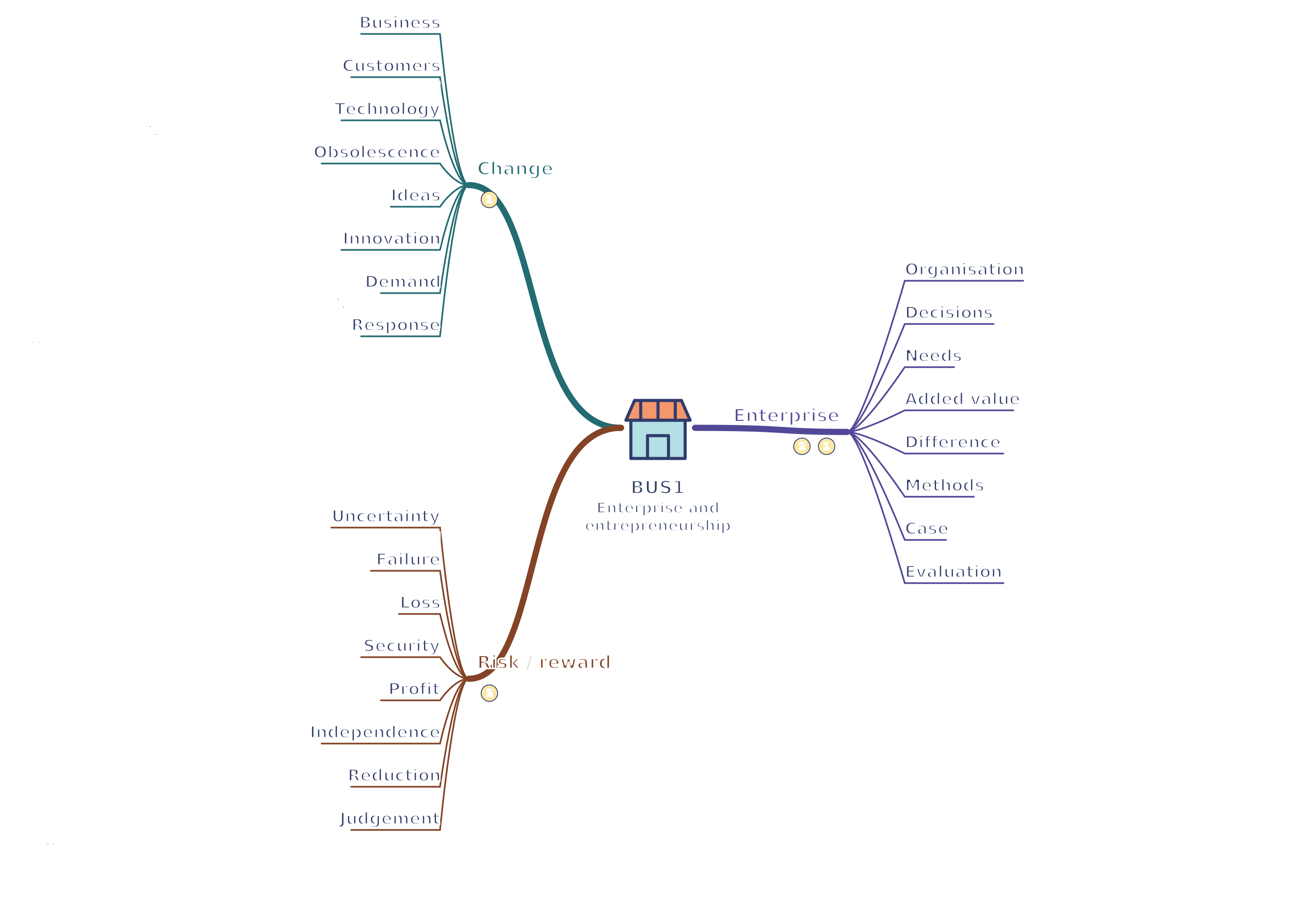
Ideas, risk, reward, added value and the entrepreneur.
Notes and quizzes ready · 40 questions ready · Revision video ready.
Revise the key ideas
1.1.1 · The dynamic nature of business
A business combines resources to supply goods or services. Goods are physical products, such as bread; services are activities, such as a haircut. Many businesses provide both.
Customer preferences change. Growing demand for reusable packaging might create an opportunity, while falling demand for a product can make an established business less successful.
New technology creates opportunities to offer new products or to deliver existing services differently. A booking app can make a local tutor easier to find and pay.
A product becomes obsolete when it is no longer useful or wanted, often because an alternative replaces it. Businesses must consider how quickly technology or habits might change.
An original idea offers something new. Adaptation changes an existing idea, perhaps through a different design, lower price, new location or greater convenience; an idea does not have to be completely new to succeed.
Innovation can improve a product or a process. A bakery might introduce gluten-free products or improve online ordering; either could help it serve customers more effectively.
An opportunity needs customers who are both willing and able to pay. Interest on social media does not establish that enough people will buy at a price that covers costs.
Businesses monitor customers and competitors and adjust their products. Responding too slowly can lose sales; changing too quickly without research can waste scarce finance.
1.1.2 · Risk and reward
Risk is the possibility that an outcome differs from what the entrepreneur expects. Demand, costs and competitors' responses are uncertain, so success cannot be guaranteed.
Business failure can mean closure because the business cannot continue trading. An unsuccessful owner may lose the savings invested and, with unlimited liability, other personal assets.
Financial loss occurs when costs exceed revenue. Even a profitable business can fail if it lacks cash when bills fall due.
Self-employment can offer less security than a regular wage: income may fluctuate, working hours may be long and the owner remains responsible for decisions.
Profit is a possible reward for successful trading. It can support the owner's income or be reinvested; revenue alone is not the entrepreneur's profit.
Independence gives an entrepreneur control over decisions and working practices. Success can also bring satisfaction from solving a problem or meeting a social objective.
Research, cash-flow planning, insurance where appropriate and starting on a smaller scale can reduce particular risks. None removes uncertainty or guarantees success.
Compare the size and likelihood of a risk with the possible reward and the owner's circumstances. A large loan may be more dangerous for an owner with little cash available.
1.1.3 · The role of business enterprise
Enterprise involves identifying an opportunity and acting on it. The entrepreneur organises people, equipment, materials and finance to turn an idea into a business.
Entrepreneurs make decisions about products, prices, suppliers, employees and location. They take risks because resources must often be committed before customer demand is known.
Business activity aims to meet customer needs by producing goods or providing services. Sales are more likely when the offer provides a benefit customers value.
Added value is the difference between a product's selling price and the cost of bought-in materials and components. It is not the same as profit because wages, rent and other costs still need paying.
Convenience can add value by saving customers time or effort. A prepared sandwich may sell for more than the ingredients because it is ready to eat.
Branding identifies a business and can create trust or a distinctive image. Quality and attractive, useful design can also make customers willing to pay more.
A unique selling point (USP) is a distinctive feature that helps the offer stand out. It must matter to the target customer; being different alone is not enough.
Worked example: a craft seller buys materials for £8 and sells the finished item for £25. Added value = £25 − £8 = £17. If labour and other costs are £12, profit on the item is £5, not £17. Added value and profit are different
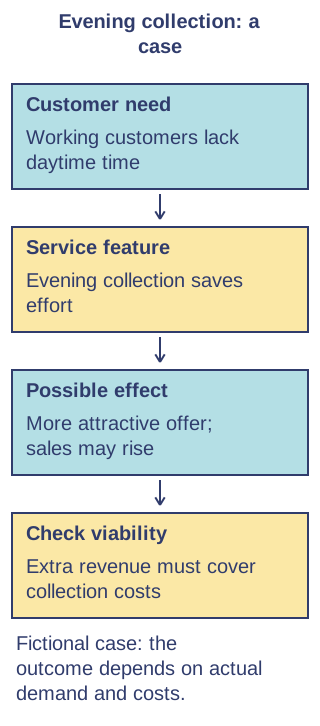
Fictional case: a local repair service offers evening collection. Busy customers may pay more for convenience, but collecting devices also increases labour and transport costs.
Build an explanation from the case: evening collection saves working customers time → the offer becomes more attractive → sales may rise. The effect depends on whether extra revenue covers collection costs.
When judging the idea, consider demand, competing services, available skills and cash. Recommend testing a limited collection area before committing to a costly expansion, explaining why that fits this business.
Test yourself
40 questions · Random sets of 10. Type numerical answers without currency or percentage symbols unless instructed. These quick checks support revision; practise extended explanations and justified judgements too.
Watch BUS1 · Enterprise and entrepreneurship
Revise enterprise and entrepreneurship with this narrated video. Use the player controls to pause, seek, adjust the volume or mute. Turn English captions on or off using the captions menu.
 Mr Kidman's Classroom