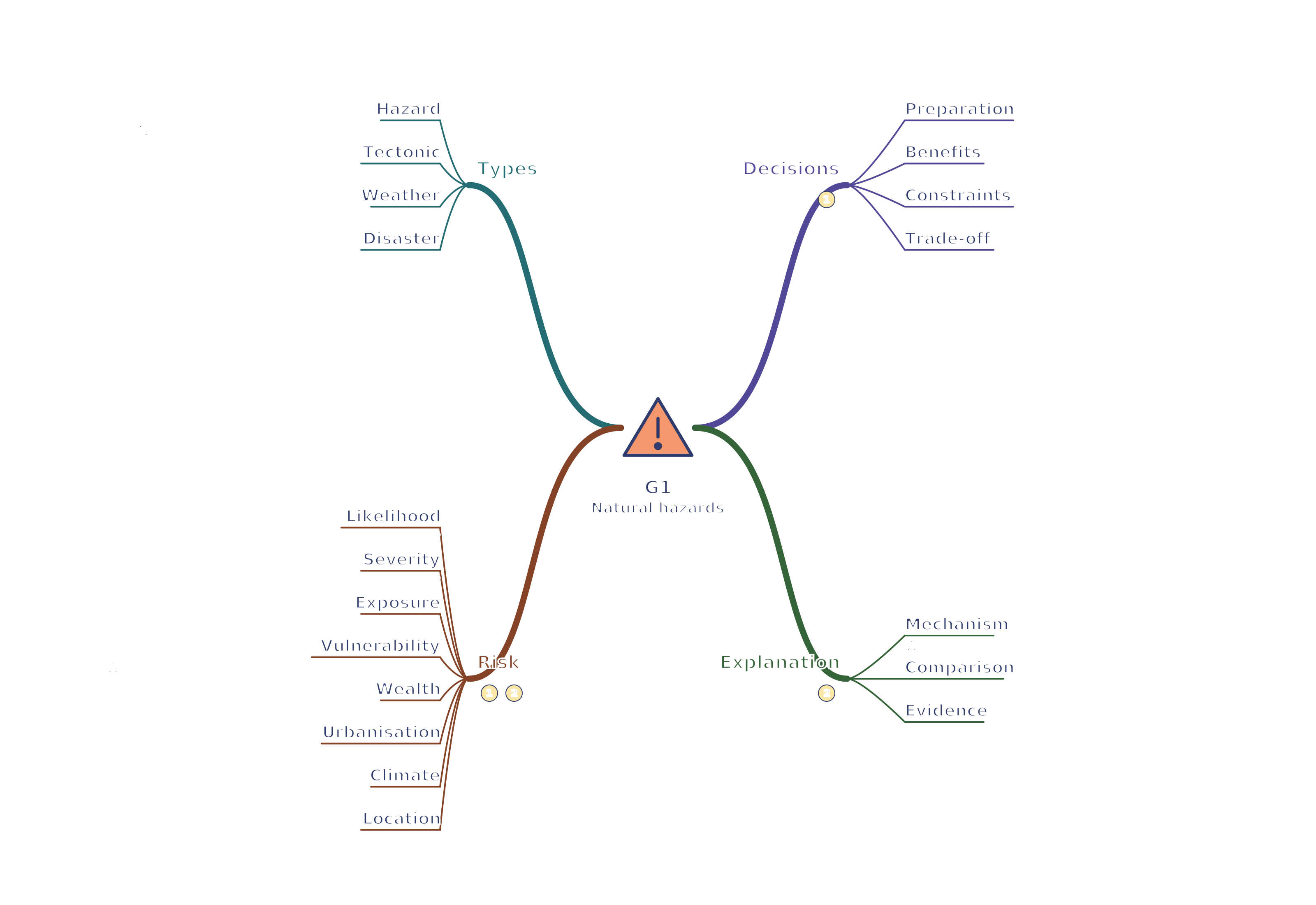
Types of natural hazard and what affects the risk to people and places.
Notes and quizzes readyCore topic
Revise the key ideas
Hazards and risk
A natural hazard is a natural event or process that could harm people, property or the environment. An earthquake in an uninhabited area is a natural event; it becomes a hazard where people or their assets are exposed.
Tectonic hazards include earthquakes and volcanic eruptions. Weather hazards include tropical storms, droughts and heatwaves. Floods can result from weather and can be made worse by human changes to drainage.
Hazard risk means the chance of harm and how serious that harm could be. It depends on the hazard's likelihood and strength, the people and assets exposed, and their vulnerability (how easily they can be harmed).Why hazard risk differs. Risk depends on these factors together; this is not a numerical risk equation.
Exposure increases where more people live in a hazard zone. A densely populated coastal city can have more people and buildings in the path of a storm surge than a sparsely populated coastline.
Vulnerability increases where buildings are weak, clean water is limited or people cannot afford transport to evacuate. Age, disability and access to warnings can also affect someone's ability to respond.
Wealth can pay for stronger buildings, emergency services and flood defences. However, wealthy places can still suffer severe losses, especially where expensive infrastructure is exposed.
Urbanisation can increase risk if rapid growth leads to crowded informal settlements on steep slopes, floodplains or unstable ground. Planning can reduce exposure by limiting building in dangerous locations.
Climate change can alter the likelihood or severity of some weather hazards. It does not cause plate movement or make earthquakes more frequent.
Explaining differences in risk
Risk changes with location: proximity to a plate margin, height above sea level, slope steepness and local climate all affect which hazards are likely.
Preparation can reduce vulnerability. Education, drills, evacuation routes, building rules and emergency supplies help people act before and after an event.
People may accept risk because a place offers jobs, fertile soils, family ties or affordable housing. Some cannot afford to move; others judge that the benefits outweigh the danger.
A disaster occurs when a hazardous event causes serious disruption beyond a community's ability to cope using its own resources. The same physical event can have very different outcomes in different places.
When explaining hazard risk, build a chain of reasoning: weak buildings are more likely to collapse, which increases injuries and makes rescue harder. Naming a factor alone does not explain its effect.
Test yourself
50 questions · Random sets of 10. These quick checks support revision; practise longer explanations and justified judgements too.
Watch G1 · Natural hazards
Revise natural hazards with this narrated video. Use the player controls to pause, seek, adjust the volume or mute. Turn English captions on or off using the captions menu.
 Mr Kidman's Classroom